The global food system is at a crossroads. The second World Congress of the Global Harmonization Initiative (GHI) will unite scientists, policymakers, industry leaders, and other stakeholders in a critical dialogue on the future of food systems.
The Food and Agriculture Organization of the United Nations (FAO) is facilitating the establishment of a Regional Food Safety Research Network and Innovation Hub (RFSRNIH) to improve food safety in Near Eastern and North African countries, addressing challenges specific to the region.
More than 100 people have been sickened and three have died as the result of a foodborne illness outbreak linked to food served at four Italian nursing homes sharing the same meal production center. Investigations are underway.
The Food and Agriculture Organization of the United Nations (FAO) has compiled a report on the exposure of humans and food-producing animals to endocrine-disrupting chemicals—such as PFAS, BPA, and phthalates, among others—between 2004 and 2024.
FAO has put out a call for experts and data to inform an upcoming series of FAO/WHO Joint Expert Meeting on Microbiological Risk Assessment (JEMRA) sessions, with the goal of generating updated advice about microbiological risk assessment for parasites in food.
A new toolbox offered by FAO describes the risk assessment process used by the Joint FAO/WHO Expert Committee on Food Additives (JECFA) regarding veterinary drug residues in animal-derived food products consumed by humans. FAO will also host a virtual launch event in February.
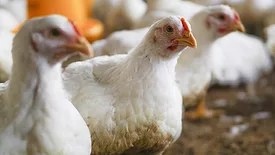
A joint scientific opinion from the European Food Safety Authority (EFSA) and the European Center for Disease Control and Prevention (ECDC) includes recommended strategies for the food animal sector to prevent the spread of avian influenza and its transmission to humans.
A recent report from the FAO/WHO Joint Expert Meeting on Microbiological Risk Assessment (JEMRA) summarizes the development of formal risk assessment models for Listeria monocytogenes in leafy greens, cantaloupe, frozen vegetables, and ready-to-eat (RTE) seafood.
An analysis of globally sourced table grapes conducted by the Chemical and Veterinary Analytical Institute of Stuttgart, Germany (CVUA Stuttgart) found notable levels of pesticides, which were significantly higher in grapes imported from outside the EU. Grapes from Türkiye were especially problematic.
In this episode of Food Safety Matters, we speak to Haley Oliver, Ph.D., Director of the USAID-funded Feed the Future Food Safety Innovation Lab at Purdue University, about her work to improve global food safety through targeted projects in Kenya, Cambodia, Nepal, and beyond.
 RSS
RSS