The European Commission is poised to make the controversial decision to renew ten-year approval of the use of glyphosate, the active ingredient in Monsanto-Bayer’s Roundup product line, which has come under fire in recent years for its association with cancer.
The European Commission’s Directorate-General for Health and Food Safety (EC’s DG SANTE) recently published a report on the effectiveness of EU Member States’ strategic approaches for fighting food fraud, which informed a guidance document that supports Member State efforts in this area.
On November 28, 2023, the Institute for the Advancement of Food and Nutrition Sciences (IAFNS) and McGill University are hosting a free, virtual food safety workshop on food safety hazards and controls in food production environments.
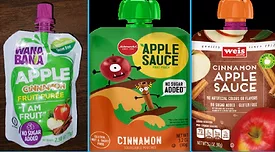
As of November 16, 2023, there are 34 known cases of acute lead toxicity linked to recalled fruit puree pouches in the U.S. FDA has alluded to an unconfirmed theory that the common source of contamination may be an imported ingredient used in the products.
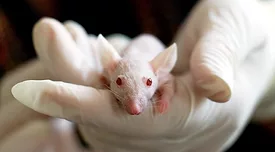
The European Food Safety Authority (EFSA) has introduced TKPlate, a new platform that can model and predict the toxicity and toxicokinetics of chemicals used in foods, which will help reduce the amount of animal testing used in food safety assessments.
In this episode of Food Safety Matters, we are joined by Dr. Kathy Knutson, an author, food safety consultant, and educator for the cannabisindustry. She discusses packaging, good manufacturing practices, training, and other considerations for ensuring the safety of cannabis-infused edibles and beverages, as well as the complicated patchwork of state regulations for cannabisand the potential for future federal regulation. We also hear from Dr. Hal King, the Editor of Food Safety Leadership in the Business of Food Safety, a new digital book published by Food Safety Magazine that serves as a resource for the retail foodservice industry. The book defines and models food safety business leadership from the perspective of top food safety business leaders at best-in-class retail foodservice operations.
The European Food Safety Authority (EFSA) has published a joint statement with the European Center for Disease Prevention and Control (ECDC), the European Chemicals Agency (ECHA), the European Environment Agency (EEA), and the European Medicines Agency (EMA) to express their commitment to supporting the One Health agenda.
A new food safety management standard in the Food Standards Australia New Zealand (FSANZ) Safe Food Australia Code will come into effect for foodservice and retail businesses on December 8, 2023.
This comprehensive whitepaper provides food safety managers an in-depth guide on developing an effective HACCP plan, a critical requirement in the food industry.
The UK Food Standards Agency (FSA) recently published Our Food 2022, its annual report of food standards across the nation, which was conducted in collaboration with Food Standards Scotland (FSS). Although the UK faced significant challenges that affected the food system in 2022, FSA reported that that there has not been any significant change in food safety and authenticity standards, except for a trend in food allergen labeling requirements.
 RSS
RSS