The theme of the sixth annual World Food Safety Day (WFSD), taking place June 7, is “Food Safety: Prepare for the Unexpected,” which aims to help all stakeholders along the food supply chain prepare for unexpected food safety incidents.
After hundreds of children across the U.S. contracted lead poisoning after eating fruit puree pouches containing contaminated cinnamon, the U.S. Food and Drug Administration (FDA) has identified six additional ground cinnamon products that were found to contain elevated levels of lead. The agency has issued a recall.
The U.S. Department of Agriculture’s Food Safety and Inspection Service (USDA’s FSIS) has published data on recalls and public health advisories issued in the case of a food safety incident in 2023.
In a recently published joint report on antimicrobial resistance (AMR) in Europe for 2021–2022, the European Food Safety Authority (EFSA) and the European Center for Disease Prevention and Control (ECDC) highlight the progress in reducing AMR in some countries, but warn about repeatedly observed resistance to common antibiotics in Salmonella and Campylobacter.
A recent meeting report from the FAO/WHO Joint Expert Consultation on Risk Assessment of Food Allergens proposes a process to guide the development and evaluation of allergen derivative exemptions.
A joint report published by the European Food Safety Authority (EFSA) and other EU agencies shows that decreased use of antibiotics in animals and humans leads to a reduction in antibiotic-resistant (AMR) bacteria.
The World Health Organization (WHO) is updating its estimate of the global burden of foodborne illness for 2025, and researchers are calling for the inclusion of Chagas disease, which has not been considered in past estimates.
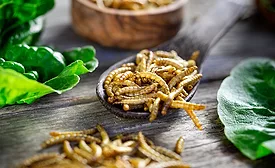
A recent study has mapped the edible insect supply chain to identify the main points for potential food safety hazards and food fraud, and concluded that, in general, substantial food safety and authenticity gaps need to be addressed before edible insects can be considered safe and sustainable protein sources for Western markets.
Phenomenex Inc. recently launched PhenoAcademy, a practical, step-by-step online educational program focused on chromatography, which has multiple applications in food and beverage analysis.
The World Health Organization (WHO) recently published a guidance for national authorities about how to design, implement, and communicate a risk-based food inspection system.
 RSS
RSS