The mesh access system, which provides unrestricted overhead clearance, is designed for food and beverage facilities where conventional, counterbalanced or sliding gates may present operational challenges.
In-house quality control teams and third-party laboratories can use the GENE-UP PROBIOTIC SPECIES ID assay to identify 18 commonly used probiotic species in 90 minutes or less.
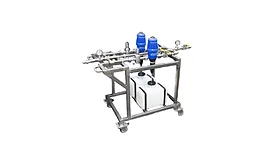
The solution includes a clean-in-place (CIP) spray header and can be used to apply sanitizing chemicals to food processing equipment such as conveyors, hoppers, bins, mixers, and other production areas.
The VITAL Program and VITAL Online identify allergens that require labeling consideration, whether due to intentional inclusion or cross-contact. The update includes changes to tree nut grouping and gluten-containing cereal labeling in line with Codex reference doses (RfDs).
Supporting routine laboratory testing, the GENESYS G5 series features an expanded software ecosystem with optional application-specific packages, including guided workflows and preconfigured methods intended to reduce setup time and improve consistency.
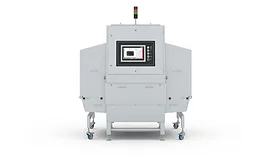
The system provides 1,000 millimeters of inspection coverage and supports belt speeds of up to 76 meters per minute. An optional integrated barcode reader enables inspection of mixed cases and supports multilane production environments.
The American Dairy Science Association (ADSA) event will be held on August 31–September 3, 2026 in Itasca, Illinois, under the theme “Dairy and the Environment: Challenges and Opportunities.”
The VR Sleeve Gloves combine heavy-duty nitrile gloves with PolyCo’s lightweight VR Protective Sleeves for protection against disinfectants and other harsh chemicals.
The acquisition combines its original equipment manufacturer (OEM) parts distribution network with 86 Repairs' repair and maintenance management software platform for foodservice operators.
Central to the strategy are food industry-specific tools designed to support product development, regulatory compliance, traceability, and commercialization for food and beverage companies.
 RSS
RSS