This episode of Food Safety Five highlights new research on cold storage practices for fresh-cut produce, food safety perspectives among small-scale produce growers exempt from FDA's FSMA Produce Safety Rule, and water management strategies that reduce arsenic in rice.
L. monocytogenes is the fourth-leading foodborne illness-related cause of death in the U.S. Despite continued efforts, listeriosis incidence rates have not declined, prompting FDA to launch a series of public engagements to discuss best practices for managing the pathogen.
The label claim “STABILIZED” would indicate that a ready-to-eat (RTE) product had been formulated or processed to inhibit Listeria monocytogenes growth. The researchers advocate for formulation and process changes as listeriosis rates climb in Europe and stricter EU Listeria regulations come into effect.
Effective July 1, the amended Regulation (EU) 2073/2005 on the microbiological criteria for foods expands the requirements for food business operators regarding Listeria monocytogenes in ready-to-eat (RTE) foods.
The Center for Produce Safety (CPS)-funded study also found that some produce items may naturally inhibit Listeria monocytogenes growth and that peracetic acid may sometimes promote Listeria growth during storage.
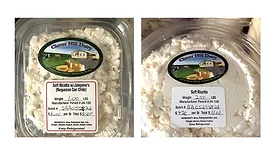
The now-recalled requeson cheese was produced by Maryland-based Clover Hill Dairy. Patients have been identified in New York, Maryland, and Virginia, with the earliest illness occurring in early 2023 and the most recent in May 2026.
The latest data from the UK Health Security Agency (UKHSA) show that the number of Campylobacter and Salmonella infections in England remained high or increased in 2025, while listeriosis cases stayed stable from the previous year.
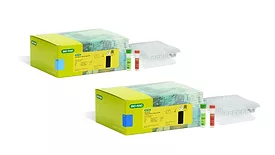
The certification confirms that the performance of the Bio-Rad method used in its EZ-Check Listeria and EZ-Check Listeria monocytogenes Kits is equivalent to that of the reference method according to ISO 16140-2 standards.
Studies funded by the Center for Produce Safety (CPS) are investigating ways to improve produce packinghouse brush sanitation, including the use of antimicrobial light and choosing the best time to replace brushes.
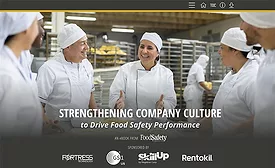
Realizing measurable improvement in food safety performance rests largely on the culture of your company. Dedicated investment in optimizing your organization's food safety culture—from the boardroom to the warehouse, and throughout your entire supply chain—offers significant returns in the form of regulatory compliance, mitigated recall risk, enhanced consumer trust, and a more skilled and invested workforce.