Although food safety spending cuts were associated with local authority staffing reductions and decreases in the number of official food hygiene interventions, industry compliance was not negatively affected.
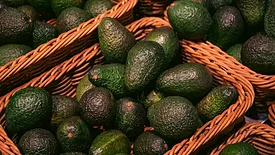
Dr. Alejandro Castillo is looking closely at Listeria contamination in the Mexican–U.S. avocado supply chain. Dr. Matt Taylor is working to help meat and poultry producers validate the microbial safety of their products and ensure regulatory compliance.
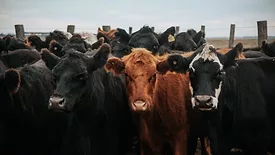
With the hope of developing a user-friendly model, a Center for Produce Safety-funded study is investigating factors that influence Escherichia coli contamination risks posed by concentrated animal feeding operations (CAFO) near produce growing fields.
The scientific opinion was published to provide a scientific basis for possible amendments to existing requirements in EU legislation for food business operators on the freezing of meat.
New research has demonstrated that certain plant-based compounds (i.e., curcumin, berberine, quercetin, and capsaicin) can enhance the antimicrobial effect of blue light treatment against Listeria monocytogenes on food and disrupt its biofilm-forming abilities.
A new paper describes U.S. regulatory agencies’ roles in two recent, high-profile foodborne illness outbreak investigations—the Boar’s Head listeriosis outbreak and the McDonald’s Escherichia coli outbreak—and highlights the shortcomings and strengths in how the outbreaks were managed.
Researchers estimate that the use of whole genome sequencing (WGS) for routine pathogen surveillance in Australia prevents up to 10,900 foodborne salmonellosis cases and delivers as much as $17 million in cost savings annually.
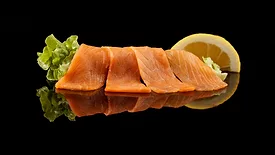
Nofima recently reported on a successful “Seek and Destroy” process carried out by a smoked salmon producer implicated in a listeriosis outbreak, which demonstrated the importance of hygienic design and WGS, and the limitations of standard cleaning and sampling.
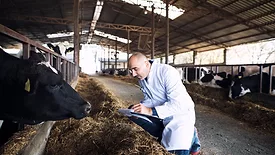
An analysis of a decade of antimicrobial resistance (AMR) surveillance data in foodborne pathogens (i.e., Salmonella, Campylobacter, and Escherichia coli) has identified patterns shaping multidrug resistance (MDR) in food animal production systems.
Contributing to the current conversation around food processing (e.g., “ultra-processed foods”), the Institute for the Advancement of Food and Nutrition Sciences (IAFNS) has published a set of governing principles for food formulation and processing classification systems.