Food Safety
search
Ask Food Safety AI
cart
facebook twitter linkedin instagram youtube
  • Sign In
  • Create Account
  • Sign Out
  • My Account
Food Safety
  • NEWS
    • Latest News
    • Food Safety Five Newsreel
  • PRODUCTS
  • TOPICS
    • Contamination Control
    • Food Types
    • Management
    • Process Control
    • Regulatory
    • Sanitation
    • Supply Chain
    • Testing and Analysis
  • PODCAST
  • EXCLUSIVES
    • eBooks
    • Sponsored Insights
    • Sponsored White Papers
    • FSM Distinguished Service Award
    • Interactive Product Spotlights
    • Videos
  • MORE
    • BUYER'S GUIDE
    • NEWSLETTERS >
      • Archive Issues
      • Subscribe to eNews
    • Store
    • ASK FSM AI
  • WEBINARS
  • FOOD SAFETY SUMMIT
  • FSM FEATURES
    • FSM Features Collection
    • eMag Archives
    • Editorial Advisory Board
    • Contact
    • Advertise
  • SIGN UP!
ProductsFood TypeProcess ControlMeat/Poultry

New Blades for Meat Processing From Starrett
By Food Safety Magazine Editorial Team
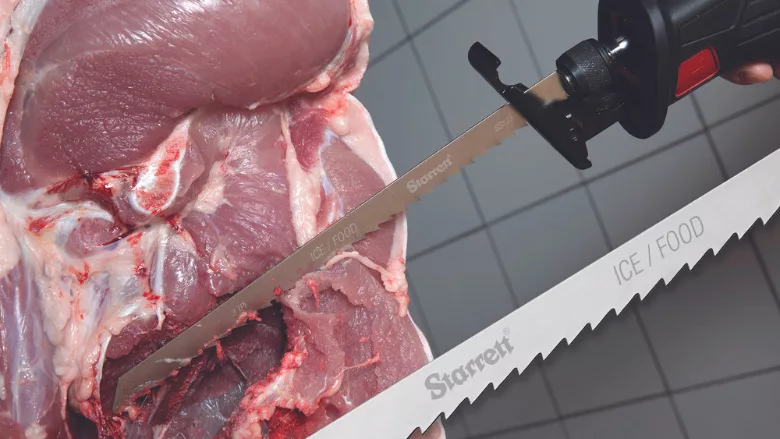
Starrett Saw Blade

Image provided by L.S. Starrett Co.

June 6, 2024

L.S. Starrett Co. has introduced its new Skinner Blades and Stainless Steel Reciprocating Saw Blades for meat and food processing.

The Starrett Skinner Saw Blades are U.S. Department of Agriculture (USDA) -certified to meet quality standards, and have the ability to produce smooth, clean cuts when removing meat membranes, skinning fish, and derinding pork. Special alloy stainless steel blade construction and heat treatment keep blades sharp, resulting in longer life and increased performance. For easy origin identification and traceability, the Skinner blades are laser-engraved.

The Skinner blades are available in a wide variety sizes and lengths, in three chamfer types (no chamfer, left chamfer, or right chamfer). At present, the blades are produced in two main width and thicknesses that fit most common skinner blade machine models: 0.8 inch (in.) width by 0.04 in. thickness, and 0.87 in. width by 0.03 in. thickness.

Starrett Stainless Steel Reciprocating Saw Blades are non-corrosive with high rust-proofing properties, maximizing food safety while enabling fast, accurate cuts by food, fish, and meat processors. The new AISI 420 stainless steel reciprocations feature precision ground teeth for durability, making them ideal for cutting fresh or frozen meat (with or without bones) and carcasses for meatpacking/cold storage, wild game processing and hunting, and ice block cutting. The recips are offered in 12 in. length by ¾ in. width by 0.05 in. thickness size blades in both 3 and 6 TPI.


L.S. Starrett Co.: www.starrett.com

Looking for quick answers on food safety topics?
Try Ask FSM, our new smart AI search tool.
Ask FSM →

KEYWORDS: L.S. Starrett Co.

Share This Story

Fsm purple logo 200x200

The Food Safety Magazine editorial team comprises Bailee Henderson, Director of Content Strategy and news editor ✉, and Adrienne Blume, M.A., Director of Editorial and Industry Engagement.

Recommended Content

JOIN TODAY
to unlock your recommendations.

Already have an account? Sign In

  • people holding baby chicks

    Serovar Differences Matter: Utility of Deep Serotyping in Broiler Production and Processing

    This article discusses the significance of Salmonella in...
    Microbiological Control
    By: Nikki Shariat Ph.D.
  • woman washing hands

    Building a Culture of Hygiene in the Food Processing Plant

    Everyone entering a food processing facility needs to...
    Personal Hygiene/Handwashing
    By: Richard F. Stier, M.S.
  • graphical representation of earth over dirt

    Climate Change and Emerging Risks to Food Safety: Building Climate Resilience

    This article examines the multifaceted threats to food...
    Contamination Control
    By: Maria Cristina Tirado Ph.D., D.V.M. and Shamini Albert Raj M.A.
Manage My Account
  • eMagazine Subscription
  • Subscribe to Newsletters
  • Manage My Preferences
  • Website Registration
  • Subscription Customer Service

More Videos

Sponsored Content

Sponsored Content is a special paid section where industry companies provide high quality, objective, non-commercial content around topics of interest to the Food Safety Magazine audience. All Sponsored Content is supplied by the advertising company and any opinions expressed in this article are those of the author and not necessarily reflect the views of Food Safety Magazine or its parent company, BNP Media. Interested in participating in our Sponsored Content section? Contact your local rep!

close
  • Top view portrait of two factory workers standing by conveyor belt during quality inspection at food production, copy space
    Sponsored byFlexXray

    Foreign Material By the Numbers: What the 2026 Benchmark Report Reveals

  • a conveyorized industrial metal detector system that appears to resemble a Loma Systems IQ4 Metal Detector setup with an integrated conveyor belt and control panel for food or package inspection.
    Sponsored byMettler Toledo

    Beyond Detection: How to Avoid Physical Contamination in Food Through a Smarter Inspection Strategy

  • The image displays a bottling plant production line, commonly used in the beverage industry for filling and packaging soft drinks.
    Sponsored byBIOIONIX

    Sustainability with ROI: A Beverage Producer Case Study in Water Savings

Popular Stories

farmer walking through field of lettuce

With Cyclospora Lettuce Outbreak Over, Taylor Farms Speaks Up as FDA is Questioned

warehouse manager

FDA Announces Food Traceability Rule Exemption for Certain Small Businesses, Considers Additional Flexibilities

Managers discuss operations in canned fish production facility

Building Leadership Buy-In for Food Safety

allergens ebook

Events

October 15, 2026

How to Prevent Physical Contamination in Food Production and Strengthen Compliance

Live: October 15, 2026 at 2:00 pm EDT: Attend this webinar to gain insight into how product inspection helps protect your brand, reduce recall risk, and support compliance.

October 29, 2026

FDA Proposes Major GRAS Reform: What It Could Mean for Your Business

Live: October 29, 2026 at 2:00 pm EDT: Attend this webinar to examine potential implications for self-GRAS, Flavor and Extract Manufacturers Association (FEMA) GRAS, and food-contact substances.

November 5, 2026

How Middle Managers Shape Food Safety Culture and Risk Performance

Live: November 5, 2026 at 11:00 am EST: From this webinar, attendees will learn how investing in middle managers improves both FSQ strategy implementation and accountability across all levels of the company.

View All

Products

Global Food Safety Microbial Interventions and Molecular Advancements

Global Food Safety Microbial Interventions and Molecular Advancements

See More Products

Related Articles

  • Food Safety Strategies coronavirus news

    CDC and OSHA offers interim guidance for meat and poultry processing workers and employers

    See More
  • Wenda Ingredients logo

    True Phosphate Replacer for Meat and Poultry—the All-New TasteNrich HyBind PR3

    See More
  • Cattle ranch

    Cattlemen’s Associations Oppose Trump’s Push to Allow On-Farm Meat Processing: ‘Food Safety is NOT Red Tape’

    See More

Related Products

See More Products
  • 9781498721776.jpg

    Handbook of Food Processing: Food Safety, Quality, and Manufacturing Processes

  • food-safety-making.jpg

    Food Safety: Making Foods Safe and Free From Pathogens

  • 1119053595.jpg

    Food Safety for the 21st Century: Managing HACCP and Food Safety throughout the Global Supply Chain, 2E

See More Products

Events

View AllSubmit An Event
  • May 28, 2026

    Advanced Sanitation Strategies for Allergen Risk Reduction in Food Processing

    On Demand: From this webinar, attendees will learn why validation and verification are necessary for allergen control, and how analytical tools can support allergen management programs.
  • August 25, 2026

    Don’t Wing It: Bird Control for Food Processing Facilities

    On Demand: This webinar will cover why managing bird activity should be a priority for your business, the complexities involved in effective bird control, and proactive strategies to help protect your facility.
View AllSubmit An Event

Related Directories

  • Vetident Technologies

    Vetident Teknoloji is a Turkish technology company that has been developing software and hardware solutions for the livestock and meat processing industries since 2005. Its products range from electronic animal identification systems to Meat Processing Factory Floor Management Software, feedlot tracking and AI powered carcass classification, serving organizations in many countries from Qatar to Morocco and the UK to Azerbaijan.
×

Never miss the latest news and trends driving the food safety industry

Newsletters | Website | FSM Features Collection

JOIN TODAY!
  • RESOURCES
    • Advertise
    • Contact Us
    • Directories
    • Store
    • Want More
  • SIGN UP TODAY
    • Create Account
    • eMagazine
    • Newsletters
    • Customer Service
    • Manage Preferences
  • SERVICES
    • Marketing Services
    • Reprints
    • Market Research
    • List Rental
    • Survey/Respondent Access
  • STAY CONNECTED
    • LinkedIn
    • Facebook
    • Instagram
    • X (Twitter)
  • PRIVACY
    • PRIVACY POLICY
    • TERMS & CONDITIONS
    • DO NOT SELL MY PERSONAL INFORMATION
    • PRIVACY REQUEST
    • ACCESSIBILITY

Copyright ©2026. All Rights Reserved BNP Media, Inc. and BNP Media II, LLC.

Design, CMS, Hosting & Web Development :: ePublishing