Food Safety
search
Ask Food Safety AI
cart
facebook twitter linkedin
  • Sign In
  • Create Account
  • Sign Out
  • My Account
Food Safety
  • NEWS
    • Latest News
    • White Papers
  • PRODUCTS
  • TOPICS
    • Contamination Control
    • Food Types
    • Management
    • Process Control
    • Regulatory
    • Sanitation
    • Supply Chain
    • Testing and Analysis
  • PODCAST
  • EXCLUSIVES
    • Food Safety Five Newsreel
    • eBooks
    • FSM Distinguished Service Award
    • Interactive Product Spotlights
    • Videos
  • BUYER'S GUIDE
  • MORE
    • ENEWSLETTER >
      • Archive Issues
      • Subscribe to eNews
    • Store
    • Sponsor Insights
    • ASK FSM AI
  • WEBINARS
  • FOOD SAFETY SUMMIT
  • EMAG
    • eMagazine
    • Archive Issues
    • Editorial Advisory Board
    • Contact
    • Advertise
  • SIGN UP!

3M and Cornell partner to develop environmental monitoring handbook

FSS news generic image
June 26, 2019

3M Food Safety and Cornell University’s College of Agriculture and Life Sciences (CALS) announce they have collaborated – together and with a team of other industry experts – on a comprehensive handbook to help food and beverage manufacturers build and implement environmental monitoring programs.

The “Environmental Monitoring Handbook for the Food and Beverage Industries” is available for free download as a complete 100+ page document, providing a holistic perspective on this preventative approach to food safety. In addition to immediately accessing this expert guidance from 20 contributors from around the world, food safety and quality professionals can also watch a related on-demand video learning series at www.3M.com/EnvironmentalMonitoringProgram.

While environmental monitoring guidance exists for certain sectors of the food and beverage industry, a comprehensive resource has not previously been created. The concept of environmental monitoring was born out of increasing realization among food processors and their regulators that food manufacturing environments are too often sources of finished product contamination. In 2015, the U.S. FDA Food Safety and Modernization Act (FSMA) began requiring environmental monitoring as a key food safety verification strategy, and globally recognized third-party food safety certification programs soon followed suit.

“We developed this handbook to instill a more strategic and integrated mindset for preventing multiple forms of environmental contamination in processing facilities,” said John David, 3M Food Safety global scientific marketing manager and the co-editor for the handbook. “Environmental monitoring programs can encompass a range of targets – not only pathogens, but spoilage organisms, allergens and more.”

“There are logical approaches to identifying, controlling and documenting contamination in food production environments, but there are also lots of unique factors, including the composition of the foods being manufactured, the control measures being applied and the layout of and machinery in the plant,” added Dr. Martin Wiedmann, the Gellert Family Professor of Food Safety at CALS. “The handbook aims to help organizations create more of a science around their environmental monitoring efforts, and that means being mindful of the variables pertaining to them.”

Handbook availability is just one outcome of a long-term partnership
Last month, 3M and CALS renewed a five-year strategic partnership that has resulted in a peer-reviewed journal publication, food safety education seminars and workshops worldwide, and more. The renewal of the public-private collaboration resulted in the naming of the 3M Food Safety and Quality Laboratory, managed by Dr. Randy Worobo, a professor within Cornell University’s Department of Food Science who co-authored the handbook’s chapter on spoilage organisms.

“Environmental monitoring relies on anticipation and proactivity and there can be a lot data to assess – not just around food safety issues, but also concerns involving shelf life,” said Worobo. “Our hope is that the Environmental Monitoring Handbook will fuel transformational thinking and practices, allowing companies to not only avoid recalls but improve the quality and longevity of their products and the efficiency of their production.”

Looking for quick answers on food safety topics?
Try Ask FSM, our new smart AI search tool.
Ask FSM →


This article was originally posted on www.provisioneronline.com.
KEYWORDS: 3M Food Safety Cornell University

Share This Story

Recommended Content

JOIN TODAY
to unlock your recommendations.

Already have an account? Sign In

  • people holding baby chicks

    Serovar Differences Matter: Utility of Deep Serotyping in Broiler Production and Processing

    This article discusses the significance of Salmonella in...
    Contamination Control
    By: Nikki Shariat Ph.D.
  • woman washing hands

    Building a Culture of Hygiene in the Food Processing Plant

    Everyone entering a food processing facility needs to...
    Training
    By: Richard F. Stier, M.S.
  • graphical representation of earth over dirt

    Climate Change and Emerging Risks to Food Safety: Building Climate Resilience

    This article examines the multifaceted threats to food...
    Risk Assessment
    By: Maria Cristina Tirado Ph.D., D.V.M. and Shamini Albert Raj M.A.
Manage My Account
  • eMagazine Subscription
  • Subscribe to eNewsletter
  • Manage My Preferences
  • Website Registration
  • Subscription Customer Service

More Videos

Sponsored Content

Sponsored Content is a special paid section where industry companies provide high quality, objective, non-commercial content around topics of interest to the Food Safety Magazine audience. All Sponsored Content is supplied by the advertising company and any opinions expressed in this article are those of the author and not necessarily reflect the views of Food Safety Magazine or its parent company, BNP Media. Interested in participating in our Sponsored Content section? Contact your local rep!

close
  • Salmonella bacteria
    Sponsored byThermoFisher

    Food Microbiology Testing Methods: Salmonella species

  • a diagram explaining indicator organisms
    Sponsored byHygiena

    How Proactive Listeria Testing Helps Prevent Six- and Seven-Figure Recalls

  • woman grocery shopping
    Sponsored byCorbion

    Designing Safety Into Every Bite: Proactive Risk Mitigation for Refrigerated Foods

Popular Stories

baby eating bottle

Infant Botulism Spike Exceeds 100 Cases, Extent of ByHeart's Involvement Unclear

NRTE breaded stuffed chicken

USDA Indefinitely Delays Enforcement of Salmonella as Adulterant in Raw Breaded, Stuffed Chicken

digital map of europe

EU Publishes Food Fraud Tool Mapping Thousands of Cases Since 2016

Events

December 11, 2025

How to Develop and Implement an Effective Food Defense Strategy

Live: December 11, 2025 at 2:00 pm EDT: From this webinar, attendees will learn common areas where companies encounter challenges in their food defense strategies and how to address them.

May 11, 2026

The Food Safety Summit

Stay informed on the latest food safety trends, innovations, emerging challenges, and expert analysis. Leave the Summit with actionable insights ready to drive measurable improvements in your organization. Do not miss this opportunity to learn from experts about contamination control, food safety culture, regulations, sanitation, supply chain traceability, and so much more.

View All

Products

Global Food Safety Microbial Interventions and Molecular Advancements

Global Food Safety Microbial Interventions and Molecular Advancements

See More Products

Related Articles

  • Image of person conducting a food safety inspection with a cotton swab

    Neogen Launches Second Edition Environmental Monitoring Handbook to Elevate Food Safety Practices

    See More
  • liquid blue splash against white background

    To Meet Demands for Natural Food Dyes, Cornell Scientists Develop New Algae-Based Blue

    See More
  • Oxford Nanopore and WeNou logos

    Oxford Nanopore, WeNou Partner to Develop First Rapid, Portable Sequencing Test for Food Fraud

    See More

Related Products

See More Products
  • 1444333348.jpg

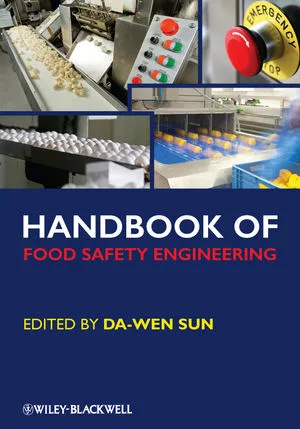
    Handbook of Food Safety Engineering

  • Food-Forensics-3D.jpg

    Food Forensics Handbook Practice, Instrumentation, Case Studies

  • 9781498721776.jpg

    Handbook of Food Processing: Food Safety, Quality, and Manufacturing Processes

See More Products

Events

View AllSubmit An Event
  • May 1, 2025

    Avoiding Sanitation Pitfalls: Challenges and Opportunities for Your Environmental Monitoring Program

    On Demand: During this webinar, attendees will learn environmental sanitation pitfalls to avoid, and how to ensure biological safety inside your plant
View AllSubmit An Event

Related Directories

  • CDG Environmental

    CDG Solution 3000TM is a ready-to-use liquid chlorine dioxide product designed to control microorganisms over a wide spectrum of applications. Compared to traditional anti-microbials, CDG Solution 3000TM offers ease of application, safety in handling, and superior effectiveness. CDG Solution 3000 is a patented, EPA approved hard-surface disinfectant.
×

Never miss the latest news and trends driving the food safety industry

eNewsletter | Website | eMagazine

JOIN TODAY!
  • RESOURCES
    • Advertise
    • Contact Us
    • Directories
    • Store
    • Want More
  • SIGN UP TODAY
    • Create Account
    • eMagazine
    • eNewsletter
    • Customer Service
    • Manage Preferences
  • SERVICES
    • Marketing Services
    • Reprints
    • Market Research
    • List Rental
    • Survey/Respondent Access
  • STAY CONNECTED
    • LinkedIn
    • Facebook
    • Instagram
    • X (Twitter)
  • PRIVACY
    • PRIVACY POLICY
    • TERMS & CONDITIONS
    • DO NOT SELL MY PERSONAL INFORMATION
    • PRIVACY REQUEST
    • ACCESSIBILITY

Copyright ©2025. All Rights Reserved BNP Media.

Design, CMS, Hosting & Web Development :: ePublishing