Conquering Food Safety Challenges for Plant-Based Ingredients
Ingredients in plant-based food products introduce unique challenges for food safety
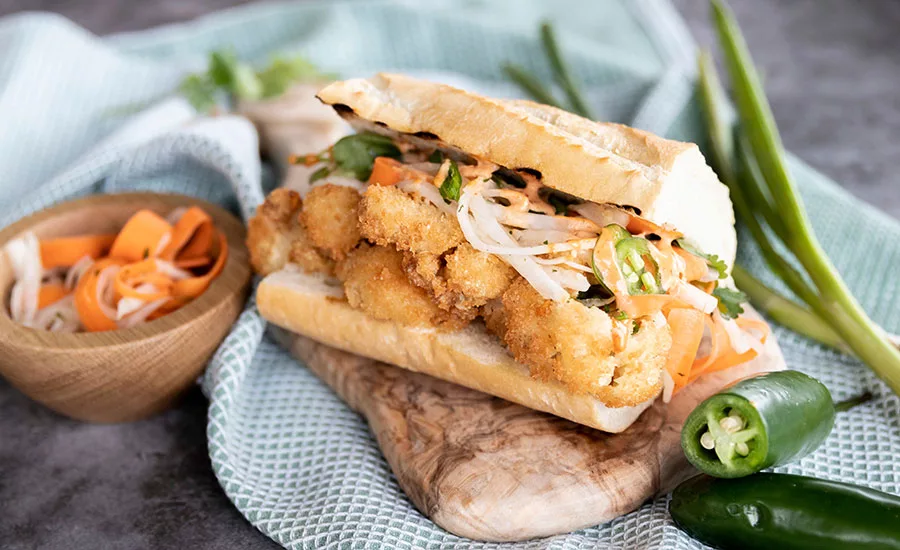
Plant-based foods and beverages have experienced explosive growth over the last few years and show no signs of slowing down. But what is it that’s driving consumer uptake of these products? In North America, according to Kerry’s plant-based consumer study conducted last year, health and wellness concerns are propelling the phenomenal growth, while in the rest of the world sustainability is a top driver. Earlier this year, Kerry completed research across all product categories that showed that more than half of consumers are concerned about the safety of the plant-based meat and dairy alternatives they purchase.
The question is, exactly how worried is the public about the safety of plant-based products?
To help separate fact from market anecdotes, earlier this year Kerry conducted research in North America with a panel of 1,000 individuals to understand consumer perceptions around food safety. First, the study confirmed what many already know: The top two items of concern for at-home consumption are fresh and processed animal-based meats.
However, one surprising finding was that third spot was held by plant-based dairy, a category that includes plant-based cheeses and yogurts (but not nondairy milk). Right behind in fourth spot were plant-based meat alternatives, with 49 percent of consumers expressing some level of worry. Interestingly, this even outpaces the unease about the safety of traditional foods such as frozen chicken, fresh milk, and snack dips (all at 43%). More than half (54%) of consumers surveyed feel that plant-based food safety issues are of concern.
One explanation for these results is that people consuming plant-based meats today are like everyone else: They’re looking for convenience that both fits into their lives and provides a benefit. They want to be able to treat plant-based as they’ve always handled animal meats—that is, being able to expect the same shelf life and recognize when there may be a problem.
Another reason: Consumers don’t fully understand plant-based meats and dairy, and they don’t give them a free pass just because there’s a bit of a feel-good factor. As proof, the study revealed that more than 60 percent read a product’s ingredient statement and nutritional panel. These products generally have longer ingredient lists, so there’s value in developing cleaner, shorter labels with fewer and more familiar-sounding ingredients. Quite simply, “chemical-sounding” names—those seen on consumer “no-no” lists—are not aligned with consumer drivers in the plant-based space, meaning that food producers are formulating without them and seeking preservation processes or clean label ingredient replacements to maintain safety and shelf life.
In the shift to plant-based, a combination of education and consumer-friendly labeling can help ease the concerns of consumers. This is a trust piece, whereby the consumer can read a list of ingredients, experience a level of familiarity, and feel confident in making the purchase decision.
Looking for quick answers on food safety topics?
Try Ask FSM, our new smart AI search tool.
Ask FSM →
Food Safety Risks in Animal Protein and Plant-Based Meat Are Similar
Kerry’s research unveiled a blurring of consumer understanding of what constitutes a food safety risk. In the U.S., consumer experience of spoilage/quality issues reflected in appearance changes or unpleasant odors is, thankfully, more common than illness through food contamination or safety issues. However, many consumers equate the two, and this seems to influence their concerns about food safety within a product category just as much as headlines about recalls. Now, more than ever, it’s paramount to make sure that plant-based foods are fully protected, especially in terms of quality—that is, a poor-quality taste experience can be perceived as a safety risk by consumers.
When it comes to determining the shelf life of goods, product developers need to understand the spoilage risks related to microbial growth. Spoilage can be broken down into two distinct categories: (1) food pathogens—bacteria that will make us sick (and often have no associated taste or smell to aid consumer detection); and (2) food spoilage microorganisms—which will simply make the food organoleptically (i.e., as relates to taste, color, odor, and mouthfeel) unappetizing. Good examples of the latter include the mold growing on your bread or cheese.
In addition, just because an intervention can control one category does not mean the other category is also resolved. Since meat- and plant-based products have high moisture content and an almost neutral pH, both make a great growing environment for bacteria; therefore, we should not be surprised that the risks are similar in both categories. That is, although technically there are more spoilage factors in plant-based meat than in animal protein, a comparison of the microbial differences between the two reveals more similarities than differences—good news given that we already have a wealth of experience preserving and protecting animal meat products.
Spoilage Risks Are Higher Due to Diversity of Substrates and Raw Materials
The primary sources of microbial risk in plant-based meat come from raw materials and factors that act during the manufacturing process itself. You may be surprised to learn that animal and plant protein face identical risks from pathogens—Listeria, Salmonella, etc. Due to diversity of substrates and raw materials in plant-based meat, spoilage challenges are often higher than in animal protein (e.g., yeast, mold, and lactic acid bacteria). Thus, for manufacturers, targeting spoilage—the main limiting factor in the shelf life of plant-based alternatives—can both reduce food waste and protect brand quality.
In the case of Listeria, challenge studies show that pathogen control in plant-based meat is relatively straightforward and highly controllable through the use of ingredients already employed in the animal-based meat space. In short, the proven vinegar-based antimicrobials used effectively with animal protein hold promise to extend Listeria control for longer in both traditional and plant-based products, potentially more than doubling shelf life. Effectively, then, with the right steps and processes in place, plant-based food safety issues should not actually be of increased concern.
A Systems Approach Is Essential for Food Protection
Ensuring there are no food safety gaps in formulation or consumer handling is key to consumer health and brand protection. Since we already know that spoilage/quality issues are often perceived by consumers as safety risks, these should not be taken lightly. It’s also vital to note that adding a preservative ingredient alone does not guarantee optimum shelf life and food safety performance. What’s required is optimizing formulations using a variety of solutions that deliver a cumulative effect on food safety and shelf life. Such optimization decreases the microbial growth that works against shelf life and food safety.
Given this, addressing the full range of objectives involved in food protection requires an integrated, systematic, and scientific approach, and it’s critical to leverage complementary taste and nutrition technologies to deliver solutions able to meet precise needs (see “Integrated Approach to Plant-Based Food Protection and Preservation”). Having access to a wide variety of processing and ingredients systems is also essential since, unfortunately, there’s no one-size-fits-all solution.
On the positive side, these food safety and spoilage solutions can be integrated at any number of stages in the product formulation process. They can be built directly into ready-to-use specialty protein ingredients, for instance, or integrated into the flavor-addition step using natural flavorings/seasonings or masking blends, reducing operational steps. They can also be applied as a single, functional liquid or dry component, or added separately in a multi-ingredient system targeting additive effects and functional benefits. These are then applied by highly experienced product application specialists to address specific goals for each unique food product.
Target objectives for a systematic process include the following:
- Keeping foods and beverages safe for the duration of shelf life
- Extending shelf life whenever possible with a focus on protecting quality and reducing food waste
- Differentiating brands by delivering cleaner labels that allow for positive claims through showcasing simple ingredient declarations
- Enhancing taste
- Maintaining quality and consistency
For instance, if a manufacturer has a product that’s frozen and is looking to move into the refrigerated space or is working on developing a new refrigerated product for the market, it’s recommended that product development follow an integrated approach. The first step is to identify the item’s specific challenges and goals. This starts with deciding what the application is and then considering how it would be processed. The developer then needs to identify its shelf-life goals, define the regulations applicable in the geographic regions where the product will be sold, and consider if there are certain desirable or “no-no” ingredients to consider. This information will feed into product cost targets.
Once these initial goals and targets are in place, technical considerations come to the fore; this is the best time to begin engaging with an experienced food protection ingredient supplier. At this stage, it’s important to perform the biological risk assessment related to the formulation, processing, and packaging of the new plant-based product and identify what data will be used by the supplier to determine the ingredients in their portfolio that would ensure success. Once these solutions have been identified, a range of tests will be performed to determine whether the success criteria have been met.
A Microbial Challenge Study Is an Important Step
In most cases, the critical step will be a microbial challenge study to ensure the formulation will keep a product safe in the event of contamination. One key question to deliberate: Can this be done in-house or will a third-party study be needed? If the latter, does your ingredient supplier have the capability to help in the process? Ultimately, ahead of any product launch, you’ll want to validate your solution with a production trial, as there’s a diverse range of spoilage conditions that will undoubtedly be introduced into the product within your facility. A trial at production scale is the only true way to test out the performance of any food safety/spoilage solution.
These solutions can be combinations that have different modes of action on spoilage or pathogenic microbials. For instance, solutions could be combined that are made from diverse actions (such as fermentation) or from plants. A combination of vinegar with plant extracts might be most effective, or peptide-based or organic acid-based compounds could be a more winning strategy. The key idea is that you’re promoting an action in two ways: something that can have a strong impact on pathogens in combination with another factor. Typically—since pairing often provides a better impact on sensory and nutritional qualities than a strong dose of any one single ingredient—these steps can be carried out using lower dosages. The goal is to precipitate the desired impact on mold, yeast, and other spoilage microorganisms. In short, these additions are integrated in such a way as to complement each other, helping protect and extend shelf life. Once solutions are identified, manufacturers can move forward with full confidence.
Is Food Safety in Plant-Based Meat a Topic We Will Continue to Hear About?
The market for plant-based products will only see a continued surge in ambitious plant-protein foods, all competing vigorously for brand loyalty. We know that achieving optimum shelf life in plant-based meat using consumer-friendly ingredients is a more complex problem than it is in animal-based meat products. While spoilage doesn’t pose the same consumer health risk or threat of widespread recall, the simple perception of unresolved quality issues as “safety risks” will stick in consumers’ minds, potentially damaging brand loyalty and, ultimately, a business’s bottom line.
For manufacturers seeking to launch novel products into an increasingly discerning public marketplace, using ingredients from nature—backed by science—means a vital extra layer of protection in terms of the mission-critical deliverables: taste, nutrition, and appeal; flavor over shelf life; sodium reduction (a common challenge in the plant-based space); and ensuring “craveability” (think plant-based burger). Engaging the expertise of key partners can provide the pivotal advantage, whether the focus is on product appeal (e.g., flavor enhancement or access to no- or low-sodium preservation solutions), addressing global and regional expansion challenges through a trustworthy global supply chain, ensuring unimpeachable regulatory compliance, or all three (as is the case for many companies). The best—perhaps the only—way forward is an integrated, systematic, science-backed approach.
Bert de Vegt, M.Sc., M.B.A., is the global vice president for Kerry’s Food Protection & Preservation business. Kerry Taste & Nutrition offers an extensive array of food protection and preservation ingredients and expertise for food and beverage product development and manufacture. Visit kerry.com for more information.