Food Safety
search
Ask Food Safety AI
cart
facebook twitter linkedin
  • Sign In
  • Create Account
  • Sign Out
  • My Account
Food Safety
  • NEWS
    • Latest News
    • White Papers
  • PRODUCTS
  • TOPICS
    • Contamination Control
    • Food Types
    • Management
    • Process Control
    • Regulatory
    • Sanitation
    • Supply Chain
    • Testing and Analysis
  • PODCAST
  • EXCLUSIVES
    • Food Safety Five Newsreel
    • eBooks
    • FSM Distinguished Service Award
    • Interactive Product Spotlights
    • Videos
  • BUYER'S GUIDE
  • MORE
    • ENEWSLETTER >
      • Archive Issues
      • Subscribe to eNews
    • Store
    • Sponsor Insights
    • ASK FSM AI
  • WEBINARS
  • FOOD SAFETY SUMMIT
  • EMAG
    • eMagazine
    • Archive Issues
    • Editorial Advisory Board
    • Contact
    • Advertise
  • SIGN UP!
Testing & AnalysisMicrobiological

High-throughput PCR Provides Real-time Solutions

October 1, 2010

Foodborne bacterial contamination is estimated to cause about 76 million illnesses per year in the United States alone. In a report from the United States Department of Agriculture Economic Research Service, foodborne illnesses account for about 1 of every 100 hospitalizations and 1 of every 500 deaths in the US. The most common bacterial pathogens attributed to outbreaks are Salmonella, Listeria monocytogenes, Escherichia coli O157:H7 and Campylobacter. According to a Centers for Disease Control and Prevention report tracking foodborne illnesses in 2007, of all the outbreaks attributed to a single food, 17% were from poultry, 16% from beef and 14% from leafy vegetables. Other food commodities have been plagued by massive recalls due to contamination including peanut butter, tomatoes, spices and, more recently, eggs.

The iQ-CheckTM real-time polymerase chain reaction (PCR) system from Bio-Rad Laboratories was designed specifically with the needs of users in mind with kits available for Salmonella, L. monocytogenes, Listeria spp., E. coli O157:H7 and Campylobacter. The use of highly specific probes and primers results in excellent sensitivity and specificity, validated by AOAC. With a high-throughput extraction, all pathogens can be tested at the same time, making life for the laboratory a little bit easier. Two instrument platforms are available for all sized labs. The 96-well, 5 color CFX96TM system is designed for high-throughout analysis while the 48-well, 2 color MiniOpticonTM is perfect for smaller labs.

In Need of a Better Method
Chestnut Labs (Springfield, MO) provides clients with food safety testing, auditing, training, consultation and research including test kit validations and shelf-life studies. In operation for more than 20 years, the lab is recognized for its superior customer service and ability to be a value-added business partner for its clients. Chestnut Labs operates under the ISO 17025 principles and is committed to providing clients with a commitment to quality and constant improvement.

Michael Clark, laboratory director at Chestnut Labs, mentions that cost and turnaround time are very important to their customers. The company needed a fast and dependable real-time PCR platform where multiple pathogens could be tested simultaneously. The laboratory needed a protocol that was user friendly and capable of high-throughput analysis to eliminate the usual bottleneck areas common of real-time PCR tests. The iQ-Check method met those needs. With the combination of the high-throughput extraction protocol, the CFX96 real-time PCR detection system and the CFX Manager Software, Chestnut Labs was able to provide their customers with reliable, next-day results without passing on an additional cost.

When asked what the advantages of this product were for their use, Clark added, “The use of a deep-well microplate allows for the high-throughput processing of 96 samples at a time. The deep-well protocol has eliminated the multiple heating, shaking and lysis steps associated with most commercial PCR kits by consolidating the steps into one. Using the deep-well plate protocol allows multichannel pipetting for most steps of PCR preparation, saving time and reducing cross-contamination. The software is simple to use and interpret, and the option to email results with an attached data file helps reduce time. Faster PCR times increase productivity. The use of non-proprietary enrichment broths helps us reduce the overall cost per sample.” Some additional benefits of the system include no special sample preparation or post enrichment re-grow step, the inclusion of an internal control to validate the PCR runs as well as a small footprint that does not take up much bench space.

Standard methods, such as the U.S. Food and Drug Administration’s Bacteriological Analytical Manual (BAM) testing method, which involves a pre-enrichment step followed by a second selective enrichment step and plating (which can include secondary plating), takes 72–96 hours (3–4 days), which depends on the food sample being analyzed and must be followed by biochemical/serological confirmation, increasing the time to results to up to 5 days minimum. The iQ-Check Listeria spp. and L. monocytogenes kits only require a 24 hour enrichment. The Salmonella test requires a 20 hour enrichment, and the E. coli O157:H7 test can be processed after an 8 hour enrichment.

Chestnut Labs tests for all significant food pathogens and indicator organisms to provide the highest service for their clients. For them, Bio-Rad’s iQ-Check kits have increased productivity through faster and simpler sample preparation, faster PCR run times and the capability of running multiple pathogens at the same time. Their customers also benefit by receiving results faster, which reduces their product hold time.

foodscience.bio-rad.com


Author(s): Bio-Rad

Looking for quick answers on food safety topics?
Try Ask FSM, our new smart AI search tool.
Ask FSM →


Share This Story

Recommended Content

JOIN TODAY
to unlock your recommendations.

Already have an account? Sign In

  • people holding baby chicks

    Serovar Differences Matter: Utility of Deep Serotyping in Broiler Production and Processing

    This article discusses the significance of Salmonella in...
    Food Type
    By: Nikki Shariat Ph.D.
  • woman washing hands

    Building a Culture of Hygiene in the Food Processing Plant

    Everyone entering a food processing facility needs to...
    Food Prep/Handling
    By: Richard F. Stier, M.S.
  • graphical representation of earth over dirt

    Climate Change and Emerging Risks to Food Safety: Building Climate Resilience

    This article examines the multifaceted threats to food...
    Best Practices
    By: Maria Cristina Tirado Ph.D., D.V.M. and Shamini Albert Raj M.A.
Manage My Account
  • eMagazine Subscription
  • Subscribe to eNewsletter
  • Manage My Preferences
  • Website Registration
  • Subscription Customer Service

More Videos

Sponsored Content

Sponsored Content is a special paid section where industry companies provide high quality, objective, non-commercial content around topics of interest to the Food Safety Magazine audience. All Sponsored Content is supplied by the advertising company and any opinions expressed in this article are those of the author and not necessarily reflect the views of Food Safety Magazine or its parent company, BNP Media. Interested in participating in our Sponsored Content section? Contact your local rep!

close
  • Salmonella bacteria
    Sponsored byThermoFisher

    Food Microbiology Testing Methods: Salmonella species

  • a diagram explaining indicator organisms
    Sponsored byHygiena

    How Proactive Listeria Testing Helps Prevent Six- and Seven-Figure Recalls

  • woman grocery shopping
    Sponsored byCorbion

    Designing Safety Into Every Bite: Proactive Risk Mitigation for Refrigerated Foods

Popular Stories

NRTE breaded stuffed chicken

USDA Indefinitely Delays Enforcement of Salmonella as Adulterant in Raw Breaded, Stuffed Chicken

non-conforming product

How to Handle Non-Conforming Product

spoonfuls of food ingredients

FDA’s Developing Rule to Tighten GRAS Oversight Moves to White House

Events

December 11, 2025

How to Develop and Implement an Effective Food Defense Strategy

Live: December 11, 2025 at 2:00 pm EDT: From this webinar, attendees will learn common areas where companies encounter challenges in their food defense strategies and how to address them.

May 11, 2026

The Food Safety Summit

Stay informed on the latest food safety trends, innovations, emerging challenges, and expert analysis. Leave the Summit with actionable insights ready to drive measurable improvements in your organization. Do not miss this opportunity to learn from experts about contamination control, food safety culture, regulations, sanitation, supply chain traceability, and so much more.

View All

Products

Global Food Safety Microbial Interventions and Molecular Advancements

Global Food Safety Microbial Interventions and Molecular Advancements

See More Products

Related Articles

  • Real-Time PCR Test Kit Provides Faster Time to Results

    See More
  • Real-Time PCR Provides Product Recall Prevention

    See More
  • Real-Time PCR Test Speeds Time to Results

    See More

Related Products

See More Products
  • 1118396308.jpg

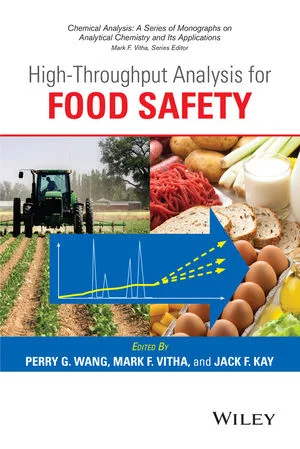
    High Throughput Analysis for Food Safety

  • Food-Forensics-3D.jpg

    Food Forensics Handbook Practice, Instrumentation, Case Studies

  • 9781138198463.jpg

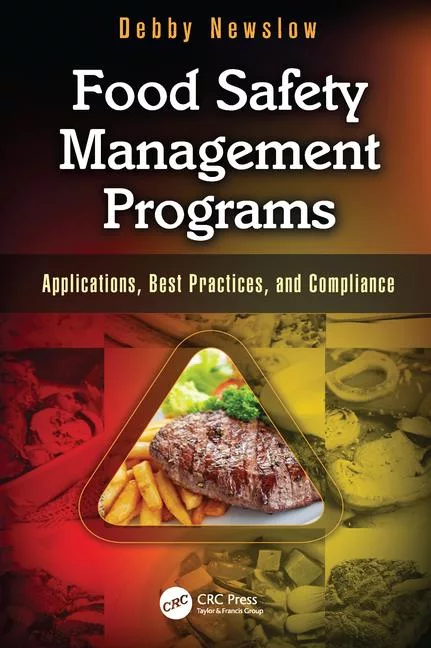
    Food Safety Management Programs: Applications, Best Practices, and Compliance

See More Products

Events

View AllSubmit An Event
  • December 4, 2025

    Beyond Detection: How Integrated PCR Diagnostics Strengthen Food Safety in RTE Manufacturing

    On Demand: From this webinar, attendees will learn best practices for prevention of FM contamination at the corporate and plant levels.
View AllSubmit An Event

Related Directories

  • Pureline Solutions

    We are the experts in the manufacture, generation, and application of chlorine dioxide. PureLine specializes in designing and implementing chlorine dioxide solutions utilizing our broad line of proved chlorine dioxide generators and pre-cursor chemicals. In locations across the nation and around the world, PureLine’s patented and proven high purity chlorine dioxide generation equipment is enhancing the safety, reliability, efficiency, and cost-effectiveness of the water treatment process.
  • Bio-Rad Laboratories

    Bio-Rad produces tests for food, water and cannabis safety, including real-time PCR test kits for detection of key pathogens, culture media for nutritive enrichment and RAPID chromogenic media with easy colony identification for detection of pathogens and enumeration of quality indicators
×

Never miss the latest news and trends driving the food safety industry

eNewsletter | Website | eMagazine

JOIN TODAY!
  • RESOURCES
    • Advertise
    • Contact Us
    • Directories
    • Store
    • Want More
  • SIGN UP TODAY
    • Create Account
    • eMagazine
    • eNewsletter
    • Customer Service
    • Manage Preferences
  • SERVICES
    • Marketing Services
    • Reprints
    • Market Research
    • List Rental
    • Survey/Respondent Access
  • STAY CONNECTED
    • LinkedIn
    • Facebook
    • Instagram
    • X (Twitter)
  • PRIVACY
    • PRIVACY POLICY
    • TERMS & CONDITIONS
    • DO NOT SELL MY PERSONAL INFORMATION
    • PRIVACY REQUEST
    • ACCESSIBILITY

Copyright ©2025. All Rights Reserved BNP Media.

Design, CMS, Hosting & Web Development :: ePublishing