Food Safety
search
Ask Food Safety AI
cart
facebook twitter linkedin
  • Sign In
  • Create Account
  • Sign Out
  • My Account
Food Safety
  • NEWS
    • Latest News
    • White Papers
  • PRODUCTS
  • TOPICS
    • Contamination Control
    • Food Types
    • Management
    • Process Control
    • Regulatory
    • Sanitation
    • Supply Chain
    • Testing and Analysis
  • PODCAST
  • EXCLUSIVES
    • Food Safety Five Newsreel
    • eBooks
    • FSM Distinguished Service Award
    • Interactive Product Spotlights
    • Videos
  • BUYER'S GUIDE
  • MORE
    • ENEWSLETTER >
      • Archive Issues
      • Subscribe to eNews
    • Store
    • Sponsor Insights
    • ASK FSM AI
  • WEBINARS
  • FOOD SAFETY SUMMIT
  • EMAG
    • eMagazine
    • Archive Issues
    • Editorial Advisory Board
    • Contact
    • Advertise
  • SIGN UP!

How to select the best heat exchanger for food pasteurization

There are various different types of pasteurization based on different combinations of heat and time.

By Matt Hale
HRS Heat Exchangers Matt Hale
June 19, 2018

The texture and viscosity of chilled food is not only an important quality parameter, but it also influences how it behaves during production and processing. Therefore, it should also influence the choice of equipment used in the manufacturing process. This is particularly true when this process has the potential to change the viscosity of the product itself, as can be the case with pasteurization or cooking.


Here’s a look at some of the key questions to ask when considering heat exchangers for food pasteurization.

Why pasteurize food?

Pasteurization is a heat treatment that reduces the presence of potentially harmful bacteria in certain foods to make them safe to eat and/or slow down spoilage and extend shelf life. Pasteurization differs from sterilization in that it only aims to reduce the number of bacterial pathogens to a level where they are very unlikely to cause disease before the specified use-by-date and potentially extend the shelf life of the product in question. For alkaline foods, it will typically extend shelf life by several days, while acidic foods (with a pH above 4.5) can often have their shelf life increased by months. In contrast, sterilization aims to kill all pathogens present in the food or drink to prevent spoilage for long periods.

What types of food are typically pasteurized?

Examples of foods typically pasteurized include egg products such as liquid and dried eggs, milk and dairy products, fruit juices and table and cooking sauces. Meat such as beef is also often surface pasteurized with steam, while some fresh produce, poultry and spices are treated with irradiation pasteurization.

What different types of pasteurization are there?

There are various different types of pasteurization based on different combinations of heat and time. Two of the most common are high-temperature, short-time (HTST), also known as flash pasteurization, which typically treats at high temperatures for between 3-15 seconds; and extended shelf life (ESL). Low-temperature, long-time (LTLT) treatments have a greater effect on nutrient and quality composition. Different techniques may be used for LTLT pasteurization, including heat exchangers and irradiation.

Looking for quick answers on food safety topics?
Try Ask FSM, our new smart AI search tool.
Ask FSM →

What is the “D-value” and why is it important?

When determining the factors required for effective pasteurization, there are two key variables to consider:

  1. The heat required to raise the temperature of the foodstuff by the right amount to destroy sufficient pathogens without changing other characteristics. This is known as the sensible heat.
  2. The timing (or extent) of heat treatment required to stabilize the foodstuff based on the most resistant enzyme or micro-organism present, the so-called “D value.”

Other elements that characterize the quality of food, including flavors, colors and vitamins also have their own D values, and it is often the case that using the HTST method will best preserve the quality of the foodstuff, but this is not always true.

Why are texture and viscosity important?

Viscosity is a measure of texture, which is itself one of the key quality characteristics of food and drink. As viscosity is a key component of the texture of food and drink, processing operations should not have an adverse effect on it. Factors such as pumping, heating, cooling and passing through pipe work all have the potential to affect viscosity, with the exact effects depending both on the liquid itself and the way it is handled.

How do you measure viscosity?

Viscosity is a measure of a substance’s resistance to motion under an applied force based on the amount of force required to remove one layer in relation to another (shear stress) and the change in speed of the layers relative to each other (the shear rate). It is measured in units called centipoise (cP) with one cP being equal to 1 mPa sec-1 (millipascal per second).

Most fluids are classified as being either Newtonian or non-Newtonian, based on the way their viscosity changes according to shear stress and temperature. Newtonian fluids have the same viscosity irrespective of changes or shear stress, the most common example of this is water. Non-Newtonian fluids (which are further divided into five categories) have viscosities that fluctuate depending on the shear rate applied.

Why does this matter?

Dairy products have a wide range of viscosity, from liquid milk, which has a value of 2.0 cP at 64°F, through 45% fat cream (48 cP) to yogurt (152 cP at 104°F) and cheese (30,000 cP). Consequently, while simple plate heat exchangers may be the most common solution for pasteurizing milk in the industry, adopting a “one-size-fits-all” approach may not be the best option for viscous products such as cream.

Using tubular heat exchangers can provide a number of benefits for viscous dairy products. The main advantage is the gentle handling that maintains the key viscosity characteristics of the product such as texture and mouthfeel. But, there are many other benefits from using tubular heat exchangers in the dairy sector. Innovations such as corrugated or scraped tubes help maintain flow and reduce fouling, improving cleaning-in-place procedures and reducing maintenance. Consequently, tubular heat exchangers feature improved service life, which is an important consideration when calculating return on investment.

A practical illustration

In a real-world example, a U.S. food company experienced a problem with the viscosity of pizza sauce (a non-Newtonian fluid) being manufactured for a restaurant chain. After cooking, the sauce was pumped through a multi-tube heat exchanger to cool it. However, the system pressure was so great that the generated shear stress on the sauce permanently changed its viscosity, making it thinner than it should be. In the worst cases, the sauce was so thin that that it would not stay on the pizza base when used in the restaurants.

The original heat exchanger being used passed the sauce though a series of half-inch and one-inch tubes, which generated high pressure. It was replaced with a different type of heat exchanger, which uses seven 3-inch tubes resolved the pressure issues. In addition, the new unit has an oscillating cleaning system, which is gentler than a rotary scraped surface heat exchanger, further helping to maintain the quality of the sauce.

Whatever foodstuff you are looking to heat or cool, understanding its viscosity properties is the first step to specifying a system that will not result in adverse effects on the quality of your product and choosing a heat exchanger of a suitable type and design.


This article was originally posted on www.refrigeratedfrozenfood.com.
KEYWORDS: heat exchanger heating and cooling solutions high pressure processing (HPP) high-pressure pasteurization pasteurization refrigeration equipment

Share This Story

Matt Hale is international sales and marketing director for HRS Heat Exchangers, Marietta, Ga.

Recommended Content

JOIN TODAY
to unlock your recommendations.

Already have an account? Sign In

  • people holding baby chicks

    Serovar Differences Matter: Utility of Deep Serotyping in Broiler Production and Processing

    This article discusses the significance of Salmonella in...
    Contamination Control
    By: Nikki Shariat Ph.D.
  • woman washing hands

    Building a Culture of Hygiene in the Food Processing Plant

    Everyone entering a food processing facility needs to...
    Management
    By: Richard F. Stier, M.S.
  • graphical representation of earth over dirt

    Climate Change and Emerging Risks to Food Safety: Building Climate Resilience

    This article examines the multifaceted threats to food...
    Contamination Control
    By: Maria Cristina Tirado Ph.D., D.V.M. and Shamini Albert Raj M.A.
Manage My Account
  • eMagazine Subscription
  • Subscribe to eNewsletter
  • Manage My Preferences
  • Website Registration
  • Subscription Customer Service

More Videos

Sponsored Content

Sponsored Content is a special paid section where industry companies provide high quality, objective, non-commercial content around topics of interest to the Food Safety Magazine audience. All Sponsored Content is supplied by the advertising company and any opinions expressed in this article are those of the author and not necessarily reflect the views of Food Safety Magazine or its parent company, BNP Media. Interested in participating in our Sponsored Content section? Contact your local rep!

close
  • Salmonella bacteria
    Sponsored byThermoFisher

    Food Microbiology Testing Methods: Salmonella species

  • a diagram explaining indicator organisms
    Sponsored byHygiena

    How Proactive Listeria Testing Helps Prevent Six- and Seven-Figure Recalls

  • woman grocery shopping
    Sponsored byCorbion

    Designing Safety Into Every Bite: Proactive Risk Mitigation for Refrigerated Foods

Popular Stories

NRTE breaded stuffed chicken

USDA Indefinitely Delays Enforcement of Salmonella as Adulterant in Raw Breaded, Stuffed Chicken

non-conforming product

How to Handle Non-Conforming Product

spoonfuls of food ingredients

FDA’s Developing Rule to Tighten GRAS Oversight Moves to White House

Events

December 11, 2025

How to Develop and Implement an Effective Food Defense Strategy

Live: December 11, 2025 at 2:00 pm EDT: From this webinar, attendees will learn common areas where companies encounter challenges in their food defense strategies and how to address them.

May 11, 2026

The Food Safety Summit

Stay informed on the latest food safety trends, innovations, emerging challenges, and expert analysis. Leave the Summit with actionable insights ready to drive measurable improvements in your organization. Do not miss this opportunity to learn from experts about contamination control, food safety culture, regulations, sanitation, supply chain traceability, and so much more.

View All

Products

Global Food Safety Microbial Interventions and Molecular Advancements

Global Food Safety Microbial Interventions and Molecular Advancements

See More Products

Related Articles

  • cannabis packaging

    How to select the right packaging for your cannabis product

    See More
  • SaltWorks®, Inc. Issues Quality Checklists for Commercial Buyers to Select the Best Quality Himalayan Pink Salt

    See More
  • We R Food Safety! Consultant Molly Linden

    [Video] How to combat heat resistant bacteria

    See More

Related Products

See More Products
  • 1119053595.jpg

    Food Safety for the 21st Century: Managing HACCP and Food Safety throughout the Global Supply Chain, 2E

  • 9781138198463.jpg

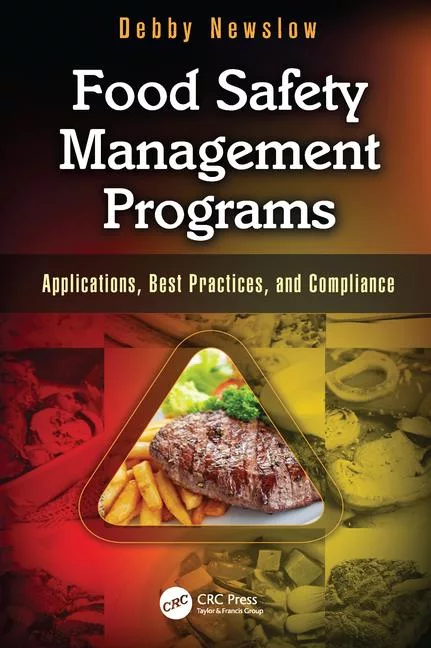
    Food Safety Management Programs: Applications, Best Practices, and Compliance

  • 1119258073.jpg

    FSMA and Food Safety Systems: Understanding and Implementing the Rules

See More Products

Related Directories

  • Heat and Control Inc.

    Heat and Control®, a world-leading equipment manufacturer, offers the latest technology and highest quality equipment for processing, coating, seasoning, conveying, weighing, packaging, and inspection systems and develops innovative solutions for production challenges. With a global team of engineers, technicians, tradespeople, and support teams, they help manufacturers to achieve production goals.
  • Pick Heaters Inc.

    Throughout the food plant, from process heating to plant sanitation, Pick Steam Injection Heaters provide instant, unlimited hot water at a precise temperature. When compared to indirect heat exchangers, Pick can cut energy costs. Higher processing efficiency, lower energy costs and increased safety are but a few of the benefits.
  • Best Sanitizers Inc.

    Since 1995, Best Sanitizers, Inc. has supplied the Food Processing and Healthcare industries with high-quality products and support. Our stringent practices and policies ensure reliable performance, giving you confidence in every use. We offer hand soaps, hand sanitizers, surface sanitizers, and industrial cleaners. As the first company to achieve both an E3 rating for an alcohol-based hand sanitizer and a D2 rating for an alcohol/quat-based surface sanitizer, we continue to innovate and provide effective hygiene and sanitation solutions.
×

Never miss the latest news and trends driving the food safety industry

eNewsletter | Website | eMagazine

JOIN TODAY!
  • RESOURCES
    • Advertise
    • Contact Us
    • Directories
    • Store
    • Want More
  • SIGN UP TODAY
    • Create Account
    • eMagazine
    • eNewsletter
    • Customer Service
    • Manage Preferences
  • SERVICES
    • Marketing Services
    • Reprints
    • Market Research
    • List Rental
    • Survey/Respondent Access
  • STAY CONNECTED
    • LinkedIn
    • Facebook
    • Instagram
    • X (Twitter)
  • PRIVACY
    • PRIVACY POLICY
    • TERMS & CONDITIONS
    • DO NOT SELL MY PERSONAL INFORMATION
    • PRIVACY REQUEST
    • ACCESSIBILITY

Copyright ©2025. All Rights Reserved BNP Media.

Design, CMS, Hosting & Web Development :: ePublishing