Food Safety
search
Ask Food Safety AI
cart
facebook twitter linkedin instagram youtube
  • Sign In
  • Create Account
  • Sign Out
  • My Account
Food Safety
  • NEWS
    • Latest News
    • Sponsored Insights
    • Sponsored White Papers
  • PRODUCTS
  • TOPICS
    • Contamination Control
    • Food Types
    • Management
    • Process Control
    • Regulatory
    • Sanitation
    • Supply Chain
    • Testing and Analysis
  • PODCAST
  • EXCLUSIVES
    • Food Safety Five Newsreel
    • eBooks
    • FSM Distinguished Service Award
    • Interactive Product Spotlights
    • Videos
  • BUYER'S GUIDE
  • MORE
    • NEWSLETTERS >
      • Archive Issues
      • Subscribe to eNews
    • Store
    • ASK FSM AI
  • WEBINARS
  • FOOD SAFETY SUMMIT
  • EMAG
    • eMagazine
    • Archive Issues
    • Editorial Advisory Board
    • Contact
    • Advertise
  • SIGN UP!

[Video] How to combat heat resistant bacteria

January 25, 2018

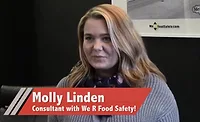
Editor-in-chief Andy Hanacek spoke with We R Food Safety! consultant Molly Linden about heat resistant bacteria and how producers can work to reduce instances of heat resistant bacteria while putting in procedures to deal with it if it occurs.  

Andy Hanacek: As an industry, what can we do to change the approach? We kind of got into it a little bit here, but give me a little bit more on what the industry can do. If Appendix A isn’t addressing that, what should the industry be doing? What’s the next steps?

Molly Linden: First of all, it’s very important for producers to know exactly what causes heat resistance, how they can avoid it themselves, and starting at the beginning of the process and working their way up to cooking in order to ensure that bacterial loads are as small as they can be. This starts when the product is raw with safe handling procedures, sanitation, both of the raw products and the food contact surfaces and being able to go through each one of your steps and make sure that bacterial loads are much less than you want them to be, so that when you get to cooking, there’s less of a chance that you’re going to be getting those heat resistant bacteria. In addition to that, it’s also really important that producers have in place procedures in case their cooking process fails, in case power goes out and your cookhouse is set at 80 degrees and it stays there for an extended amount of time and you end up getting heat resistant bacteria or spores or any number of those things. Having procedures set in place in very important to ensure that you can keep those contaminants contained in the facility without contaminating anything else. Lastly, I just have to say that the USDA really needs to put more attention to towards heat resistant bacteria to make sure that we can modify Appendix A and make sure we have enough studies in place to support it, so that we can really show producers how correctly to cook their products so that there is no confusion and really to just pay attention to a topic within the micro community and the food industry to say this is something that needs to be addressed. It’s something that can cause illness in consumers and really just a public safety hazard.

See more videos with We R Food Safety!

This article was originally posted on www.provisioneronline.com.

Looking for quick answers on food safety topics?
Try Ask FSM, our new smart AI search tool.
Ask FSM →


This article was originally posted on www.provisioneronline.com.
KEYWORDS: bacteria

Share This Story

Recommended Content

JOIN TODAY
to unlock your recommendations.

Already have an account? Sign In

  • people holding baby chicks

    Serovar Differences Matter: Utility of Deep Serotyping in Broiler Production and Processing

    This article discusses the significance of Salmonella in...
    Food Type
    By: Nikki Shariat Ph.D.
  • woman washing hands

    Building a Culture of Hygiene in the Food Processing Plant

    Everyone entering a food processing facility needs to...
    Facilities
    By: Richard F. Stier, M.S.
  • graphical representation of earth over dirt

    Climate Change and Emerging Risks to Food Safety: Building Climate Resilience

    This article examines the multifaceted threats to food...
    International
    By: Maria Cristina Tirado Ph.D., D.V.M. and Shamini Albert Raj M.A.
Manage My Account
  • eMagazine Subscription
  • Subscribe to Newsletters
  • Manage My Preferences
  • Website Registration
  • Subscription Customer Service

More Videos

Sponsored Content

Sponsored Content is a special paid section where industry companies provide high quality, objective, non-commercial content around topics of interest to the Food Safety Magazine audience. All Sponsored Content is supplied by the advertising company and any opinions expressed in this article are those of the author and not necessarily reflect the views of Food Safety Magazine or its parent company, BNP Media. Interested in participating in our Sponsored Content section? Contact your local rep!

close
  • Man In Warehouse
    Sponsored byRentokil

    Mitigating Hidden Rodent Risks in Food Facilities

  • an industrial manufacturing or processing facility
    Sponsored bybioMérieux

    Get Ahead of Spoilage in Food Manufacturing with Metagenomics for Preventive Monitoring

  • an automated industrial production line used in a modern food factory
    Sponsored byIFC

    A Formula for Food Processing Pest Management

Popular Stories

iceberg lettuce growing

Cyclospora Outbreak Linked to Taylor Farms Lettuce Ends with Nearly 13,000 Illnesses, Two Deaths

abbott nutrition logo wall plaque

Abbott Nutrition to Pay $385M Settlement for 2022 Infant Formula Shortage, Contamination Incident

employees checking clipboard in food manufacturing facility

Building a HACCP Program: More Than the Seven Principles

allergens ebook

Events

September 22, 2026

From EFSA to Enforcement: Managing the Growing Complexity of EU MRLs

Live: September 22, 2026 at 11:00 am EDT: Attend this webinar to evaluate best practices for monitoring regulatory changes and protecting market access.

September 24, 2026

Benchmarking Foreign Material Contamination in 2026: What the Data Shows

Live: September 24, 2026 at 2:00 pm EDT:  From this webinar, attendees will learn what is driving investment decisions, and the factors FSQA and ops leaders weigh when making the case for new prevention technology.

September 29, 2026

How to Talk to Your Board of Directors About Food Safety

Live: September 29, 2026 at 11:00 am EDT: Attend this webinar to learn how to position food safety as a material enterprise risk with measurable financial, operational, and reputational impacts relevant to Board-level decision-making.

View All

Products

Global Food Safety Microbial Interventions and Molecular Advancements

Global Food Safety Microbial Interventions and Molecular Advancements

See More Products

Related Articles

  • We R Food Safety! Consultant Molly Linden

    [Video] How heat resistant bacteria forms

    See More
  • Pew.png

    Walmart, McDonald’s and Other Food Companies Urge Congress to Fund National Action Plan for Combating Antibiotic Resistant Bacteria

    See More
  • CDC Says Worst Drug-Resistant Bacteria Come from Hospitals, Not Farms

    See More

Related Products

See More Products
  • food-safety-making.jpg

    Food Safety: Making Foods Safe and Free From Pathogens

  • 1119053595.jpg

    Food Safety for the 21st Century: Managing HACCP and Food Safety throughout the Global Supply Chain, 2E

  • 9781032369990 (1).webp

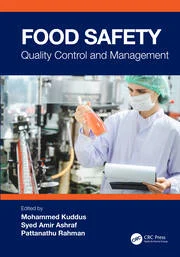
    Food Safety Quality Control and Management

See More Products

Events

View AllSubmit An Event
  • September 29, 2026

    How to Talk to Your Board of Directors About Food Safety

    Live: September 29, 2026 at 11:00 am EDT: Attend this webinar to learn how to position food safety as a material enterprise risk with measurable financial, operational, and reputational impacts relevant to Board-level decision-making.
View AllSubmit An Event

Related Directories

  • Heat and Control Inc.

    Heat and Control®, a world-leading equipment manufacturer, offers the latest technology and highest quality equipment for processing, coating, seasoning, conveying, weighing, packaging, and inspection systems and develops innovative solutions for production challenges. With a global team of engineers, technicians, tradespeople, and support teams, they help manufacturers to achieve production goals.
  • Salus Scientific Inc.

    Providing innovative bacteria enrichment and culture mediums to detect pathogenic, spoilage, or other contaminating bacteria. The Actero™ Enrichment Media benefits are one step enrichment, faster “time-to-results”, and targeted accuracy. Actero™ EZ-Media Bag provides pre-measured and pre-sterilized enrichment media that can be prepared in under 30-minutes. The newest innovation is a true Multiplex enrichment media that simultaneously enriches 2 to 3 pathogenic bacteria in one step. “Always Easy. Always Right.”
  • Palmer Wahl Instruments Inc.

    Providing solutions since 1836, we manufacture custom designed RTD and Thermocouple and sensor assemblies, meters, and probes; precision industrial digital, bimetal, and filled system thermometers; digital pressure gauges; pressure and temperature chart recorders and accessories; thermowells; temperature recording labels; hand-held and fixed infrared thermometers; transducers and transmitters. ISO9001:2015 certified.
×

Never miss the latest news and trends driving the food safety industry

Newsletters | Website | eMagazine

JOIN TODAY!
  • RESOURCES
    • Advertise
    • Contact Us
    • Directories
    • Store
    • Want More
  • SIGN UP TODAY
    • Create Account
    • eMagazine
    • Newsletters
    • Customer Service
    • Manage Preferences
  • SERVICES
    • Marketing Services
    • Reprints
    • Market Research
    • List Rental
    • Survey/Respondent Access
  • STAY CONNECTED
    • LinkedIn
    • Facebook
    • Instagram
    • X (Twitter)
  • PRIVACY
    • PRIVACY POLICY
    • TERMS & CONDITIONS
    • DO NOT SELL MY PERSONAL INFORMATION
    • PRIVACY REQUEST
    • ACCESSIBILITY

Copyright ©2026. All Rights Reserved BNP Media, Inc. and BNP Media II, LLC.

Design, CMS, Hosting & Web Development :: ePublishing