Food Safety
search
Ask Food Safety AI
cart
facebook twitter linkedin
  • Sign In
  • Create Account
  • Sign Out
  • My Account
Food Safety
  • NEWS
    • Latest News
    • White Papers
  • PRODUCTS
  • TOPICS
    • Contamination Control
    • Food Types
    • Management
    • Process Control
    • Regulatory
    • Sanitation
    • Supply Chain
    • Testing and Analysis
  • PODCAST
  • EXCLUSIVES
    • Food Safety Five Newsreel
    • eBooks
    • FSM Distinguished Service Award
    • Interactive Product Spotlights
    • Videos
  • BUYER'S GUIDE
  • MORE
    • ENEWSLETTER >
      • Archive Issues
      • Subscribe to eNews
    • Store
    • Sponsor Insights
    • ASK FSM AI
  • WEBINARS
  • FOOD SAFETY SUMMIT
  • EMAG
    • eMagazine
    • Archive Issues
    • Editorial Advisory Board
    • Contact
    • Advertise
  • SIGN UP!
News

Watchdog Group Blasts EFSA for Experts' Conflicts of Interest

October 24, 2013


Almost 60% of experts sitting on the European Food Safety Authority's (EFSA) panels have direct or indirect links with industries regulated by the agency, according to an independent screening performed by Corporate Europe Observatory (CEO) and freelance journalist Stéphane Horel.

Their report, entitled “Unhappy Meal. The European Food Safety Authority's independence problem,” identifies significant loopholes in EFSA's independence policy. CEO's report also claims that EFSA's new rules for assessing its experts, implemented in 2012 after several conflicts of interest scandals, have failed to improve the situation.

The report's authors warn that this situation casts a severe doubt on the credibility of the scientific output of the key body responsible for food safety at the EU, with the agency issuing recommendations and risk assessments on crucial public health issues such as food additives, packaging, GMOs, contaminants, and pesticides.

The main loophole identified in EFSA's new rules for assessing its experts' interests is that the assessment is too narrow, mainly looking at the panel's specific remit to determine whether there are conflicts of interest. Instead, the report's authors argue, the agency should consider experts' wider conflicts of interest, in line with EFSA's broader mandate to guarantee that its decisions remain independent from the industry it regulates. CEO charges that the agency's current approach enables dozens of experts with multiple commercial interests (such as consultancy contracts and research funding) to be granted full membership on EFSA panels, including a majority of panel chairs and vice-chairs.

Stéphane Horel, the report's primary author, said: “Even without checking for undeclared interests, the number of conflicts of interest in this agency is very worrying. Experts with conflicts of interest dominate all panels but one. We found that the bulk of conflicts are from research funding and private consultancy contracts, but certain crucial institutions for scientists (scientific societies, journals) are also targeted by industry lobbying, and EFSA seems to ignore this.”

The report also asserts that EFSA failed to properly implement its own new rules in several instances, and that there is no visible difference between panels assembled under the new policy and those composed using the old policy.

Martin Pigeon, a researcher and campaigner at Corporate Europe Observatory, said: “Despite indications of a new willingness to tackle the problem, EFSA seems not to have learned from its previous mistakes. There are specific cases the agency was warned about years ago which remain a problem. The system in place is very resource-intensive, yet its flaws prevent it from keeping industry interests at bay. EFSA is also paying the price of EU and national research policy flaws, but it should not use this as an excuse to allow such a situation to persist. It must defend the public interest.”

CEO officials added that the report provides short-, medium- and long-term recommendations that, if implemented, could help design a system that is more resistant to commercial pressures and closer to normal scientific practice.


Author(s): Heidi Parsons

Looking for quick answers on food safety topics? Try Ask FSM, our new smart AI search tool. Ask FSM →

Share This Story

Recommended Content

JOIN TODAY
to unlock your recommendations.

Already have an account? Sign In

  • people holding baby chicks

    Serovar Differences Matter: Utility of Deep Serotyping in Broiler Production and Processing

    This article discusses the significance of Salmonella in...
    Contamination Control
    By: Nikki Shariat Ph.D.
  • woman washing hands

    Building a Culture of Hygiene in the Food Processing Plant

    Everyone entering a food processing facility needs to...
    Training
    By: Richard F. Stier, M.S.
  • graphical representation of earth over dirt

    Climate Change and Emerging Risks to Food Safety: Building Climate Resilience

    This article examines the multifaceted threats to food...
    Risk Assessment
    By: Maria Cristina Tirado Ph.D., D.V.M. and Shamini Albert Raj M.A.
Manage My Account
  • eMagazine Subscription
  • Subscribe to eNewsletter
  • Manage My Preferences
  • Website Registration
  • Subscription Customer Service

More Videos

Sponsored Content

Sponsored Content is a special paid section where industry companies provide high quality, objective, non-commercial content around topics of interest to the Food Safety Magazine audience. All Sponsored Content is supplied by the advertising company and any opinions expressed in this article are those of the author and not necessarily reflect the views of Food Safety Magazine or its parent company, BNP Media. Interested in participating in our Sponsored Content section? Contact your local rep!

close
  • Salmonella bacteria
    Sponsored byThermoFisher

    Food Microbiology Testing Methods: Salmonella species

  • a diagram explaining indicator organisms
    Sponsored byHygiena

    How Proactive Listeria Testing Helps Prevent Six- and Seven-Figure Recalls

  • woman grocery shopping
    Sponsored byCorbion

    Designing Safety Into Every Bite: Proactive Risk Mitigation for Refrigerated Foods

Popular Stories

scott&jons scampi

Two More Deaths Reported in Listeria Outbreak Linked to Prepared Pasta Meals

mindy brashears USDA headshot

USDA-FSIS Under Secretary for Food Safety Nominee Reveals Priorities in Senate Hearing

lettuce close up

Study Explores Sanitizer Limitations Against Listeria Biofilms in Leafy Greens Production

Events

November 11, 2025

Feeding the Future: How Lessons From 2025 Will Shape 2026

Live: November 11, 2025 at 10:00 am EST: This webinar will bring together LRQA experts and industry leaders to explore how lessons from 2025 will shape 2026, focusing on building resilient, digitally enabled, and consumer-trusted food systems.

November 18, 2025

Dry Sanitation and Cleaning Techniques for Facilities and Equipment

Live: November 18, 2025 at 12:00 pm EDT: From this webinar, attendees will learn best practices employed by dry/low-moisture food processors for dry sanitation and equipment cleaning.

November 20, 2025

New U.S. Additive Bans: How to Prepare and Protect Your Brand

Live: November 20, 2025 at 11:00 am EST: From this webinar, attendees will learn the impact of ingredient restrictions on product development, sourcing, labeling, and market access.

View All

Products

Global Food Safety Microbial Interventions and Molecular Advancements

Global Food Safety Microbial Interventions and Molecular Advancements

See More Products

Related Articles

  • Study Finds Widespread Conflicts of Interest in Food-Safety Decisions

    See More
  • open laptop with efsa logo overlay

    EFSA Appoints 180 New Experts to Scientific Panels for 5-Year Term

    See More
  • scientist with petri dish

    USDA Salmonella Grand Challenge Brings Together Diverse Group of Experts to Develop Mitigation Tools Through Collaboration

    See More

Related Products

See More Products
  • 1119053595.jpg

    Food Safety for the 21st Century: Managing HACCP and Food Safety throughout the Global Supply Chain, 2E

  • 1118396308.jpg

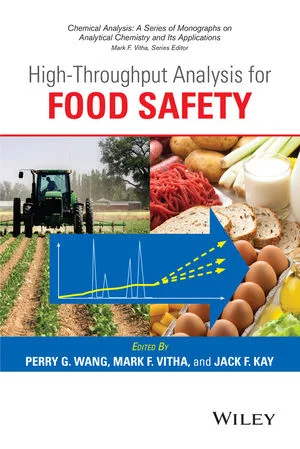
    High Throughput Analysis for Food Safety

  • 1119160553.jpg

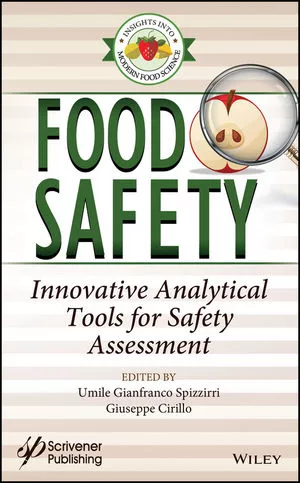
    Food Safety: Innovative Analytical Tools for Safety Assessment

See More Products

Related Directories

  • EAS Consulting Group, a Certified Group Co.

    EAS Consulting Group is a global leader in regulatory solutions for industries regulated by FDA, USDA, and other federal and state agencies. Our network of 200+ independent consultants enables EAS to provide comprehensive consulting, training, and auditing services, ensuring proactive regulatory compliance for food, supplements, pharmaceuticals, medical devices, cosmetics, tobacco, hemp, and CBD.
  • Plascon Group

    Plascon specializes in flexible packaging for the foodservice industry with BRCGS ‘AA’ Certification. We manufacture Cook Chill bags, Box Liners, Saftea Tea Urn Liners, HDPE, LLDPE, PE Blends, and Biodegradable films, bags, and liners which are all FDA approved for food packaging and storing.
×

Never miss the latest news and trends driving the food safety industry

eNewsletter | Website | eMagazine

JOIN TODAY!
  • RESOURCES
    • Advertise
    • Contact Us
    • Directories
    • Store
    • Want More
  • SIGN UP TODAY
    • Create Account
    • eMagazine
    • eNewsletter
    • Customer Service
    • Manage Preferences
  • SERVICES
    • Marketing Services
    • Reprints
    • Market Research
    • List Rental
    • Survey/Respondent Access
  • STAY CONNECTED
    • LinkedIn
    • Facebook
    • Instagram
    • X (Twitter)
  • PRIVACY
    • PRIVACY POLICY
    • TERMS & CONDITIONS
    • DO NOT SELL MY PERSONAL INFORMATION
    • PRIVACY REQUEST
    • ACCESSIBILITY

Copyright ©2025. All Rights Reserved BNP Media.

Design, CMS, Hosting & Web Development :: ePublishing