Food Safety
search
Ask Food Safety AI
cart
facebook twitter linkedin instagram youtube
  • Sign In
  • Create Account
  • Sign Out
  • My Account
Food Safety
  • NEWS
    • Latest News
    • White Papers
  • PRODUCTS
  • TOPICS
    • Contamination Control
    • Food Types
    • Management
    • Process Control
    • Regulatory
    • Sanitation
    • Supply Chain
    • Testing and Analysis
  • PODCAST
  • EXCLUSIVES
    • Food Safety Five Newsreel
    • eBooks
    • FSM Distinguished Service Award
    • Interactive Product Spotlights
    • Videos
  • BUYER'S GUIDE
  • MORE
    • NEWSLETTERS >
      • Archive Issues
      • Subscribe to eNews
    • Store
    • Sponsor Insights
    • ASK FSM AI
  • WEBINARS
  • FOOD SAFETY SUMMIT
  • EMAG
    • eMagazine
    • Archive Issues
    • Editorial Advisory Board
    • Contact
    • Advertise
  • SIGN UP!
News

FDA Scientists in Puerto Rico Seek Faster Screening for Foodborne Pathogens

March 21, 2014

Source: FDA Voice blog

Pictured at left is FDA's San Juan Laboratory team. Back row (left to right): Joseph Bloom, Osvaldo Rosario, Fernando González. Front row (left to right): Miguel A. Martínez and LCDR José Moreno.


Whether an outbreak of foodborne illnesses is caused by Listeria in cantaloupe, E.coli in salad or Salmonella in peanut butter, the faster the disease-causing bacteria are identified, the more illnesses can be averted.

Last year scientists based in FDA’s San Juan Laboratory were endowed with seed funding through a [Department of] Health and Human Services HHSignite award to adapt traditional chemistry methods for the detection of foodborne pathogens. HHSignite (beta) is an internal competitive seed-funding opportunity to test new and unconventional ideas within HHS.

The team is being led by LCDR José Moreno of the U.S. Public Health Service, a microbiologist in FDA’s San Juan Laboratory. Working with Moreno on this project are Joseph Bloom, Ph.D., San Juan Laboratory science advisor, supervisory chemists Adalberto Cajigas and Héctor Espinet, science advisor Osvaldo Rosario, Ph.D., chemist Miguel A. Martínez, and staff fellow Fernando González, Ph.D.  FDA’s San Juan scientists were among 13 teams within HHS to receive such funding when Secretary Sebelius announced the finalists in June 2013.

Their proposal is to assess the utility and practicality of coupling CE-MS, which stands for capillary electrophoresis coupled with a mass spectrometer, that promises to be the workhorse of many analytical chemistry laboratories for use in identifying pathogenic microorganisms through the identification of specific proteins associated with pathogenicity by their fragmentation patterns. This essentially identifies specific “fingerprints” for disease-causing bacteria, such as E. coli, Salmonella, Listeria and Staphylococcus, in foods.

The research undertaken by Moreno and his team could result in faster screening methods for a wide array of pathogens as part of FDA’s food safety and food defense programs.

Looking for quick answers on food safety topics?
Try Ask FSM, our new smart AI search tool.
Ask FSM →

What’s next?

The San Juan team is continuing their research on this innovative screening tool to reduce testing times even more, and coordinating their efforts with their scientific colleagues in our Office of Regulatory Affairs and in our Center for Food Safety and Applied Nutrition on the mainland to protect the safety of the U.S. food supply.


Editor's Note: This blog post was written by Nilda Villegas, a public affairs specialist in the San Juan District Office, part of FDA’s Office of Regulatory Affairs.


Share This Story

Recommended Content

JOIN TODAY
to unlock your recommendations.

Already have an account? Sign In

  • people holding baby chicks

    Serovar Differences Matter: Utility of Deep Serotyping in Broiler Production and Processing

    This article discusses the significance of Salmonella in...
    Food Type
    By: Nikki Shariat Ph.D.
  • woman washing hands

    Building a Culture of Hygiene in the Food Processing Plant

    Everyone entering a food processing facility needs to...
    Food Prep/Handling
    By: Richard F. Stier, M.S.
  • graphical representation of earth over dirt

    Climate Change and Emerging Risks to Food Safety: Building Climate Resilience

    This article examines the multifaceted threats to food...
    Contamination Control
    By: Maria Cristina Tirado Ph.D., D.V.M. and Shamini Albert Raj M.A.
Manage My Account
  • eMagazine Subscription
  • Subscribe to Newsletters
  • Manage My Preferences
  • Website Registration
  • Subscription Customer Service

More Videos

Sponsored Content

Sponsored Content is a special paid section where industry companies provide high quality, objective, non-commercial content around topics of interest to the Food Safety Magazine audience. All Sponsored Content is supplied by the advertising company and any opinions expressed in this article are those of the author and not necessarily reflect the views of Food Safety Magazine or its parent company, BNP Media. Interested in participating in our Sponsored Content section? Contact your local rep!

close
  • NEVIFIT 3 Compartment BPA-FREE
    Sponsored byCorbion

    The Risks of Ready-to-Eat: Five Ways to Protect Today's Prepared Meals

  • a group of workers in a food production facility
    Sponsored bySkillUp by Registrar Corp

    How to Build a Better Training Program: Data and Insights from the Global Food Safety Training Survey

  • the use of dual-energy X-ray food inspection technology to identify foreign contaminants.
    Sponsored byEagle by METTLER TOLEDO

    Precision Inspection Starts with the Right X-ray Detector

Popular Stories

FSM podcast

Ep. 219: World Food Safety Day 2026

logistics managers in warehouse talking looking at tablet

FDA Traceability Rule Readiness Exercises Reveal Supply Chain Coordination Matters More than Technology

diverse group of people wearing protective clothing in food production plant

EU Member States Report Challenges in Implementing Food Safety Culture Official Controls

Events

June 16, 2026

Sustainable Food Contact Materials: Where Regulation Meets Analytical Testing

Live: June 16, 2026 at 11:00 am EDT: This webinar explores how sustainability regulations are changing food contact material requirements, including packaging compliance, unintended substances, and per- and polyfluoroalkyl substances.

June 17, 2026

Living HACCP: Practical Steps for Implementation

Live: June 17, 2026, at 12:00 pm EDT: From this webinar, attendees will understand how social norms shape the way hazards are understood, how decisions are made, and how well risks are understood and acted on across companies.

June 25, 2026

Rethinking Food Safety: Eliminating Biofilm and Building a Smarter Food Safety System

Live: June 25, 2026 at 2:00 pm EDT: Join this webinar to explore a modern approach to decontamination that goes beyond surface-level cleaning to combat biofilm and persistent pathogens.

View All

Products

Global Food Safety Microbial Interventions and Molecular Advancements

Global Food Safety Microbial Interventions and Molecular Advancements

See More Products

Related Articles

  • scientist in yellow vest and hard hat kneeling down next to water in wastewater treatment plant collecting samples with laptop and clipboard

    FDA Funds Penn State Researchers to Continue Wastewater Monitoring for Foodborne Pathogens

    See More
  • FDA Testing Fresh Herbs, Avocados for Foodborne Pathogens

    See More
  • EFSA Evaluates Molecular Typing Methods for Foodborne Pathogens

    See More

Related Products

See More Products
  • 9781138070912.jpg

    Trends in Food Safety and Protection

  • food-safety-making.jpg

    Food Safety: Making Foods Safe and Free From Pathogens

  • 1118396308.jpg

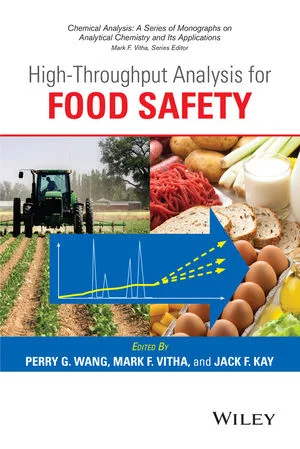
    High Throughput Analysis for Food Safety

See More Products

Related Directories

  • Integrated Chemistry Services LLC

    Integrated Chemistry Services (ICS) is a contract development and manufacturing partner based in Moorestown, New Jersey. In 2025, ICS acquired the PDX product line from Paradigm Diagnostics. These trusted, high-speed microbiological tests detect foodborne pathogens (Listeria, Salmonella, and STEC) quickly and affordably, minimizing downtime and protecting your bottom line.
  • North American Chemical Residue Workshop

    NACRW) formerly the Florida Pesticide Residue Workshop conducts an annual meeting for scientists particularly interested in trace level analysis of pesticides, veterinary drug residues, and other chemicals in food, animal feed, and environmental samples. The purpose of the meeting is to provide training, develop and improve technical knowledge, facilitate development and distribution of new analysis methods and techniques, and establish networking to promote professional cooperation between scientists of these interests.
×

Never miss the latest news and trends driving the food safety industry

Newsletters | Website | eMagazine

JOIN TODAY!
  • RESOURCES
    • Advertise
    • Contact Us
    • Directories
    • Store
    • Want More
  • SIGN UP TODAY
    • Create Account
    • eMagazine
    • Newsletters
    • Customer Service
    • Manage Preferences
  • SERVICES
    • Marketing Services
    • Reprints
    • Market Research
    • List Rental
    • Survey/Respondent Access
  • STAY CONNECTED
    • LinkedIn
    • Facebook
    • Instagram
    • X (Twitter)
  • PRIVACY
    • PRIVACY POLICY
    • TERMS & CONDITIONS
    • DO NOT SELL MY PERSONAL INFORMATION
    • PRIVACY REQUEST
    • ACCESSIBILITY

Copyright ©2026. All Rights Reserved BNP Media, Inc. and BNP Media II, LLC.

Design, CMS, Hosting & Web Development :: ePublishing