Food Safety
search
Ask Food Safety AI
cart
facebook twitter linkedin instagram youtube
  • Sign In
  • Create Account
  • Sign Out
  • My Account
Food Safety
  • NEWS
    • Latest News
    • White Papers
  • PRODUCTS
  • TOPICS
    • Contamination Control
    • Food Types
    • Management
    • Process Control
    • Regulatory
    • Sanitation
    • Supply Chain
    • Testing and Analysis
  • PODCAST
  • EXCLUSIVES
    • Food Safety Five Newsreel
    • eBooks
    • FSM Distinguished Service Award
    • Interactive Product Spotlights
    • Videos
  • BUYER'S GUIDE
  • MORE
    • NEWSLETTERS >
      • Archive Issues
      • Subscribe to eNews
    • Store
    • Sponsor Insights
    • ASK FSM AI
  • WEBINARS
  • FOOD SAFETY SUMMIT
  • EMAG
    • eMagazine
    • Archive Issues
    • Editorial Advisory Board
    • Contact
    • Advertise
  • SIGN UP!
White Papers

Track-and-Trace: A Real-Time Technology Solution for Today's Food Safety Challenges

October 11, 2012


With the continued threat and reality of foodborne illnesses and product recalls, food safety remains a priority issue for consumers and food chain parties. Each year, roughly one in six people in the U.S. become ill from eating contaminated food.[1] Furthermore, food withdrawals, rejections and recalls cost the food industry $7 billion annually, with the majority of these costs coming from internal reworking, commodity loss, inventory replacement, removing goods from shelves, lost sales and public relations and reputation or customer confidence repair.[2]

While efforts are being made to further protect the nation’s food supply, there is still more that can be done. Participants in the food supply-chain like growers, processors and distributors, want to do everything possible to avoid contaminated food reaching consumers. However, many factors beyond the control of the food supply chain members cause food safety violations. In spite of advancements in food science and technology, the number of food recalls has increased from 100 per year in the 1990s to about 300 recalls per year in the 2000s.

In January 2011, President Barack Obama signed the Food Safety Modernization Act (FSMA) into law, marking the first major reform of the U.S. Food and Drug Administration (FDA) in 70 years. The bill increases FDA’s authority over food recalls, enables FDA to require food producers to have safety plans and enhances FDA’s ability to improve the safety of imported foods. Once fully realized, FSMA will install greater accountability for handlers along the entire food supply chain to prevent catastrophic harm to the health of consumers and avoid food safety related disruption and economic loss to the food industry. Additionally, among FSMA’s many provisions, there now is a greater emphasis on track-and-trace capabilities.

Even though FSMA has seen delays, companies can and should move forward in implementing track-and-trace technology with an enterprise resource planning (ERP) system to enable regulatory compliance and make product transparency a business asset rather than a business liability. A provision of FSMA requires companies to enhance their track and trace capabilities, rapidly tracing back from where a product was received and tracking forward to where it was sent. This will create massive amounts of information that companies will have to manage and integrate to provide complete traceability across the supply chain.

While FSMA does not necessarily require the brand owner or manufacturer to maintain records about its upstream and downstream partners, it is highly recommended that they do. Brand value, once eroded, is difficult to rebuild. Many food companies are investing significant money and effort to build awareness of their brands, which can pay off amply in highly competitive markets. The negative media image generated by recall coverage however, can turn an established brand asset into a liability. Nervous consumers can cause distributors and brokers to quickly abandon tainted products in the channel.

An ERP system allows companies to manage and mitigate food safety risks. For example, by tracking and storing information about a food product from the beginning, companies are able to access and syndicate valuable information throughout their supply chain in real time. ERP systems also help manage the complexity of the vast amounts of information and data required to track food as it moves from field-to-fork. With any sort of issue that arises, having an ERP system in place helps officials examine the data, pinpoint the problem(s), and, ideally, work through a solution before it escalates into a crisis.

itelligence’s food producer & distributor customers have real time insight and best in class supply chain processes to identify, react and remediate product recall issues. For more than 20 years, itelligence has developed and provided industry leadership and worked closely with SAP to ensure software and technology advancements address the evolving requirements around food safety and the Produce Traceability initiative. Robust SAP ERP solutions like itelligence’s it. CPG and it.trade come preconfigured to comply with government requirements, with built in quality-management, supply chain optimization and food-safety capabilities.

Other key components include tracking and tracing, as well as automated recall procedures. With itelligence’s rapid deployment methodology, companies can recognize value in weeks. This quick turnaround makes it possible for an organization to immediately place itself in compliance with the new bill without having to bring in additional full-time staff to help develop a clipboard-based manual safety program.The need for accountability and quick response in the food supply chain is great. Real-time visibility and transparency provide consumers and food safety officials with answers to questions that help put the wheels in motion to solve food issues quickly. Track-and-trace is one example of how businesses can be empowered to handle responsibilities that are part of today’s stronger food safety enforcement efforts. This technology provides safety measures that can help minimize the impact of contaminated food on consumers’ health and trust, while protecting the reputation and bottom lines of properly equipped businesses.

Eric Jones is a consumer products industry principal at itelligence.


References

1. www.cdc.gov/vitalsigns/FoodSafety/?s_cid=vitalsigns_070#Introduction.
2. www.foodsafetynews.com/2012/09/the-roi-of-food-safety-and-quality-assurance-technology-solutions/#.UFdeVbJlQik.


Author(s): Eric Jones, itelligence

Looking for quick answers on food safety topics?
Try Ask FSM, our new smart AI search tool.
Ask FSM →


Share This Story

Recommended Content

JOIN TODAY
to unlock your recommendations.

Already have an account? Sign In

  • people holding baby chicks

    Serovar Differences Matter: Utility of Deep Serotyping in Broiler Production and Processing

    This article discusses the significance of Salmonella in...
    Methods
    By: Nikki Shariat Ph.D.
  • woman washing hands

    Building a Culture of Hygiene in the Food Processing Plant

    Everyone entering a food processing facility needs to...
    Personal Hygiene/Handwashing
    By: Richard F. Stier, M.S.
  • graphical representation of earth over dirt

    Climate Change and Emerging Risks to Food Safety: Building Climate Resilience

    This article examines the multifaceted threats to food...
    Best Practices
    By: Maria Cristina Tirado Ph.D., D.V.M. and Shamini Albert Raj M.A.
Manage My Account
  • eMagazine Subscription
  • Subscribe to Newsletters
  • Manage My Preferences
  • Website Registration
  • Subscription Customer Service

More Videos

Sponsored Content

Sponsored Content is a special paid section where industry companies provide high quality, objective, non-commercial content around topics of interest to the Food Safety Magazine audience. All Sponsored Content is supplied by the advertising company and any opinions expressed in this article are those of the author and not necessarily reflect the views of Food Safety Magazine or its parent company, BNP Media. Interested in participating in our Sponsored Content section? Contact your local rep!

close
  • This image displays a multi-stage water filtration system designed to remove contaminants from drinking water.
    Sponsored byWaterdrop Filter

    The 4.0 ppt Era: Future-Proofing Your Food Supply Chain Against "Forever Chemicals"

  • The image displays a bottling plant production line, commonly used in the beverage industry for filling and packaging soft drinks.
    Sponsored byBIOIONIX

    Sustainability with ROI: A Beverage Producer Case Study in Water Savings

  • factory
    Sponsored byIFC

    A Clean Break to Reset the Environment with Chlorine Dioxide

Popular Stories

workers and inspector in processing facility

Gearing Up for an FDA Inspection

woman looking at box of packaged food in grocery store seeming pensive

RFK Jr. Says Federal Ultra-Processed Foods Definition is Coming in April

magnifying glass hovering over question mark on yellow background

FDA Redacts All Key Details in Summary of Fatal Listeriosis Outbreak Linked to Produce

Events

March 26, 2026

Continuous Pathogen Control: Enhancing Sanitation and Environmental Monitoring in Food Processing

Live: March 26, 2026, at 2:00 pm EST: This session explores the role of continuous airborne pathogen control technology in supporting sanitation and environmental monitoring programs within food processing environments.

March 31, 2026

Regulatory Risk, Ingredient Safety, and GRAS: What Companies Need to Act on Now

Live: March 31, 2026, at 11:00 am EDT: From this webinar, attendees will recognize patterns in food policy affecting dietary guidelines, UPFs, state legislative actions, and expected GRAS reform.

April 8, 2026

Foreign Material Contamination: Why In-Line Reinspection Isn't Enough

Live: April 8, 2026, at 11:00 am EDT: From this webinar, attendees will learn why reinspecting with in-line equipment is not sufficient when it comes to potential foreign material contamination.

View All

Products

Global Food Safety Microbial Interventions and Molecular Advancements

Global Food Safety Microbial Interventions and Molecular Advancements

See More Products

Related Articles

  • Why Real-Time Temperature Monitoring and Track-and-Trace Technology Provide Supply Chain Control

    See More
  • Provision Risk Scoring

    Provision Announces Real-Time Food Safety Risk Scoring for Food, Beverage Operations

    See More
  • Updated Food Safety Training, Solution for Upcoming FSMA Challenges

    See More

Related Products

See More Products
  • 1119237963.jpg

    Food Safety in China: Science, Technology, Management and Regulation

  • 1119053595.jpg

    Food Safety for the 21st Century: Managing HACCP and Food Safety throughout the Global Supply Chain, 2E

  • 1119160553.jpg

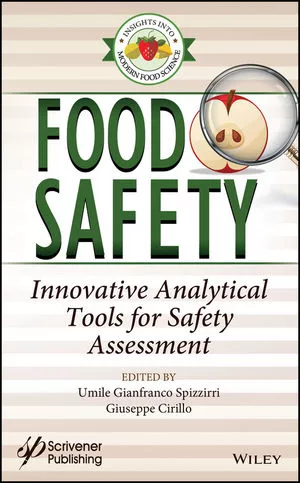
    Food Safety: Innovative Analytical Tools for Safety Assessment

See More Products

Events

View AllSubmit An Event
  • May 14, 2025

    Leveraging AI for a Safer Today and Tomorrow

    On Demand: This session will highlight some of the early and visible benefits of using AI for data-informed decision making.
View AllSubmit An Event

Related Directories

  • SoftTrace Ltd.

    SoftTrace has being providing innovative Software solutions to the Dairy industry for over twenty two years. Our experienced team fully understand the many challenges facing today’s dairy industry. Since the beginning, our customers are at the centre of what we do, SoftTrace takes pride in having developed and maintained strong customer relationships building up a strong Dairy manufacturing client base. Our software solutions form a key component for dairy manufacturing in Ireland, the U.K, Europe and North America.
  • PLM TrustLink

    PLM TrustLink® is a comprehensive software platform for tracking & tracing food throughout the supply chain. From origin to destination, PLM TrustLink® utilizes unique product markers to provide transparency, traceability, and trust of key date elements through critical tracking events. The PLM TrustLink® solution delivers real-time actionable data to improve operational efficiency, food safety and regulatory compliance for customers.
  • Zebra Technologies Corp.

    In today’s fast-paced world, staying ahead requires more than just innovation; it demands solutions that are as dynamic and adaptive as your business. Zebra delivers industry-specific solutions that empower businesses to operate smarter, faster, and more efficiently. From retail and healthcare to manufacturing and logistics, our cutting-edge technology provides real-time visibility and actionable insights that drive success.
×

Never miss the latest news and trends driving the food safety industry

Newsletters | Website | eMagazine

JOIN TODAY!
  • RESOURCES
    • Advertise
    • Contact Us
    • Directories
    • Store
    • Want More
  • SIGN UP TODAY
    • Create Account
    • eMagazine
    • Newsletters
    • Customer Service
    • Manage Preferences
  • SERVICES
    • Marketing Services
    • Reprints
    • Market Research
    • List Rental
    • Survey/Respondent Access
  • STAY CONNECTED
    • LinkedIn
    • Facebook
    • Instagram
    • X (Twitter)
  • PRIVACY
    • PRIVACY POLICY
    • TERMS & CONDITIONS
    • DO NOT SELL MY PERSONAL INFORMATION
    • PRIVACY REQUEST
    • ACCESSIBILITY

Copyright ©2026. All Rights Reserved BNP Media, Inc. and BNP Media II, LLC.

Design, CMS, Hosting & Web Development :: ePublishing