Why sorting technology is crucial to enhanced sustainability

With a rapidly expanding global population and limited food supply, it’s vital for food businesses to work more sustainably and stay profitable. The food and beverage industry must also be more effective with resources to provide food for everyone. That means, every crop matters and every piece of produce counts.
However, inefficient processes would sometimes occur throughout the food supply chain at farms, factories, processing plants and stores, with produce being lost and unnecessarily wasted.
While you may think you know what the word “sustainability” means for your business, in reality it isn’t just about introducing environmental initiatives or stand-alone corporate social responsibility (CSR) programs.
So, what is sustainability? In short, sustainability is the efficient use of resources, which is vital for ensuring food supply for future generations. And, technology is the answer to making the food sector more sustainable, efficient and profitable.
The sustainability challenge
The global economy is facing huge resource challenges in the next 40 years. The global population is expected to grow 30% by 2050 and the majority of these people will live in cities. In fact, urbanization is increasing at such a rate that by 2050, around 70% of the population will live in cities; in 1960, it was the opposite, according to a report published the UN Food and Agriculture Organization, Canada.
At the same time, the land available for us to grow food is very limited and only 20% more land can be brought into productive use, according to the study. When you consider that resource productivity in the 27 EU countries has only increased by 1% per year for the past seven years, you see how big the challenge is.
The impact of this in the long term comes back to the old economic rule that the cost of ingredients will increase due to scarcity, putting economic pressure onto the food and drink markets.
Looking for quick answers on food safety topics?
Try Ask FSM, our new smart AI search tool.
Ask FSM →
Food waste from farm to fork
Food waste happens throughout the supply chain. Food crops can be spoilt before harvest, such as in April 2017 where at least 80% of central European fruit crops were lost due to late frost, according to this report.
On the other hand, good produce is sometimes rejected during processing due to inefficient sorting.
Finally, supermarkets and stores often throw out food that is beyond its best, while consumers end up disposing of some food straight from the fridge. Importantly, food shortages like the vegetable shortage in Europe in early 2017, as reported by CNN, lead to higher prices for processors and consumers.
Of course, there is an imbalance in food efficiency between developed and developing countries. The issues mentioned above are common in developed countries, and with 70 million people entering the middle class globally every year, they will only grow. But, while consumer-led waste is not such an issue in developing countries, they often have inefficient processes upstream in the supply chain, which lead to greater waste during harvesting and processing.
It is up to all of us as businesses and individuals to use resources more efficiently and live more sustainably. From the “ugly food” trend that sees stores and consumers accepting misshapen but quality produce, to multinational companies setting sustainability requirements for their suppliers and sourcing food locally, some progress is being made.
Many businesses are setting ambitious commitments to send zero food waste to landfill from their own direct operations, as part of a UK Food and Drink Federation (FDF) campaign.
Costs and savings for business
There is a common misconception among businesses that being sustainable will cost money. In fact, sustainability and profitability are linked, as both rely on the most efficient use of resources, and taking action to prevent food waste could save businesses €341 million a year, according to the Waste and Resources Action Programme (WRAP), UK.
These businesses may face some upfront costs when evolving to become more sustainable, but even small changes can have a large impact. Most companies that have transformed their business say they had to make an initial investment and are now seeing long-term financial benefits.
So, what can food processors do to work more sustainably and increase their profitability at the same time? Many are looking to the latest in advanced sensor-based sorting.
Using technology to increase resource efficiency
Automating food processing lines with the right technology can improve sustainability in many ways, according to the European Parliament’s report “Technology options for feeding 10 billion people,” such as “optimizing product quality, reducing quality losses and defects and decreasing energy and water consumption.”
It is worth looking at each of these benefits in more detail:
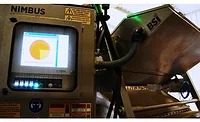
Reducing food loss and waste. In-line sensor-based sorting machines are very effective at optimizing product yield, ensuring quality and maximizing profits.
Previously, when bad weather conditions damaged a crop, it would go to waste. For example, following a potato blight or hail damage to blueberries, the food producers would decide not to recover any of the crop at all. Now, food producers can recover a small percentage of the crop through “reverse sorting,” or removing the majority of bad input and recovering the 1-2% of good product available. In the past, this would have all gone to waste.
These technologies and platforms are inspiring companies to think outside of the box. Whereas in the past waste was waste, now processors have multiple waste streams depending on the quality of product. For instance, a misshapen carrot can be diced or juiced, a lower-grade one will be used for cattle feed and only truly defective ones will be rejected.
Reducing energy consumption and emissions. Some machines such as peelers can reduce energy use through recycling and re-using.
Similarly, while it was common for companies to freeze fruit and vegetables before sorting, new technology means they can reject defective product before freezing, thus optimizing the yield and cutting energy costs.
Reducing water usage. Some technology solutions improve the efficiency of the whole processing line. Just as in the examples above, machines can now remove defects from salads and lettuce before washing them. This not only means that washing is more efficient, but also that water stays cleaner longer and needs replacing less frequently. As such, water consumption and wastewater treatment is reduced significantly.
Case in point: Technology is crucial to enhanced sustainability, helping use resources more effectively and keep businesses profitable.