Food Safety
search
Ask Food Safety AI
cart
facebook twitter linkedin
  • Sign In
  • Create Account
  • Sign Out
  • My Account
Food Safety
  • NEWS
    • Latest News
    • White Papers
  • PRODUCTS
  • TOPICS
    • Contamination Control
    • Food Types
    • Management
    • Process Control
    • Regulatory
    • Sanitation
    • Supply Chain
    • Testing and Analysis
  • PODCAST
  • EXCLUSIVES
    • Food Safety Five Newsreel
    • eBooks
    • FSM Distinguished Service Award
    • Interactive Product Spotlights
    • Videos
  • BUYER'S GUIDE
  • MORE
    • ENEWSLETTER >
      • Archive Issues
      • Subscribe to eNews
    • Store
    • Sponsor Insights
    • ASK FSM AI
  • WEBINARS
  • FOOD SAFETY SUMMIT
  • EMAG
    • eMagazine
    • Archive Issues
    • Editorial Advisory Board
    • Contact
    • Advertise
  • SIGN UP!

Use, care & maintenance of cleaning tools

By Amit Kheradia
Remco AMit K
September 5, 2017

Despite the amount of soap and cleaning agents used on cleaning tools, they still need to be cleaned on their own and properly taken care of to ensure food safety and quality. Even if it seems like a brush that stays inside a soapy bucket all day should be clean, contaminants and microbes can still build up without the right maintenance.

Proper cleaning and maintenance begins with employee training and supervision and should be considered a significant part of the facility’s overall hygiene and sanitation plan.

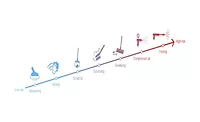
The cleaning regime of different tools is influenced by their purpose or use. Different cleaning routines should be established for food contact and non-food contact tools. For example, a broom used in a low-risk environment probably won’t be cleaned after every use. However, a tank brush that’s used for cleaning the interior of a batch tank should be cleaned and sanitized before and after each use. To avoid cross-contamination, tools used on food contact surfaces must be easily identifiable and kept separate from those used on non-food contact surfaces. Color coding is often a simple solution for achieving this level of intended segregation.

To ensure tools have a longer utility and lifespan, they must be properly cared for. Cleaning your tools should be approached in the same manner that you clean any other equipment or surface in your facility.

The cleaning principles are:

  1. Dry clean. Remove visible and gross soils and debris.
  2. Pre-rinse. Rinse all areas and surfaces until they are visibly free of soil.
  3. Wash (soap and scrub). Use the right detergent in the right concentration with the right level of mechanical action in the right water temperature for the right contact time.
  4. Post-rinse. Rinse away all visible detergents and remaining soil.
  5. Inspect. Look again at crevices and other contamination traps to ensure they’re free of soils and detergents. Determine whether steps 1-4 should be performed again.
  6. Sanitize. Foam, wipe or spray sanitizing chemicals onto surfaces as per the appropriate instructions.
  7. Dry. Ensure adequate time is allotted for equipment to thoroughly dry.
  8. Verification. Gather proof that the cleaning performed achieved the expected level by following facility verification protocols.

As part of the care strategy, cleaning tools should be hung to thoroughly dry. Brushes, brooms and squeegees should be stored in wall brackets and shouldn’t touch the walls or other cleaning tools while drying or while being stored.

In addition to keeping tools clean, facilities should also move beyond the concept of just fixing or replacing a tool when it is broken. A tool that breaks while in use can trigger significant downtime and operational losses. Several companies have transitioned to the practice of diagnostic maintenance, where the maintenance crew sets a troubleshooting and monitoring schedule to ensure that tools and equipment are functioning as intended.

Preventive maintenance has become the hallmark of ensuring consistent tool effectiveness and efficiency over time through the appropriate scheduling and servicing of a facility’s cleaning products. Appropriate maintenance can also be combined with the 5S efficient workplace organization method, which involves sorting, setting-in-order, shining, standardizing and sustaining work tools. Solving problems before they affect food safety is the direction the food and beverage industry needs to head toward.

Looking for quick answers on food safety topics? Try Ask FSM, our new smart AI search tool. Ask FSM →

Proper use, care and maintenance of cleaning tools hangs on three primary considerations. First, there should be a validated protocol ensuring that the intended tasks are effective in decontaminating the tool. Second, care and maintenance must be regularly monitored by trained and competent personnel. Third, there must be a method of verifying cleaning effectiveness by another person through appropriate observation or tests.

Apart from color coding and workplace organization (5S), there is a great opportunity for the industry to look beyond maintenance by investing in hygienically designed tools. Indeed, the British Retail Consortium (BRC) Food Safety Standard, Issue 7, states “cleaning equipment shall be hygienically designed and fit for purpose.” There will be a need to employ effective and hygienically designed cleaning equipment to help maximize removal of contamination and food debris, minimize the risk of cross contamination and comply with audit requirements.

This article was originally posted on www.refrigeratedfrozenfood.com/.

This article was originally posted on www.refrigeratedfrozenfood.com.
KEYWORDS: color-coded tools food safety solutions hygienic design hygienic environments sanitary equipment design sanitation sanitation best practices sanitation solutions tools

Share This Story

Amit 200
Amit Kheradia is the education and technical support manager for Remco Products Corp., Zionsville, Ind.

Recommended Content

JOIN TODAY
to unlock your recommendations.

Already have an account? Sign In

  • people holding baby chicks

    Serovar Differences Matter: Utility of Deep Serotyping in Broiler Production and Processing

    This article discusses the significance of Salmonella in...
    Methods
    By: Nikki Shariat Ph.D.
  • woman washing hands

    Building a Culture of Hygiene in the Food Processing Plant

    Everyone entering a food processing facility needs to...
    Facilities
    By: Richard F. Stier, M.S.
  • graphical representation of earth over dirt

    Climate Change and Emerging Risks to Food Safety: Building Climate Resilience

    This article examines the multifaceted threats to food...
    Risk Assessment
    By: Maria Cristina Tirado Ph.D., D.V.M. and Shamini Albert Raj M.A.
Manage My Account
  • eMagazine Subscription
  • Subscribe to eNewsletter
  • Manage My Preferences
  • Website Registration
  • Subscription Customer Service

More Videos

Sponsored Content

Sponsored Content is a special paid section where industry companies provide high quality, objective, non-commercial content around topics of interest to the Food Safety Magazine audience. All Sponsored Content is supplied by the advertising company and any opinions expressed in this article are those of the author and not necessarily reflect the views of Food Safety Magazine or its parent company, BNP Media. Interested in participating in our Sponsored Content section? Contact your local rep!

close
  • Salmonella bacteria
    Sponsored byThermoFisher

    Food Microbiology Testing Methods: Salmonella species

  • a diagram explaining indicator organisms
    Sponsored byHygiena

    How Proactive Listeria Testing Helps Prevent Six- and Seven-Figure Recalls

  • woman grocery shopping
    Sponsored byCorbion

    Designing Safety Into Every Bite: Proactive Risk Mitigation for Refrigerated Foods

Popular Stories

scott&jons scampi

Two More Deaths Reported in Listeria Outbreak Linked to Prepared Pasta Meals

mindy brashears USDA headshot

USDA-FSIS Under Secretary for Food Safety Nominee Reveals Priorities in Senate Hearing

lettuce close up

Study Explores Sanitizer Limitations Against Listeria Biofilms in Leafy Greens Production

Events

November 11, 2025

Feeding the Future: How Lessons From 2025 Will Shape 2026

Live: November 11, 2025 at 10:00 am EST: This webinar will bring together LRQA experts and industry leaders to explore how lessons from 2025 will shape 2026, focusing on building resilient, digitally enabled, and consumer-trusted food systems.

November 18, 2025

Dry Sanitation and Cleaning Techniques for Facilities and Equipment

Live: November 18, 2025 at 12:00 pm EDT: From this webinar, attendees will learn best practices employed by dry/low-moisture food processors for dry sanitation and equipment cleaning.

November 20, 2025

New U.S. Additive Bans: How to Prepare and Protect Your Brand

Live: November 20, 2025 at 11:00 am EST: From this webinar, attendees will learn the impact of ingredient restrictions on product development, sourcing, labeling, and market access.

View All

Products

Global Food Safety Microbial Interventions and Molecular Advancements

Global Food Safety Microbial Interventions and Molecular Advancements

See More Products

Related Articles

  • Food safety

    Use, care and maintenance of cleaning tools during the pandemic and beyond

    See More
  • Selection, Care and Maintenance Guide for Food Contact Tools and Equipment

    See More
  • employee cleans food processing equipment

    Use these tips for cleaning all parts of a food factory

    See More

Related Products

See More Products
  • 1119160553.jpg

    Food Safety: Innovative Analytical Tools for Safety Assessment

  • 9781498721776.jpg

    Handbook of Food Processing: Food Safety, Quality, and Manufacturing Processes

  • 1444333348.jpg

    Handbook of Food Safety Engineering

See More Products

Related Directories

  • Clean Works Corp.

    Clean Works is at the forefront of pioneering decontamination solutions that set the industry standard. Food sanitation solutions, award-winning gas-phase homogenous technology has been rigorously tested and has consistently demonstrated its effectiveness in eliminating up to 99.99% of pathogens and food-spoiling organisms, ensuring your produce is safe and fresh. We have successfully commercialized our technology in six countries, making a global impact.
  • Air Cleaning Blowers LLC

    Air Cleaning Blowers™ (ACBs) blow and clean air in the world’s toughest conditions without filter elements. Without filter media to clog or maintain, ACBs qualify as first truly-sustainable air-filtration systems. The multi-patented technology has proven its worth in powdered-food packaging, air compressors, HVAC and production lines globally. ACBs attain full effectiveness immediately, unlike media filters that must first partially clog to reach rated effectiveness.
×

Never miss the latest news and trends driving the food safety industry

eNewsletter | Website | eMagazine

JOIN TODAY!
  • RESOURCES
    • Advertise
    • Contact Us
    • Directories
    • Store
    • Want More
  • SIGN UP TODAY
    • Create Account
    • eMagazine
    • eNewsletter
    • Customer Service
    • Manage Preferences
  • SERVICES
    • Marketing Services
    • Reprints
    • Market Research
    • List Rental
    • Survey/Respondent Access
  • STAY CONNECTED
    • LinkedIn
    • Facebook
    • Instagram
    • X (Twitter)
  • PRIVACY
    • PRIVACY POLICY
    • TERMS & CONDITIONS
    • DO NOT SELL MY PERSONAL INFORMATION
    • PRIVACY REQUEST
    • ACCESSIBILITY

Copyright ©2025. All Rights Reserved BNP Media.

Design, CMS, Hosting & Web Development :: ePublishing