Food Safety
search
Ask Food Safety AI
cart
facebook twitter linkedin
  • Sign In
  • Create Account
  • Sign Out
  • My Account
Food Safety
  • NEWS
    • Latest News
    • White Papers
  • PRODUCTS
  • TOPICS
    • Contamination Control
    • Food Types
    • Management
    • Process Control
    • Regulatory
    • Sanitation
    • Supply Chain
    • Testing and Analysis
  • PODCAST
  • EXCLUSIVES
    • Food Safety Five Newsreel
    • eBooks
    • FSM Distinguished Service Award
    • Interactive Product Spotlights
    • Videos
  • BUYER'S GUIDE
  • MORE
    • ENEWSLETTER >
      • Archive Issues
      • Subscribe to eNews
    • Store
    • Sponsor Insights
    • ASK FSM AI
  • WEBINARS
  • FOOD SAFETY SUMMIT
  • EMAG
    • eMagazine
    • Archive Issues
    • Editorial Advisory Board
    • Contact
    • Advertise
  • SIGN UP!

Appealing COVID-19 fines shows how industry perceives value of employees

By Sam Gazdziak
Food Safety Strategies coronavirus news
September 18, 2020

What is the value of a meat industry employee? If you treat each one as a number on a human-resources spreadsheet, you’d probably say about $15 an hour, depending on where you are in the country or their job responsibilities. I’d like to think the industry thinks beyond an HR number and sees that there’s so much more to an employee than their ability to go in day after day and do their job. They are a spouse, a parent, a friend, a relative. They work for 40 to 60 hours a week to live the rest of the time. You can put a value on a person’s work with a salary, but can you put a price on their life?

The Department of Labor recently issued a series of statements announcing citations against companies that failed to protect employees from exposure to the coronavirus. Two meat processing plants were cited, which led to some outcry within the industry. Let’s take a look into it.

Smithfield Packaged Meats Corp. of Sioux Falls, S.D., was cited by OSHA, which proposed a fine of $13,494, the maximum allowed by law. OSHA cited the company for one violation of the general duty clause for failing to provide a workplace free from recognized hazards that can cause death or serious harm. At least 1,294 Smithfield workers contracted coronavirus, and four employees died from the virus.

JBS Foods of Greeley, Colo., was likewise cited by OSHA, which proposed $15,615 in penalties. OSHA cited the company for a violation of the general duty clause for failing to provide a workplace free from recognized hazards that can cause death or serious harm. The penalty assessed for the general duty clause violation is the maximum allowed by law. The company also failed to provide an authorized employee representative with injury and illness logs in a timely manner following OSHA’s May 2020 inspection. OSHA’s announcement did not list the number of employees who were sickened by the virus in the Greeley facility, but the Denver Post reported 290 confirmed employee cases to date, three probable cases and the six reported deaths of plant employees.

These fines are the first actions taken against meat-processing plants for their treatment of employees during the pandemic. The Labor Department did not pick on just the meat industry, though. Three health-care facilities in Louisiana and New Jersey were also cited within the past week, with proposed fines between $9,649 and $28,070.

Not surprisingly, the subject of debate has been the amount of the fines doled out. Some have complained it was too much, and others complained it was not enough. Considering the sales figures of both companies from our 2020 Top 100 Report, the fines are mere pocket change — both companies would have made enough money to pay the fines in the time it took you to get to this sentence from the start of this article.

However, look at the amounts in a different way — how those fines perceive employee value. Assuming the number of cases listed above is true, the Smithfield fine breaks down to $10.43 per sickened employee. The JBS fine amounts to $53.84 per person.

Looking for quick answers on food safety topics?
Try Ask FSM, our new smart AI search tool.
Ask FSM →

What’s the value of a meat industry employee’s life? According to the Department of Labor, it’s somewhere between dinner at a fast-casual restaurant and a grocery store trip. Furthermore, it’s likely those fines will be appealed and lowered. At that point, the value of a human life becomes equivalent to a grande latte or even less.

Yes, the industry could argue that there are extenuating circumstances in this pandemic and legitimate reasons why a company would combat what it feels is an unfair fine. Industry associations have pointed to some conflicts in the timelines of these cases that would normally merit a review. But I believe perspective has been totally lost here.

In this instance, when your employees have been sickened, some may be recovering still, and some have even died, spending more money on lawyers’ fees than you would on the original fine is a bad look. What does that say to your remaining employees? They’ve already been informed by a government agency that their health and well-being is worth an amount you could find in petty cash. How much would fighting these relatively modest fines further deteriorate employee morale? The meat and poultry industry already fights an uphill battle in terms of work conditions — why make it even worse in a higher-profile way?

So, what’s the value of an employee’s life? Is it a yearly salary, an OSHA fine, or something that you can’t possibly calculate?

Pay the fine, drop the appeals and use those lawyers’ fees and all that effort to protect your employees, because the pandemic isn’t over — and even once it is, the next threat sits in the shadows.

Your employees are counting on you.

This article was originally posted on www.provisioneronline.com.
KEYWORDS: coronavirus and food safety meat industry employees OSHA

Share This Story

Samg

Editor In Chief, Independent Processor and Editor, National Provisioner. 

Sam Gazdziak has been writing for trade publications since 1997 and joined The National Provisioner in 2004. He helped launch Independent Processor magazine in 2008 as its editor-in-chief.

Recommended Content

JOIN TODAY
to unlock your recommendations.

Already have an account? Sign In

  • people holding baby chicks

    Serovar Differences Matter: Utility of Deep Serotyping in Broiler Production and Processing

    This article discusses the significance of Salmonella in...
    Contamination Control
    By: Nikki Shariat Ph.D.
  • woman washing hands

    Building a Culture of Hygiene in the Food Processing Plant

    Everyone entering a food processing facility needs to...
    Food Prep/Handling
    By: Richard F. Stier, M.S.
  • graphical representation of earth over dirt

    Climate Change and Emerging Risks to Food Safety: Building Climate Resilience

    This article examines the multifaceted threats to food...
    International
    By: Maria Cristina Tirado Ph.D., D.V.M. and Shamini Albert Raj M.A.
Manage My Account
  • eMagazine Subscription
  • Subscribe to eNewsletter
  • Manage My Preferences
  • Website Registration
  • Subscription Customer Service

More Videos

Sponsored Content

Sponsored Content is a special paid section where industry companies provide high quality, objective, non-commercial content around topics of interest to the Food Safety Magazine audience. All Sponsored Content is supplied by the advertising company and any opinions expressed in this article are those of the author and not necessarily reflect the views of Food Safety Magazine or its parent company, BNP Media. Interested in participating in our Sponsored Content section? Contact your local rep!

close
  • Salmonella bacteria
    Sponsored byThermoFisher

    Food Microbiology Testing Methods: Salmonella species

  • a diagram explaining indicator organisms
    Sponsored byHygiena

    How Proactive Listeria Testing Helps Prevent Six- and Seven-Figure Recalls

  • woman grocery shopping
    Sponsored byCorbion

    Designing Safety Into Every Bite: Proactive Risk Mitigation for Refrigerated Foods

Popular Stories

newborn earing from bottle

Infants Nationwide Hospitalized With Botulism After Consuming ByHeart Formula

U.S. currency on scale

Shutdown Deal Restricts Funds for FSMA 204, Produce Safety Rule Enforcement

us capitol

MAHA Pushback Kills ‘Big Food’-Aligned Legislative Effort to Stop State Food Laws

Events

November 18, 2025

Dry Sanitation and Cleaning Techniques for Facilities and Equipment

Live: November 18, 2025 at 12:00 pm EDT: From this webinar, attendees will learn best practices employed by dry/low-moisture food processors for dry sanitation and equipment cleaning.

November 20, 2025

New U.S. Additive Bans: How to Prepare and Protect Your Brand

Live: November 20, 2025 at 11:00 am EST: From this webinar, attendees will learn the impact of ingredient restrictions on product development, sourcing, labeling, and market access.

December 4, 2025

Beyond Detection: How Integrated PCR Diagnostics Strengthen Food Safety in RTE Manufacturing

Live: December 4, 2025 at 2:00 pm EST: From this webinar, attendees will learn best practices for prevention of FM contamination at the corporate and plant levels.

View All

Products

Global Food Safety Microbial Interventions and Molecular Advancements

Global Food Safety Microbial Interventions and Molecular Advancements

See More Products

Related Articles

  • Food Safety Strategies coronavirus news

    OSHA fines JBS $15,000 for failing to protect plant workers from COVID-19

    See More
  • Craig Stauffer

    How COVID-19 foodservice closures have altered the fresh produce industry

    See More
  • Food Safety Summit 2017 logo

    Keynote address and opening session of 2020 Food Safety Summit will focus on the impact of COVID-19 on the food industry

    See More

Related Products

See More Products
  • 9781498721776.jpg

    Handbook of Food Processing: Food Safety, Quality, and Manufacturing Processes

  • 1444333348.jpg

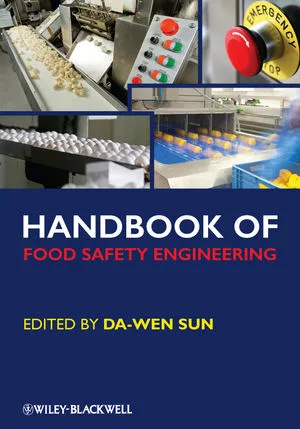
    Handbook of Food Safety Engineering

  • 9781138198463.jpg

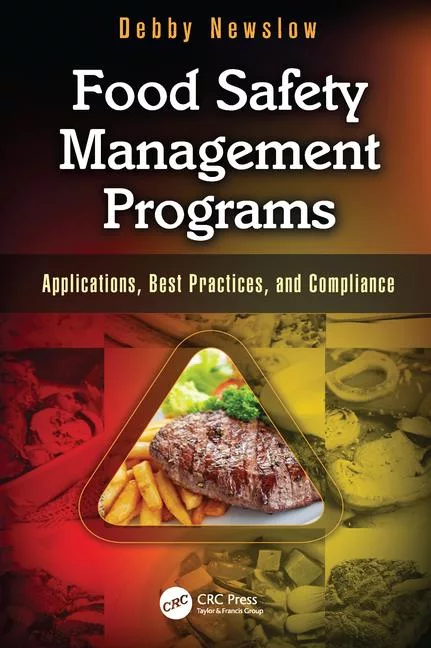
    Food Safety Management Programs: Applications, Best Practices, and Compliance

See More Products

Related Directories

  • Fayette Industrial

    At Fayette, we understand that cleanliness in your meat, poultry, pork, or ready-to-eat facility isn't just about passing inspections—it's about protecting your entire business. Our specialized contract sanitation services are tailored to your specific processing environment with rigorous pathogen prevention protocols and audit preparation that exceed regulatory standards.
  • Praesidio Consulting LLC

    Expert regulatory consulting based upon 25+ years FSIS experience. We specialize in HACCP and related food safety plans, facility design and sanitation program consultation, non-compliance management and appeals, enforcement action response, retention and recall management, and expert witness consultation for litigation cases.
×

Never miss the latest news and trends driving the food safety industry

eNewsletter | Website | eMagazine

JOIN TODAY!
  • RESOURCES
    • Advertise
    • Contact Us
    • Directories
    • Store
    • Want More
  • SIGN UP TODAY
    • Create Account
    • eMagazine
    • eNewsletter
    • Customer Service
    • Manage Preferences
  • SERVICES
    • Marketing Services
    • Reprints
    • Market Research
    • List Rental
    • Survey/Respondent Access
  • STAY CONNECTED
    • LinkedIn
    • Facebook
    • Instagram
    • X (Twitter)
  • PRIVACY
    • PRIVACY POLICY
    • TERMS & CONDITIONS
    • DO NOT SELL MY PERSONAL INFORMATION
    • PRIVACY REQUEST
    • ACCESSIBILITY

Copyright ©2025. All Rights Reserved BNP Media.

Design, CMS, Hosting & Web Development :: ePublishing