Food Safety at Sea: Why Norovirus Prevention Starts with Culture, Not Checklists
Norovirus prevention is not a sanitation problem; it is a cultural one
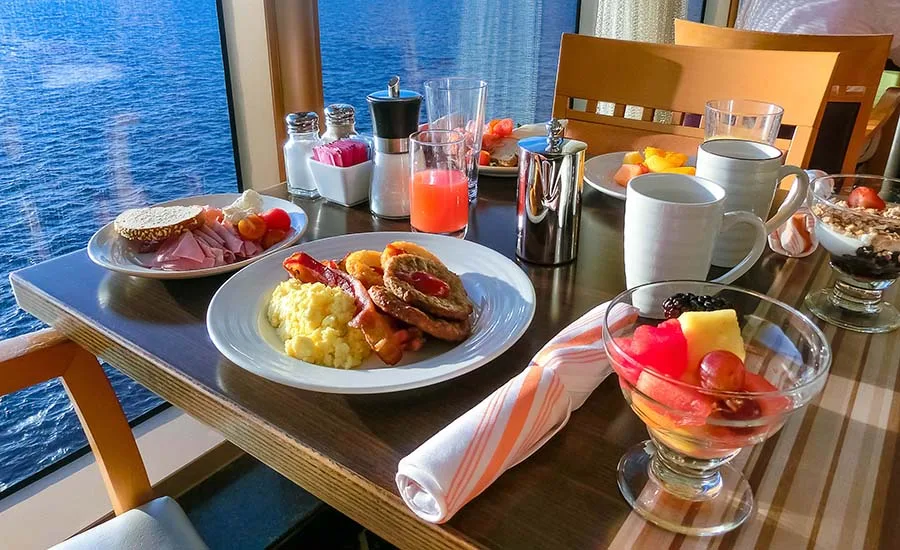
Food safety at sea is unlike food safety anywhere else in the world.
Cruise ships are floating cities, self-contained ecosystems where thousands of guests and crew live, dine, and interact in close quarters for days or weeks at a time. With this complexity comes heightened risk, and no pathogen exemplifies that risk more than norovirus. Highly contagious, environmentally persistent, and operationally disruptive, norovirus has long been the single greatest food safety challenge facing the cruise industry.
During my tenure as Vice President of Food and Beverage for multiple global cruise brands, food safety was not simply a regulatory obligation; it was one of my primary key performance indicators (KPIs). Guest health, crew welfare, brand reputation, and operational continuity all hinged on our ability to prevent outbreaks before they started. What I learned over decades at sea is this: norovirus prevention is not about reacting to illness, it is about building a culture where contamination never gains a foothold.
The Reality of Norovirus at Sea
Norovirus is often mislabeled as a "cruise ship illness," yet this framing overlooks both the biology of the virus and the operational realities of cruising. While food can be a transmission vector, norovirus spreads just as efficiently through hands, contaminated surfaces, shared utensils, and improper personal hygiene practices. Its low infectious dose, sometimes as few as 10 viral particles, makes it uniquely dangerous in high-density environments.
Critically, a significant percentage of norovirus cases introduced onboard originate off the vessel, particularly during port days. Guests dine in local restaurants, participate in shore excursions, use public transportation, and interact with high-touch environments that fall entirely outside the cruise line's control. When guests return to the ship, the incubation period may already be underway, often before symptoms are present.
This reality fundamentally shifts the challenge: cruise ships are not only preventing onboard transmission, but they are also managing imported risk every single port day.
Once norovirus is introduced onboard, whether through a guest, crew member, or contaminated surface, it can spread rapidly unless controls are already deeply embedded into daily operations. This is why successful prevention cannot rely solely on outbreak response plans or enhanced sanitation after cases appear. By the time symptoms are visible, the system has already been stress-tested.
Looking for quick answers on food safety topics?
Try Ask FSM, our new smart AI search tool.
Ask FSM →
Leadership Accountability: Food Safety as a KPI
Cruise ships operate under one of the most rigorous public health oversight frameworks in the world: the U.S. Public Health (USPH) Vessel Sanitation Program (VSP), administered by the Centers for Disease Control and Prevention (CDC). The VSP establishes highly detailed, enforceable standards governing food handling, potable water, sanitation, medical reporting, and outbreak response.
Compliance alone does not guarantee prevention, however.
On ships, culture flows downhill. When food safety is treated as a compliance exercise, something done "for USPH," shortcuts inevitably follow. Conversely, when senior leadership visibly treats hygiene and sanitation as non-negotiable operational priorities, behaviors change.
In my role, food safety metrics sat alongside guest satisfaction scores, operational efficiency, and food cost control. Executive chefs, food safety officers, and supervisors understood that hygiene failures were not "small misses"; they were operational failures with enterprise-level consequences.
This executive alignment sent a clear message: food safety is not owned by inspectors; it is owned by leadership.
Personal Hygiene: The First and Most Critical Control
Every norovirus prevention program begins, and succeeds or fails, with personal hygiene. No amount of chemical sanitation can compensate for poor handwashing practices.
USPH guidelines are explicit regarding hand hygiene, illness reporting, and exclusion policies. However, the effectiveness of these standards depends entirely on execution.
Effective programs go beyond signage and training videos. They enforce:
- Mandatory handwashing protocols tied to task changes, time intervals, and zone transitions
- Supervised handwash stations at critical production and service entry points
- Strict exclusion policies for symptomatic crew, aligned with CDC and USPH illness reporting requirements
One of the most dangerous failures I have seen is presenteeism: crew members working while ill out of fear of disciplinary action or lost income. Progressive cruise operations recognize that encouraging early illness reporting is not a cost; it is a containment strategy.
Hygiene Discipline in Food Production and Service
Norovirus does not respect job titles or departmental boundaries. Whether in a commissary galley, specialty restaurant, or high-volume buffet, the same principles apply:
- Bare-hand contact is eliminated wherever possible
- Glove use is controlled and purposeful, not excessive
- Utensil management follows defined change intervals, particularly in self-service environments
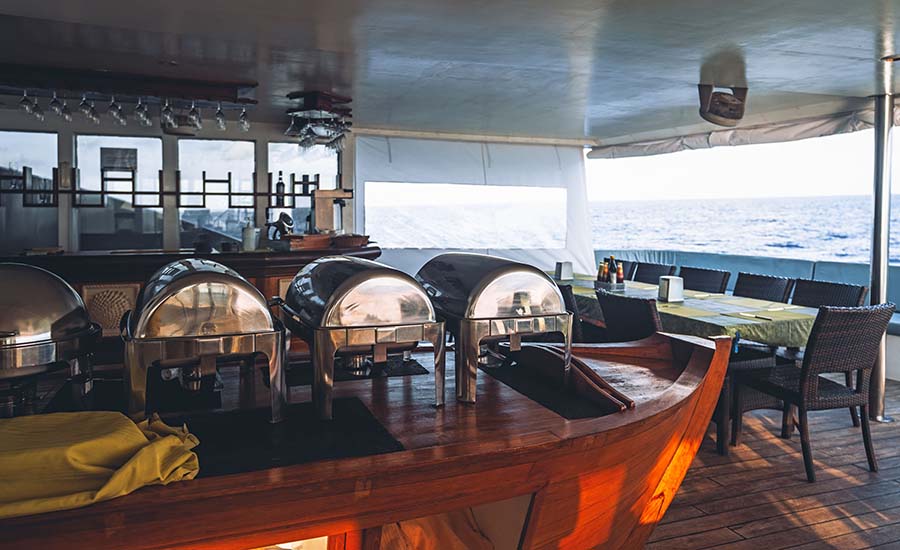
Buffets remain one of the most scrutinized venues under USPH inspections due to guest interaction. Serving utensils, sneeze guards, beverage stations, and ice dispensers are all treated as high-risk control points (Figure 1). Frequent replacement, proper storage, and visible sanitation practices are essential, not just for compliance but also for guest confidence.
Blaming guests for outbreaks oversimplifies the issue. The true challenge is designing systems that anticipate human behavior and limit the opportunity for cross-contamination, regardless of origin.
Cleaning, Sanitizing, and Disinfecting: Understanding the Difference
One of the most common operational misunderstandings I encountered was the belief that cleaning and sanitizing are interchangeable. They are not. In reality:
- Cleaning removes visible soil and organic matter
- Sanitizing reduces microbial load to acceptable levels
- Disinfection, particularly for norovirus, requires agents that are proven effective against non-enveloped viruses
USPH standards clearly define chemical concentrations, contact times, and application methods. However, execution gaps occur when protocols are rushed during peak service, improperly diluted, or insufficiently verified.
High-touch surfaces, handrails, elevator buttons, restroom fixtures, and beverage dispensers require disciplined schedules and documented verification. The strongest programs move beyond "check-the-box" logs and instead focus on execution quality, verification, and corrective action closure.
Training That Changes Behavior
Training is often cited as the solution, yet ineffective training is worse than none at all. Annual refresher courses alone do not change habits under pressure. What works is:
- Task-specific training, delivered at the point of work
- Frequent reinforcement, especially around embarkation and port days
- Supervisor modeling, where leaders visibly follow and enforce standards
Onboard, we treat food safety training as an operational rhythm, not an event. Short, focused refreshers before high-risk periods, embarkation days, turnaround operations, and port-intensive itineraries proved far more effective than long classroom sessions detached from reality.
Monitoring, Verification, and the Role of Data
Unfortunately, cruise food safety relies heavily on manual logs, temperature records, sanitation schedules, illness reports, and corrective action forms. While these systems meet USPH documentation requirements, they are often vulnerable to human error, delayed entries, and inconsistent verification.
Effective prevention requires real-time visibility:
- Are handwash stations being used?
- Are sanitation intervals maintained during peak service?
- Are corrective actions closed, or merely recorded?
The next evolution of cruise food safety lies in systems that force accuracy, eliminate manual shortcuts, and provide leadership with actionable insight rather than retrospective paperwork. Transparency, not volume of documentation, is what drives accountability.
“Ships that consistently outperform inspections do so because they internalize the intent behind the regulations.”
USPH Standards: The Floor, Not the Ceiling
The USPH Vessel Sanitation Program has dramatically elevated global cruise food safety standards. Ships undergo unannounced inspections, detailed scoring, and continuous surveillance, far exceeding the requirements found in most land-based hospitality environments. If the USPH had to inspect shore-side restaurants, 98 percent of them would fail their stringent food safety compliance protocols, in my opinion.
However, the most successful operators understand that regulatory compliance is the baseline, not the objective. Ships that consistently outperform inspections do so because they internalize the intent behind the regulations. They design operations that make noncompliance difficult, not easy.
In these environments, inspections become validations of excellence, sprinkled with anxiety.
Culture Is the Ultimate Control Measure
After decades in cruise food and beverage operations, one truth stands above all others: norovirus prevention is not a sanitation problem; it is a cultural one.
Guests will continue to travel globally. Port days will always introduce external risk. Pathogens will evolve. What remains constant is the need for disciplined systems, an empowered crew, and leadership accountability.
When hygiene standards are embedded into daily behavior, when illness reporting is encouraged rather than feared, and when leadership visibly enforces standards, food safety becomes self-sustaining.
Cruise ships will never be risk-free environments, but outbreaks are not inevitable. With rigorous adherence to USPH standards, disciplined hygiene practices, meaningful training, and a culture that prioritizes prevention over reaction, norovirus can be managed—not sensationalized.
Food safety at sea is not about perfection. It is about vigilance, consistency, and respect for the guests we serve, the crew who support them, and the responsibility that comes with feeding thousands of people every single day.
In the end, compliance sets the standard, but culture determines the outcome.