Ten Critical Food Safety Risks and Opportunities in Aseptic Manufacturing
Small compromises made to protect throughput can contribute to warning signs and failure
Many people still think aseptic production is primarily about achieving the correct time and temperature and then filling packages in an aseptic environment. While those elements are essential, that view is too narrow. In aseptic systems, product sterilization is only one part of a much larger control strategy. The U.S. Food and Drug Administration's (FDA's) Acidified and Low-Acid Canned Foods guidance framework1 outlines the regulatory requirements for producing aseptic products, but a functioning system also depends on effective sanitation, strong control of ingredients and packaging materials, and robust maintenance.
For the purposes of this article, I will set aside process design and the formal work of the process authority, since those elements should already be defined and established before commercial production begins. The focus here is on operational creep that can gradually compromise an aseptic system.
Sanitation
In aseptic beverage manufacturing, sanitation is often assumed to be effective until a failure proves otherwise. That is a costly mistake. Sanitation is a core food safety control. The system must be capable of being cleaned effectively for the products being run, the run times being used, and the conditions routinely encountered in production. When sanitation is poorly designed, inconsistently executed, weakly monitored, or not revalidated when needed, the result can be spoilage, reduced shelf life, commercial sterility failures, quality defects, and in some cases, food safety events.
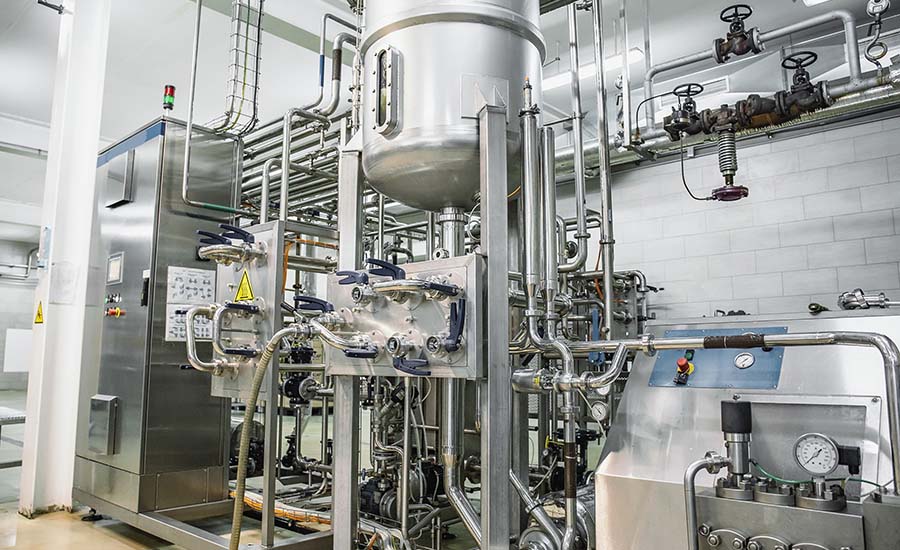
Cleaning programs should be validated against actual products and operating conditions, not ideal assumptions (Figure 1). That includes defined run times, practical buffers when those run times are approached or exceeded, and clear criteria for revalidation. Revalidation should be considered whenever run lengths are extended, formulas change significantly, allergens are introduced, viscosity or particulate load shifts, or new cleaning chemicals are used. Even minor changes can affect fouling, residue buildup, rinse performance, and the effectiveness of both clean-in-place (CIP) and clean-out-of-place (COP) programs.
This applies across the process, including the raw side, thermal processors, and filling operations. Many sanitation failures begin when cycles are shortened, steps are removed, washes are skipped, or operators manually intervene to keep an automated cycle from timing out. If a CIP system cannot complete its cycle without assistance, that is a major warning sign that the process may no longer be stable or fully controlled.
One of the biggest sanitation concerns is the development of biofilms and, eventually, biomass. When residues remain on surfaces, microorganisms can attach, persist, and become more difficult to remove with standard cleaning. Over time, this can lead to recurring spoilage, contamination, and chronic sanitation failures.
Time, temperature, flow, and chemical concentration must be controlled throughout the cleaning cycle to confirm that the wash was completed as intended and was effective. Special washes may be needed, but they must be managed carefully, as aggressive chemicals can damage gaskets, seals, and other components, creating new harborage points. Potable ingredient waterlines are another overlooked risk. If they are not included in sanitation and inspection routines, biofilms can develop over time and contribute to food safety and quality failures. Leadership, training, and oversight also matter. When capability is weak, significant risk can go unnoticed until a major failure occurs.
Looking for quick answers on food safety topics?
Try Ask FSM, our new smart AI search tool.
Ask FSM →
Failure Prevention Checkpoints
- Have CIP and COP cycles been validated for current products, run times, and operating conditions?
- Are extended runs, formula changes, allergens, or chemical changes triggering formal sanitation review?
- Are sanitation cycles ever shortened, skipped, or manually pushed through to avoid downtime?
- Are time, temperature, flow, and concentration verified throughout the cleaning cycle?
- Are biofilms, biomass, and overlooked utility lines actively checked rather than assumed to be under control?
Environmental and Personnel Controls
In aseptic beverage manufacturing, environmental and personnel controls are sometimes underestimated because the process itself is designed to provide strong microbial protection. That confidence can become dangerous. A robust aseptic system should never be used to justify a weak plant environment. When infrastructure, traffic patterns, air handling, personnel practices, and surrounding sanitation controls begin to slip, contamination pressure around the process rises. If enough barriers weaken simultaneously, the system can be challenged beyond what it was designed to withstand.
Facility conditions are often where problems begin. Leaking roofs, cracked floors, broken tiles, damaged drains, and neglected wall or ceiling surfaces create areas where moisture, debris, allergens, and microorganisms can accumulate. Once established, these areas can become ongoing sources of contamination spread by forklifts, carts, tools, shoes, and maintenance activities. What starts as a building issue can eventually spread to processing rooms, filler areas, and other high-risk locations.
Basic personnel practices matter just as much. Weak Good Manufacturing Practices (GMP) discipline, including poor handwashing, inadequate footwear control, improper gowning, or careless entry into controlled rooms, allows organisms to move from people into the environment. Controlled access must mean more than a sign on the door. It requires discipline in who enters, how they enter, what they bring, and how interventions are managed once inside.
Air handling is another critical control point. Aseptic areas depend on proper airflow, pressure relationships, filtration, and humidity control. When these systems are not maintained or balanced correctly, airborne bacteria, mold spores, dust, and moisture can be pulled in from surrounding areas. Condensation is especially concerning because moisture above the line or near fillers can create a direct route into sensitive areas.
Cleaning around the aseptic system is also essential. Many plants focus on cleaning the product path but pay less attention to the surrounding structures, utilities, and floors that influence room conditions. One compromised barrier or overlooked entry point can lead to a much larger failure.
Failure Prevention Checkpoints
- Are structural defects corrected before they become harborage or tracking points?
- Are access, handwashing, footwear, gowning, and intervention routines strong enough?
- Are air handling, room pressure, and condensation controls maintained and verified?
- Are cleaning and inspection programs focused on both the system and the surrounding environment?
- Is environmental monitoring based on actual contamination routes and recurring plant weaknesses?
Procurement and Supplier Control
Food safety begins long before the product reaches the processor or filler. It starts with procurement and supplier control. Commercial sterility is not achieved by thermal processing alone. It also depends on the consistency of incoming ingredients and packaging materials. When risk enters upstream, the aseptic system is forced to absorb variability it was never designed to manage. That is often where preventable failures begin.
Ingredient microbiological risk is a critical starting point. Raw materials can carry varying levels of mesophilic and thermophilic spore-forming organisms, particularly those from agricultural, botanical, or dairy. That variability matters because the same ingredient may perform differently depending on supplier, geographic origin, season, harvesting conditions, or handling practices. Procurement, quality, and operations must understand the realistic microbiological range that could affect process lethality, product stability, and shelf life. If this risk is underestimated, the result may be loss of commercial sterility resulting in spoilage, shortened shelf life, or food safety recalls.
Formulation-sensitive risks also need early review. Changes in powder quality, particulate size, flowability, pH, viscosity, protein percentage, and fat content can influence heat transfer and flow behavior, reducing the system's ability to deliver the intended lethality.
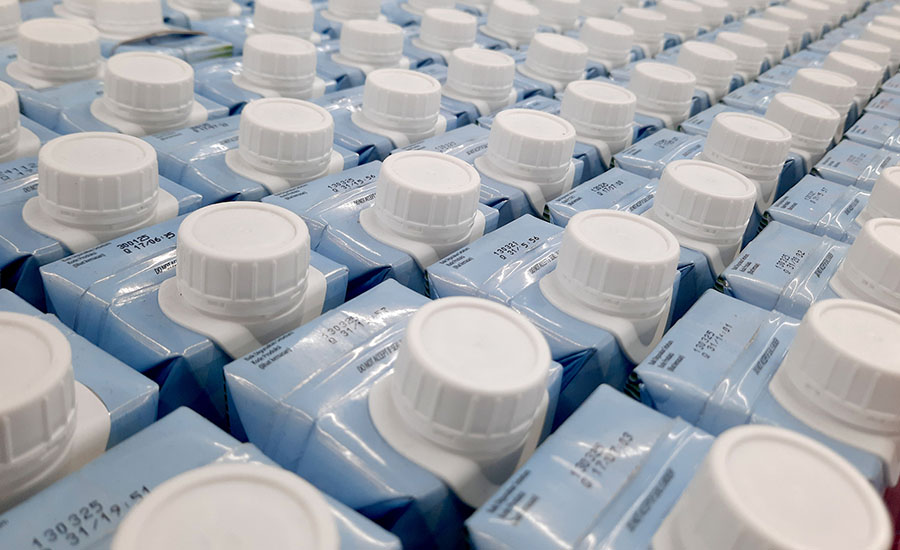
Packaging materials deserve the same scrutiny. Material consistency, conditioning and storage, transit time, barrier performance, and compatibility are all essential (Figure 2). Variability in containers, closures, or overall material performance can weaken even a well-controlled aseptic system, leading to package failure, loss of integrity, post-process contamination, or reduced shelf stability.
Strong supplier programs also require formal change notification. A "minor" supplier change in ingredient source, particle size, or packaging resin can disrupt the process in ways that are not immediately obvious.
Procurement is not simply a sourcing function. It is a critical food safety control point because upstream variability can become downstream failure.
Failure Prevention Checkpoints
- Do supplier specifications and Certificates of Analysis (COAs) reflect the actual microbiological load of incoming materials?
- Are formulation changes reviewed for their effect on lethality, fouling, and shelf life?
- Are packaging materials qualified for consistency, transit conditions, and performance?
- Are suppliers required to notify the company before making changes?
- Are incoming ingredients and packaging risks reviewed as food safety risks?
Thermal Processing
Even when the system has been properly filed, the thermal processor can still become a major failure point when routine operating conditions begin to drift. In many cases, the problem is not the original process design, but what is fed into the system and what is allowed to build up inside it over time.
One significant risk is raw product that is not properly prepared before entering the processor. Poorly hydrated or mixed powders can move through the system without receiving uniform thermal treatment. This creates what operators often describe as "fish eyes," where dry powder remains trapped inside partially wetted material. These pockets may not receive the intended heat treatment, even when the system appears to be operating normally. Changes in viscosity can create additional problems by affecting flow through the hold tube and contributing to fouling and residue buildup that support biofilm development.
Extended time on water can also create problems. Many processors circulate "sterile" water continuously when not running product. Over time, this can lead to inorganic mineral deposits on internal surfaces and fouling of probes or other critical components. Long runs on product can also create organic burn-on. That buildup can interfere with thermal performance, contribute to probe drift or false readings, and if not fully removed during cleaning, create harborage for allergens, microorganisms, or spores.
Rubber goods and related components are another major risk. Gaskets, valve diaphragms, and similar parts are exposed to heat, pressure, and aggressive cleaning chemicals. As they age, they can harden, crack, or lose integrity. This can lead to leaks, product intrusion, contamination pathways, and areas where residues collect and biofilms begin to form.
Thermal processors remain reliable only when the product entering them is properly prepared, the equipment is maintained carefully, and fouling is controlled before it becomes a larger food safety risk.
Failure Prevention Checkpoints
- Are powders and ingredients fully hydrated and properly dispersed before entering the processor?
- Are time on water and time on product controlled to prevent mineral scale and organic burn-on?
- Are probes and other critical components checked for fouling, drift, or false readings?
- Are gaskets, seals, and diaphragms replaced before wear creates leaks or harborage?
- Are products reviewed for compatibility with the processor before they are introduced?
Package Integrity and Labeling
Package integrity and labeling are two areas that can quietly create major risk in aseptic beverage manufacturing. Even when the process itself is well controlled, failures in packaging or labeling can lead to post-process contamination, shelf-life problems, or allergen-related recalls. In many cases, the issue is not the filler or thermal system, but what happens at the package level before, during, and after filling.
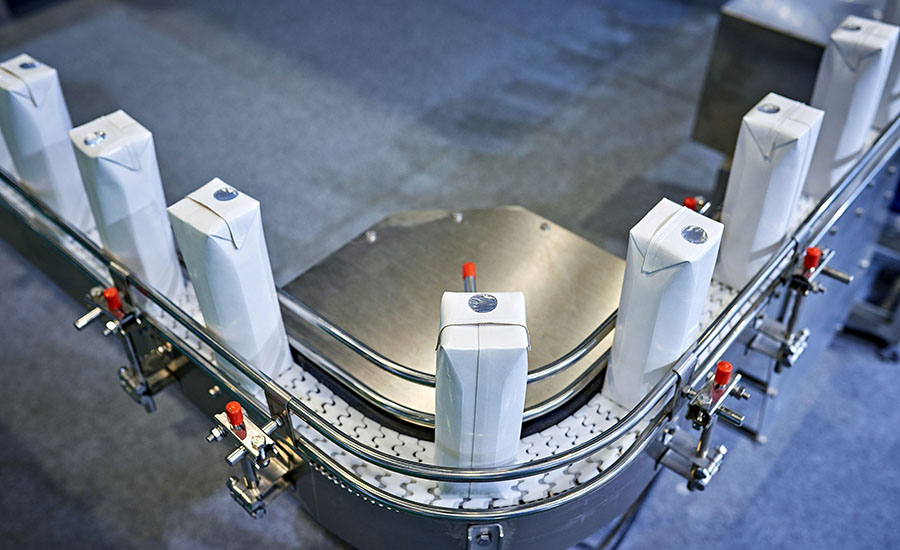
From a package integrity standpoint, bottles, pouches, caps, and closures must be properly stored, protected, and handled before use. Some materials also require conditioning or tempering before they perform as intended on the line. If that step is missed, then package performance may be affected during sterilization, filling, sealing, or capping. Packaging components should also be protected from anything that could interfere with sterilization or closure integrity, including condensation, dust, grease, lubricants, or other foreign material (Figure 3).
Plants should also determine whether lot testing or pre-run evaluation of packaging materials is necessary. Variability in resin, dimensions, surface condition, closure fit, or handling during transit and storage can create problems that are not obvious until production is underway.
Labeling creates a different, but equally serious, risk. Incorrect labels can turn an otherwise safe product into a recall, especially when allergens are involved. Strong line clearance is essential during changeovers and SKU transitions to ensure bottles, labels, caps, cartons, and printed materials from the prior run are fully removed before the next product begins.
Verification that the correct labels are in use must go beyond a quick visual check. Controls should confirm that the right product is matched to the right package and the right label every time. Package performance must also be evaluated after filling, including storage, palletizing, transport, and warehousing. Companies should determine whether units and finished cases can withstand single-pallet stacking only or whether double- or triple-stacking is acceptable, particularly in third-party or customer warehouses.
Failure Prevention Checkpoints
- Are bottles, pouches, caps, and closures stored, protected, and conditioned properly before use?
- Are packaging materials shielded from condensation, grease, dust, and other contaminants before sterilization?
- Is lot testing or pre-run packaging evaluation used when material variability could affect performance?
- Is line clearance strong enough to fully remove prior-run materials during SKU changes?
- Has package performance been evaluated after filling, including stacking strength and warehouse handling conditions?
Maintenance and Reliability
In aseptic manufacturing, serious failures are often traced back to routine maintenance and preventive maintenance practices that were ignored, delayed, or treated as less important than production output (Figure 4).
A common failure point is the delayed replacement of wear components, especially gaskets, valve seats, and other rubber parts. These components are repeatedly exposed to heat, pressure, cleaning chemicals, and mechanical stress. Over time, they can harden, crack, distort, or lose their sealing ability. When that happens, the result may be leaks, poor cleanability, product buildup, or entry points for contamination. Risk increases when non-OEM parts are used that are not designed for the system's actual temperatures, pressures, or chemistries. What appears to be a cost-saving decision can create compatibility issues, premature failure, and conditions that support residue buildup and biofilm development.
Clamp failure is another overlooked risk. As clamps age, they can lose tension, weaken, or become damaged. This can allow small leaks, compromise hygienic connections, and create migration paths for contamination. It is also a serious safety issue, since clamp failure on a pressurized or high-temperature system can cause severe burns.
Preventive maintenance is also critical for the utility systems. Potable water lines, ingredient systems, culinary steam sets, compressed air systems, boilers, dehumidifiers, condensate management systems, and air handling components must all be maintained on a disciplined schedule.
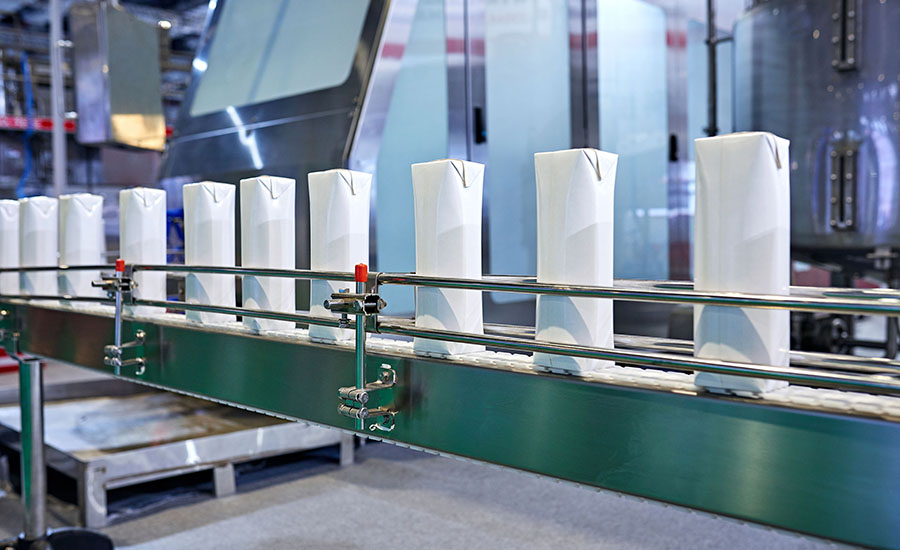
Calibration failures are equally serious. Temperature probes, pressure sensors, flow devices, timing pumps, and conductivity systems must be calibrated at the required frequency. When instruments drift, the system may appear normal while critical conditions fall outside validated limits.
Failure Prevention Checkpoints
- Are gaskets, seals, clamps, valve components, and other wear parts changed at the required frequency?
- Are only approved components used for hygienic and high-temperature applications?
- Are utility systems such as water, steam, air, and dehumidification included in preventive maintenance programs?
- Are probes, sensors, and critical instruments calibrated on time and checked for drift?
- Are post-maintenance inspections and startup checks strong enough to confirm the system is safe to return to service?
Operation-Only Culture
One of the most dangerous cultural shifts occurs when operational output begins to outweigh every other function. It usually does not start with bad intent. It starts with pressure: keep the line running, recover the schedule, protect throughput, hit OEE, avoid downtime, make the numbers. Over time, those pressures can reshape decision-making in ways that quietly weaken food safety, sanitation, maintenance discipline, and overall system reliability.
Statements such as "just keep it running" or pressure to restart after repeated CIP failures send a powerful message. They tell operators, mechanics, and supervisors that production is the real priority, while sanitation, preventive maintenance, and process discipline are obstacles to be worked around. Once that mindset takes hold, teams begin normalizing risk. Failed cleaning cycles are treated as inconveniences. Deep-clean activities are postponed. Preventive maintenance tasks are delayed to protect schedule attainment. Shortcuts become routine because the line is still running and finished product appears, at least initially, to be acceptable.
In the short term, those decisions are often celebrated. The team is praised for getting back online. Production volumes look strong. Downtime appears lower. Overall equipment effectiveness (OEE) may even improve on paper. But these gains are usually temporary and misleading. Equipment that is not maintained at the proper interval begins to degrade. Components wear beyond their intended life. Deposits, residues, and product buildup increase. Cleaning becomes less effective, and minor process deviations become more frequent. What management sees as resilience may actually be the early stage of system decline.
Eventually, the line begins to show warning signs. Efficiencies become inconsistent. Startup performance worsens. Downtime events become harder to diagnose. Small leaks, recurring alarms, and repeated interventions become part of the daily routine. Finished product may begin to show "spotty" failures, including spoilage, shelf-life inconsistencies, package defects, off-flavors, or unexplained consumer complaints. These are warning signs of deeper system instability.
If these signals are ignored, then product quality becomes unreliable, investigations increase, and product holds become more common. Teams spend more time reacting than preventing. Eventually, the line may run only intermittently or shut down entirely for major sanitation, maintenance, or investigation work.
Failure Prevention Checkpoints
- Are teams making exceptions just to keep production moving?
- Has the system been validated for current products and operating conditions?
- Are changes reviewed formally before implementation?
- Are warning signs being trended and escalated early?
- Is ownership for this risk area clear?
Quality Testing, Data, and What it is Telling You
Quality checks only matter if they are designed to detect risk early enough for the business to act. That means using the right equipment, methods, and testing frequency. A technically sound test performed too infrequently may do little to protect the operation. The goal is not to collect data; it is to identify developing problems before they become broader failures.
In-process checks and finished product testing should reflect the realities of the operation. Testing frequency should take into account product type, process risk, startup conditions, changeovers, run length, ingredient sensitivity, and prior issues. If the interval is too wide, then early signs of drift may be missed, and the problem may only be recognized after a significant volume of product has been produced.
Assuming the correct methods and equipment are being used and technicians are properly trained, failures must be taken seriously. One of the most damaging mindsets is "just retest it and it will be fine." That response usually points to a deeper issue. Either the process is unstable, the equipment is unreliable, the technician is inconsistent, or leadership is avoiding disciplined investigation.
Data must also be monitored and trended to reveal patterns. Repeated failures on the raw side, or sporadic failures that seem unrelated, can become meaningful when linked to a specific tank, processor, line, shift, ingredient, or operating condition. Ongoing issues tied to a specific asset may point to a sanitation weakness, mechanical problem, valve issue, or hidden harborage point. If results are reviewed one event at a time instead of as a connected trend, the true source of instability may be missed.
This is where quality data becomes a leadership issue, not just a laboratory issue. Negative trends, repeat failures, and unexplained variation should trigger formal CAPAs with strong management involvement. Too often, companies respond with aggressive cleaning or temporary operating adjustments that make the issue disappear for a short time. That may buy time, but it does not fix the problem. Without identifying the true root cause, the failure is likely to return later in a bigger and more costly way.
Failure Prevention Checkpoints
- Are test methods and testing frequency strong enough to catch developing issues early?
- Are failures investigated deeply, or is the default response to retest and move on?
- Is data trended by equipment, shift, ingredient, product, and operating condition?
- Do repeated failures trigger formal CAPAs with strong management ownership?
- Are temporary fixes being mistaken for true root-cause correction?
Change Control and Change Management
In aseptic manufacturing, change is often introduced with good intentions. Teams want to improve efficiency, reduce cost, and increase uptime. The problem begins when changes are made too quickly, too narrowly, or without the right technical review. In high-risk operations, a seemingly helpful change can undermine long-term product stability.
In some operations, adjustments are made informally because the team believes the risk is low or the benefit is obvious. A cleaning cycle is shortened, a setting is adjusted, a step is skipped. These decisions may appear successful at first, especially if downtime decreases or output improves. In aseptic systems, however, early success does not prove the change is safe.
For example, if a CIP circuit that historically requires three hours now consistently finishes in two, that should not automatically be treated as a win. It may reflect an improvement in time, but it may also signal reduced wash coverage, weaker chemical exposure, and incomplete soil removal. Unusual gains deserve the same scrutiny as unusual failures.
That does not mean improvement should be avoided. It means improvement must be controlled. Changes should be reviewed by a cross-functional group that includes operations, quality, sanitation, maintenance, engineering, and leadership. Depending on the change, outside input may also be needed from original equipment manufacturers (OEMs), chemical suppliers, or packaging suppliers. Effective change management must evaluate not only the immediate impact of a change but also its effects over time. In aseptic manufacturing, change should not be feared, but it should never be casual.
Failure Prevention Checkpoints
- Are operational changes ever made informally without full, cross-functional review?
- Does the site investigate unusually positive results with the same discipline used for failures?
- Are the right internal and external experts involved before changes are approved?
- Is the effect of a change monitored long enough to detect delayed problems?
- Is the change management process practical enough that teams use it consistently?
Leadership and Culture
Leadership is one of the most important controls in the plant. The best systems, equipment, and procedures can still fail when leadership is weak, distant, inconsistent, or overly reactive. Strong aseptic operations require leaders who are visible, engaged, and present across all levels, functions, and shifts, especially with hourly employees who are closest to the work and often first to see risk developing.
Leadership presence matters because it shapes culture. When leaders are regularly on the floor, ask good questions, listen carefully, and follow through on concerns, employees are more likely to speak up early. That is where professional candor and psychological safety become critical. People must feel safe raising concerns, reporting failures, and sharing bad news without fear of blame or overreaction. At the same time, employees should be encouraged to bring possible solutions, including the benefits, trade-offs, and risks. That kind of engagement builds ownership and strengthens decision-making.
Good leadership also means making sure people feel like part of one team. Aseptic performance depends on alignment across operations, quality, sanitation, maintenance, warehousing, and technical support. When departments work in silos or compete for priorities, problems are missed, handoffs weaken, and risk increases.
Leaders must also identify gaps before they become failures. That includes staffing, training, supervision, technical capability, shift coverage, and escalation practices. Most importantly, leaders must remain steady under pressure. If employees believe bad news will trigger blame or overreaction, they will hold back information. When leaders stay composed, ask clear questions, and focus on facts and solutions, employees are more likely to share what really happened.
Failure Prevention Checkpoints
- Are leaders consistently visible across all shifts, especially with hourly teams?
- Do employees feel safe raising concerns and bad news early?
- Are employees encouraged to bring solutions, not just problems?
- Are gaps in labor, training, and supervision identified and addressed quickly?
- Do leaders stay composed and constructive when failures occur?
Takeaway
Aseptic manufacturing is often viewed through the lens of the thermal process, sterile filling, and package performance. While essential, these elements are only part of the story. In practice, failures are often caused not by flaws in the original process design, but by the gradual erosion of the systems that support it.
That is what makes aseptic manufacturing so demanding. The process may be robust, but it is not immune to operational creep. Small compromises made to protect throughput can contribute to warning signs and failure.
Strong aseptic plants understand this. They do not rely on the thermal process alone to protect the business. They build discipline around other essential functions. In the end, commercial sterility may be the outcome, but operational discipline is what sustains it.
References
- U.S. Food and Drug Administration (FDA). "Acidified & Low-Acid Canned Foods Guidance Documents & Regulatory Information." Current as of May 29, 2025. https://www.fda.gov/food/guidance-documents-regulatory-information-topic-food-and-dietary-supplements/acidified-low-acid-canned-foods-guidance-documents-regulatory-information.