Food Safety
search
Ask Food Safety AI
cart
facebook twitter linkedin
  • Sign In
  • Create Account
  • Sign Out
  • My Account
Food Safety
  • NEWS
    • Latest News
    • White Papers
  • PRODUCTS
  • TOPICS
    • Contamination Control
    • Food Types
    • Management
    • Process Control
    • Regulatory
    • Sanitation
    • Supply Chain
    • Testing and Analysis
  • PODCAST
  • EXCLUSIVES
    • Food Safety Five Newsreel
    • eBooks
    • FSM Distinguished Service Award
    • Interactive Product Spotlights
    • Videos
  • BUYER'S GUIDE
  • MORE
    • ENEWSLETTER >
      • Archive Issues
      • Subscribe to eNews
    • Store
    • Sponsor Insights
    • ASK FSM AI
  • WEBINARS
  • FOOD SAFETY SUMMIT
  • EMAG
    • eMagazine
    • Archive Issues
    • Editorial Advisory Board
    • Contact
    • Advertise
  • SIGN UP!
NewsContamination ControlFood TypeChemicalAlternative ProteinsPlant-Based

Study Shows Relatively High Levels of Flame Retardants, Plasticizers in Plant-Based ‘Cheeses,’ Soy Products
By Food Safety Magazine Editorial Team
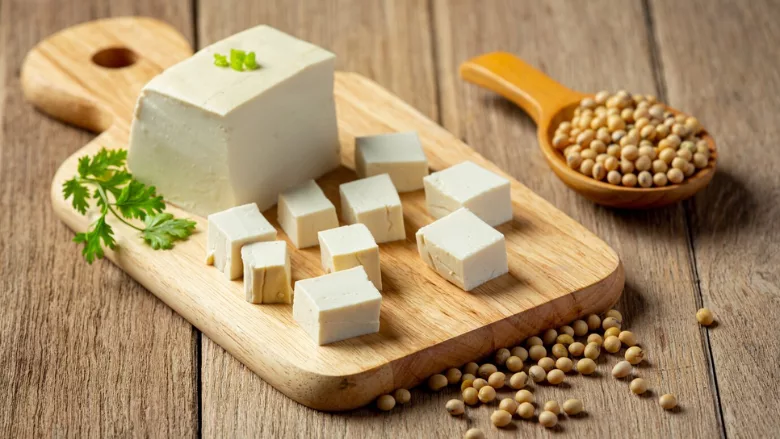
tofu and soybeans

Image credit: jcomp via Freepik

April 25, 2025

A study led by researchers from the University of Antwerp has found that ultra-processed plant-based foods contain high levels of certain chemical contaminants in comparison to their animal-based analogs. However, based on a dietary exposure risk assessment, the contaminants in these products are unlikely to pose a significant health risk for the adult population, even when eating an all-vegan diet.

For the study, published in Environmental Science and Technology, the researchers purchased 52 ultra-processed plant-based food samples from large grocery chains in Belgium, Germany, and the UK, including a wide selection of commercial brands. Samples included plant-based meat alternatives (e.g., burger, chicken, minced meat, sausage, and cold cut alternatives, as well as processed soy products like tofu), plant-based cheese alternatives, plant-based fish alternatives, and miscellaneous other items. The foods were made of ingredients like soy, legumes, vegetables, grains, mycoprotein, oils, and seeds and nuts.

The samples were tested for organophosphorus flame retardant and plasticizer contaminants using liquid chromatography-tandem mass spectrometry. Specifically, the researchers tested for 17 organophosphates, eight phthalates, and eleven alternative plasticizers.

The results showed differences in contamination levels and patterns between food categories. Plant-based cheese-alternatives, which consisted mostly of coconut oil as their base ingredient, showed the highest levels of both total organophosphorus flame retardants, with a mean of 123 nanograms per gram of wet weight (ng/g ww), and total plasticizers, with a mean of 1,155 ng/g ww. When looking at previous studies, the contamination levels of plant-based cheese alternatives were comparable to concentrations measured in commonly consumed oils and fats for both organophosphorus flame retardants and phthalates, but higher than in animal-based cheese for organophosphorus flame retardants. The researchers hypothesize that, since coconut oil was not included in the previous comparable studies, coconut oil may be a possible source of contamination. Additionally, while di-(2-ethylhexyl) phthalate (DEHP) was the main contaminant found in plant-based cheese alternatives, it could not be detected in the only sample that was made of nuts instead of coconut oil.

Processed soy products (i.e., tofu, tempeh, and dry soy) were the second most contaminated food category for both organophosphorus flame retardants (78 ng/g ww) and plasticizers (817 ng/g ww), even though such products are considered to be less processed than other plant-based alternatives. This is possibly due to migration of contaminants from food contact materials, although the researchers could not draw a link between final product packaging and product contamination, suggesting that contamination migration may occur at earlier points in the supply chain, such as during processing. Most of the contamination of the soy products was attributed to 2-ethylhexyl diphenyl phosphate (EHDPHP) and acetyl tributyl citrate (ATBC), both of which are used in plastic food contact materials. The researchers found the high levels of contamination in soy products compared to more processed categories of plant-based foods to be surprising, and hypothesized that the soy content itself may be a contributing factor, calling for additional research into the role it may play in contaminant migration.

The researchers also conducted a dietary exposure risk assessment for organophosphorus flame retardants and phthalates in flexitarian, vegetarian, and vegan diets. For sum organophosphorus flame retardants, the estimated daily intake (EDI) was 2.7 nanograms per kilogram of bodyweight per day (ng/kg bw/day) in the flexitarian scenario and 14 ng/kg bw/day in the vegetarian scenario. The vegan EDI reached 53 ng/kg bw/day, with plant-based meat alternatives being the major contributor (27 ng/kg bw/day). However, calculated EDIs in the vegan scenario were still at least 1,000 times lower than available health-based guidance values, indicating that the estimated exposure is unlikely to pose a significant health risk for the adult population.

Overall, the researchers underlined the differences in contamination levels and patterns between plant-based food categories, and the fact that, in general, the plant-based products assessed in the study showed higher contamination levels compared to their animal-based counterparts (based on previous studies). They call for more research that includes a wider variety of ultra-processed plant-based food products and contaminants in future consumption surveys, market basket studies, and dietary exposure risk assessments. Additional studies are also required to better understand specific sources of contamination along the supply chain and in the production process. Although the researchers’ dietary risk assessment did not indicate an immediate health concern for the adult population, a more robust assessment combining data of multiple compound classes is needed, and the researchers still caution against basing one’s diet entirely on ultra- processed plant-based products.

Looking for quick answers on food safety topics? Try Ask FSM, our new smart AI search tool. Ask FSM →

KEYWORDS: exposure science food contact materials (FCMs) phthalates study University of Antwerp

Share This Story

Fsm purple logo 200x200

The Food Safety Magazine editorial team comprises Bailee Henderson, Digital Editor ✉; Adrienne Blume, M.A., Editorial Director; and Stacy Atchison, Publisher.

Recommended Content

JOIN TODAY
to unlock your recommendations.

Already have an account? Sign In

  • people holding baby chicks

    Serovar Differences Matter: Utility of Deep Serotyping in Broiler Production and Processing

    This article discusses the significance of Salmonella in...
    Contamination Control
    By: Nikki Shariat Ph.D.
  • woman washing hands

    Building a Culture of Hygiene in the Food Processing Plant

    Everyone entering a food processing facility needs to...
    Food Prep/Handling
    By: Richard F. Stier, M.S.
  • graphical representation of earth over dirt

    Climate Change and Emerging Risks to Food Safety: Building Climate Resilience

    This article examines the multifaceted threats to food...
    International
    By: Maria Cristina Tirado Ph.D., D.V.M. and Shamini Albert Raj M.A.
Manage My Account
  • eMagazine Subscription
  • Subscribe to eNewsletter
  • Manage My Preferences
  • Website Registration
  • Subscription Customer Service

More Videos

Sponsored Content

Sponsored Content is a special paid section where industry companies provide high quality, objective, non-commercial content around topics of interest to the Food Safety Magazine audience. All Sponsored Content is supplied by the advertising company and any opinions expressed in this article are those of the author and not necessarily reflect the views of Food Safety Magazine or its parent company, BNP Media. Interested in participating in our Sponsored Content section? Contact your local rep!

close
  • Salmonella bacteria
    Sponsored byThermoFisher

    Food Microbiology Testing Methods: Salmonella species

  • a diagram explaining indicator organisms
    Sponsored byHygiena

    How Proactive Listeria Testing Helps Prevent Six- and Seven-Figure Recalls

  • woman grocery shopping
    Sponsored byCorbion

    Designing Safety Into Every Bite: Proactive Risk Mitigation for Refrigerated Foods

Popular Stories

newborn earing from bottle

Infants Nationwide Hospitalized With Botulism After Consuming ByHeart Formula

researcher dropping liquid in petri dishes

First-of-its-Kind Study Shows How Listeria Strains Evolve Into Strong Biofilm Formers

us capitol

MAHA Pushback Kills ‘Big Food’-Aligned Legislative Effort to Stop State Food Laws

Events

November 18, 2025

Dry Sanitation and Cleaning Techniques for Facilities and Equipment

Live: November 18, 2025 at 12:00 pm EDT: From this webinar, attendees will learn best practices employed by dry/low-moisture food processors for dry sanitation and equipment cleaning.

November 20, 2025

New U.S. Additive Bans: How to Prepare and Protect Your Brand

Live: November 20, 2025 at 11:00 am EST: From this webinar, attendees will learn the impact of ingredient restrictions on product development, sourcing, labeling, and market access.

December 4, 2025

Beyond Detection: How Integrated PCR Diagnostics Strengthen Food Safety in RTE Manufacturing

Live: December 4, 2025 at 2:00 pm EST: From this webinar, attendees will learn best practices for prevention of FM contamination at the corporate and plant levels.

View All

Products

Global Food Safety Microbial Interventions and Molecular Advancements

Global Food Safety Microbial Interventions and Molecular Advancements

See More Products

Related Articles

  • almonds splashing in milk

    Study Shows High Proportion of Spore-Forming Microbes in Plant-Based Dairy Ingredients

    See More
  • empty plastic water bottles

    High Levels of Toxic Plasticizers Phthalates, Bisphenols Found in Nearly All Foods in U.S.

    See More
  • red and green grapes spilling out of overturned wooden bucket

    German Study Shows High Pesticide Levels in Non-EU Grapes

    See More

Related Products

See More Products
  • 1118396308.jpg

    High Throughput Analysis for Food Safety

  • 9781498721776.jpg

    Handbook of Food Processing: Food Safety, Quality, and Manufacturing Processes

  • 9781138070912.jpg

    Trends in Food Safety and Protection

See More Products

Related Directories

  • Food Plant Engineering LLC

    We are designers and builders of sustainable food production facilities. Using imagination, innovation, and ingenuity, we help food manufacturing companies improve food safety, gain productivity, and grow capacity.
×

Never miss the latest news and trends driving the food safety industry

eNewsletter | Website | eMagazine

JOIN TODAY!
  • RESOURCES
    • Advertise
    • Contact Us
    • Directories
    • Store
    • Want More
  • SIGN UP TODAY
    • Create Account
    • eMagazine
    • eNewsletter
    • Customer Service
    • Manage Preferences
  • SERVICES
    • Marketing Services
    • Reprints
    • Market Research
    • List Rental
    • Survey/Respondent Access
  • STAY CONNECTED
    • LinkedIn
    • Facebook
    • Instagram
    • X (Twitter)
  • PRIVACY
    • PRIVACY POLICY
    • TERMS & CONDITIONS
    • DO NOT SELL MY PERSONAL INFORMATION
    • PRIVACY REQUEST
    • ACCESSIBILITY

Copyright ©2025. All Rights Reserved BNP Media.

Design, CMS, Hosting & Web Development :: ePublishing