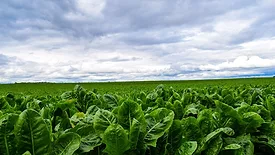
Designed for Salinas Valley, California growers, an ongoing project supported by the Center for Produce Safety will leverage existing science and consider unique farming operation factors to create a user-friendly tool that assesses Escherichia coli contamination risk and provides actionable mitigation measures.
The U.S. Food and Drug Administration (FDA) has published an updated compliance guide for small food entities regarding the preharvest agricultural water requirements of the Food Safety Modernization Act (FSMA) Produce Safety Rule.
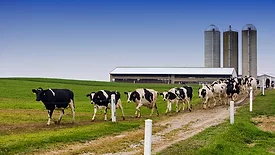
Testing of all licensed dairy farms across the state of Massachusetts has produced 100 percent negative results for Highly Pathogenic Avian Influenza (HPAI) H5N1. Massachusetts is the first U.S. state to test all of its dairy herds for the virus.
In this bonus episode of Food Safety Matters, we speak with Scott Gustin, M.S., Technical Advisor for Elanco Animal Health, about the crucial role that farm biosecurity plays in ensuring food safety, best practices for farm personnel, and the future landscape of biosecurity.
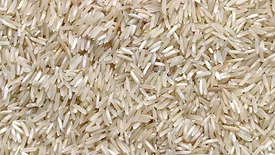
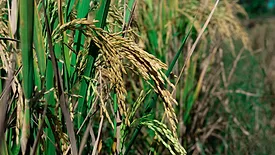
A recent University of Delaware study has shown that, although certain irrigation management approaches can reduce the levels of either cadmium or arsenic in rice crops, irrigation management may not be able to simultaneously mitigate both of the chemicals.
With relation to circular agri-food production models, a recent article authored by Food and Agriculture Organization of the United Nations (FAO) experts has explored the current and emerging risks, data gaps, and opportunities for food safety.
A recent study found that, while alternative farming practices aimed at reducing water usage can lower greenhouse gas emissions and arsenic levels in rice, the same practices may also increase cadmium content in plants. The same study also demonstrated that no-till farming techniques raise the likelihood of mycotoxin contamination in crops.
A new study has revealed how leafy greens like spinach absorb various toxic metals differently and offers strategies to reduce uptake, highlighting practical solutions for farmers, food processors, and consumers.
The California Assembly has passed a bill requiring an expedited review of paraquat, an herbicide linked to human health harms. It is used on food crops like almonds and pistachios.
The U.S. Department of Agriculture (USDA) has awarded a $300,000 grant to a University of Arkansas research project that aims to develop best practices for controlling pests and pathogens in soilless substrate used in hydroponic lettuce production.
 RSS
RSS