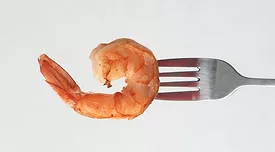
On August 24, 2023, the U.S. Food and Drug Administration (FDA) signed a Regulatory Partnership Arrangement (RPA) with Ecuador’s Vice Ministry of Aquaculture and Fisheries (VMAF) to strengthen the food safety of Ecuadorian shrimp intended for sale in the U.S. market.
The UK Food Standards Agency (FSA) has issued a new voluntary guidance for industry on glycerol in slush-ice drinks, advising that they should not be sold to children four years of age and under.
With a draft legislation recently introduced to the European Commission, Italy is seeking to prohibit the production and marketing of cell-based meat, as well as the sale of plant-based proteins labeled as meat.
The European Food Safety Authority (EFSA) and the European Center for Disease Prevention and Control (ECDC) recently published a summary of a joint investigation of a multi-country foodborne illness outbreak of Salmonella Seftenberg that was possibly linked to cherry-like tomatoes.
The European Food Safety Authority (EFSA) recently updated its list of qualified presumption of safety (QPS) -recommended microbiological agents intentionally added to food or feed. QPS is a regularly updated generic pre-valuation of the safety of microorganisms based on an assessment of published data for each agent.
The Dutch government has partnered with the cultivated meat industry to develop a code of practice for the facilitation of taste tests for cell-cultured meat and seafood products prior to receiving market approval.
The UK Food Standards Agency (FSA) hopes to secure further legal powers for the National Food Crime Unit (NFCU) in England and Wales, which will enable the agency to more effectively investigate food crime with autonomy by granting powers of entry and search. A public consultation is now available.
In 2022, two-thirds of business in England and nine of ten businesses in Northern Ireland and Wales had their food hygiene ratings on visible display, according to an audit by the UK Food Safety Authority (FSA).
The UK Government’s Foreign, Commonwealth, and Development Office recently released a guidance on the standards and regulatory requirements that businesses need to meet in order to import and sell goods, including foodstuffs, in the UK.
 RSS
RSS