The UK Food Standards Agency has endorsed a new route to qualification for those wanting to further their career in food standards and trading standards. The new apprenticeship will contribute to the pipeline of officers who can carry out official food safety controls.
The UK Food Standards Agency (FSA) recently published the results of a survey that assessed the value of the national Food Hygiene Rating Scheme (FHRS) and perspectives on potential changes to regulatory approach.
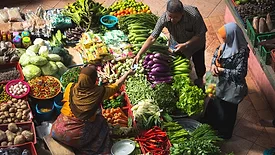
The World Health Organization of the United Nations’ (WHO’s) new manual, Five Keys for Safety Traditional Food Markets: Risk Mitigation in Traditional Food Markets in the Asia-Pacific Region, provides guidance on the implementation of five keys to promote public health and safety in the context of food safety, zoonotic diseases, and infectious respiratory diseases.
Dietary exposure to bisphenol A (BPA), a chemical used in food packaging, is a health concern for consumers across all age groups, according to a reevaluation conducted by the European Food Safety Authority (EFSA). The agency significantly lowered the tolerable daily intake (TDI) for BPA.
The Food and Agriculture Organization of the United Nations (FAO) has released a report on the food safety considerations for regulating foods
foods derived from gene editing (also known as “genome editing”) to help national authorities develop and implement policies and regulatory criteria for food products derived from gene editing.
There are no public health or food safety issues posed by popular non-nutritive sweetener steviol glycosides, according to a risk assessment conducted by Food Standards Australia New Zealand (FSANZ).
Following a string of recalls in recent years caused by Ethylene Oxide, the European Commission (EC) has classified Ethylene Oxide as a pesticide and the chemical will be subject to mandatory testing.
 RSS
RSS