FDA and CDC have closed their investigation into a Listeria outbreak linked to ready-to-eat products produced by Fresh and Ready Foods of San Fernando, California, announcing that one of the ten people who fell ill has died.
A study suggests that some food matrices (i.e., smoked fish and soft cheese) significantly increase the ability of Listeria monocytogenes to adapt, survive digestion, and cause infection. Based on the findings, modulating the fat and protein content in food could be one potential way to reduce L. monocytogenes risk.
JBT Marel recently launched its patented Efficient Agitation Retort, which optimizes static processing and agitation to provide flexible preservation solutions across a wider range of packaging formats, including those for ready-to-eat (RTE) food products.
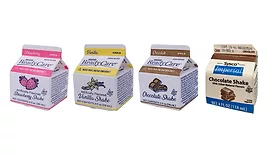
According to FDA, between 2018 and 2025, 42 people were sickened and 14 died across 21 states after consuming Listeria monocytogenes-contaminatedSysco Imperial and Lyons ReadyCare Frozen Supplemental Shakesthat wereserved at long-term care facilities and hospitals.
In 2024, UKHSA investigated seven listeriosis outbreaks across England and Wales, linked to various food products including smoked fish, chocolate and strawberry mousse, garlic sausage and pre-packed sandwiches.
Researchers from the University of Córdoba
in Spain have developed a model for predicting the growth of Listeria monocytogenes in artisanal cheeses, which will be especially useful to producers that must demonstrate compliance with recently expanded EU regulations for controlling the pathogenin ready-to-eat (RTE) foods.
The UK Health Security Agency (UKHSA) is investigating a listeriosis outbreak involving five illnesses and three deaths. Desserts served at healthcare facilities are being considered as the potential vehicle of illness. The desserts tested positive for low levels of Listeria monocytogenes, but have not been confirmed as the source of the outbreak.
FDA is launching “Operation Stork Speed,” comprising a series of actions like increased contaminant testing, to better ensure the safety and adequacy of the U.S. infant formula supply. Consumer Reports, which says Operation Stork Speed was announced one day after it shared contaminant testing results with the agency, has questioned whether FDA is adequately resourced to deliver on its new promises.
This episode of Food Safety Five covers a new EU regulation that limits PFAS in food packaging and bans single-use plastics for fruit and vegetables under a certain weight, among other changes. Also discussed is a bill introduced to the New York State legislature to ban certain food additives and tighten requirements for GRAS ingredients.
 RSS
RSS