Food Standards Australia New Zealand (FSANZ) has published the findings of a national survey of antimicrobial resistance (AMR) in foodborne bacteria on raw beef, chicken, and pork meat at retail.
As part of its efforts to encourage industry to phase out the use of petroleum-based synthetic food dyes, FDA is expanding the allowed uses of the label claim “no artificial colors” on food products and has approved a new naturally derived colorant for food.
In the wake of a high-profile safety incidents involving powdered infant formula, FAO/WHO have issued a call for experts and data to support JEMRA in conducting a risk assessment that will help the Codex Committee on Food Hygiene update the Codex Alimentarius standards for powdered formula.
New Jersey Governor Phil Murphy has signed into law the Protecting Against Forever Chemicals Act, which prohibits statewide the manufacture and sale of certain consumer goods that contain intentionally added per- and polyfluoroalkyl substances (PFAS).
Following the ByHeart botulism outbreak, FDA intends to begin testing infant formula products and ingredients for Clostridium botulinum to help determine whether contamination by the pathogen is a “foreseeable hazard that companies could test for.”
The FAO/WHO Joint Expert Meeting on Microbiological Risk Assessment (JEMRA) has published a report on prevention and intervention measures for foodborne virus–commodity pairs of concern.
The UK Government’s PFAS Plan addresses human dietary exposure and food and water contamination, environmental monitoring, potentially restricting PFAS uses, and other actions.
The researchers found that advanced, multi-step disinfection treatment significantly reduces the antibiotic resistance (AMR)-related food safety risks of wastewater reused for irrigation, while biological treated water remains a potential source of resistant bacteria contamination.
This episode of Food Safety Five discusses new research about the rising Salmonella disease burden worldwide and the utility of whole genome sequencing (WGS) for Salmonella surveillance.
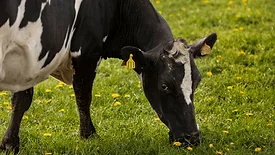
Antibodies for highly pathogenic avian influenza H5N1 (HPAI H5N1) have been detected in a Dutch dairy cow, indicating the animal was infected with the virus.
 RSS
RSS