Food Safety
search
Ask Food Safety AI
cart
facebook twitter linkedin instagram youtube
  • Sign In
  • Create Account
  • Sign Out
  • My Account
Food Safety
  • NEWS
    • Latest News
    • Food Safety Five Newsreel
  • PRODUCTS
  • TOPICS
    • Contamination Control
    • Food Types
    • Management
    • Process Control
    • Regulatory
    • Sanitation
    • Supply Chain
    • Testing and Analysis
  • PODCAST
  • EXCLUSIVES
    • eBooks
    • Sponsored Insights
    • Sponsored White Papers
    • FSM Distinguished Service Award
    • Interactive Product Spotlights
    • Videos
  • MORE
    • BUYER'S GUIDE
    • NEWSLETTERS >
      • Archive Issues
      • Subscribe to eNews
    • Store
    • ASK FSM AI
  • WEBINARS
  • FOOD SAFETY SUMMIT
  • FSM FEATURES
    • FSM Features Collection
    • eMag Archives
    • Editorial Advisory Board
    • Contact
    • Advertise
  • SIGN UP!
Home » Topics » Contamination Control

Contamination Control
Contamination Control RSS Feed RSS

fish sticks

FDA Study Will Evaluate Children’s Exposure to Mercury from Seafood

October 11, 2022

As part of the Closer to Zero Action Plan, the U.S. Food and Drug Administration has asked the National Academies of Sciences, Engineering, and Medicine to conduct an independent study to assess young children’s exposure to mercury from consuming seafood.


Read More
chinese takeout

Navigating U.S. Federal and State Regulation of PFAS in Applications Involving Food

PFAS restrictions and bans are not consistent, and determining compliance presents numerous challenges
George Misko
George G. Misko J.D.
October 11, 2022

As the focus on per- and polyfluoroalkyl substances (PFAS) intensifies, multiple states and some U.S. federal agencies are implementing or considering implementation of restrictions or bans on the products use in food contact articles. This article focuses on the restrictions and bans in the U.S. that impact the use of PFAS in food packaging, and includes a discussion of the challenges manufacturers face due to inconsistent science and policy decision related to the use of these chemicals in food packaging.


Read More
Pesticide residues

Demystifying Pesticide Residues

To determine acceptable pesticide residue risk levels, we rely on a risk assessment framework to make science-based decisions
Dave Stone Ph.D. Jason Sandahl Ph.D.
October 11, 2022

This article covers U.S. regulatory oversight in establishing pesticide residue tolerances, testing for residues in domestic goods and imports, and the importance of science-based standards for global trade and food safety.


Read More
meat safety

Ongoing Improvements to Meat and Poultry Safety

The author examines five current topics in meat and poultry and their implications to protein food
Eric Wilhelmsen
Eric Wilhelmsen Ph.D., CFS
October 11, 2022
The meat and poultry industries are an interesting mix of conservative practices and innovation. This article examines five topics and their implications to protein food, including meat safety as a model for the produce industry; increased interest in Salmonella and Listeria; USDA proposed rulemaking for meat and poultry; the move toward aggregated sampling; and developing safety needs for tissue-cultivated products.


Read More
Elanco CI Model for Salmonella in Poultry
BIZTRACKS

Continuous Improvement Model for Reducing Salmonella in Poultry

October 10, 2022

A continuous improvement approach may be useful for poultry operations aiming to reduce the presence of Salmonella in their flocks, in light of the U.S. Department of Agriculture’s initiative that includes increased quantitative microbial monitoring of incoming flocks to processing plants.


Read More
sliced ham on grilled cheese.

Certain Regulatory Limits for Listeria in RTE Foods Could Greatly Reduce Contamination, Foodborne Illness, Study Finds

Bailee Henderson headshot
Bailee Henderson
October 7, 2022

A recent study has estimated that removing products with a concentration of Listeria monocytogenes higher than 1 CFU/g could greatly reduce food contamination and associated foodborne illness cases. The study also found ready-to-eat (RTE) foods to be of greatest concern.


Read More
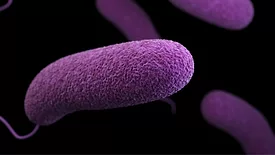
vibrio 3d rendering

CDC Reports 8 Percent Decrease of Enteric Diseases in 2021

Bailee Henderson headshot
Bailee Henderson
October 7, 2022

Based on Foodborne Diseases Active Surveillance Network (FoodNet) data, a U.S. Centers for Disease Control and Prevention (CDC) report states that the incidence of commonly foodborne enteric infections decreased in the U.S. during 2021.


Read More
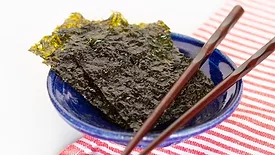
dried edible seaweed with chopsticks

Seaweed Food Safety Knowledge is Limited; FAO, WHO Call for Research, Regulation

Bailee Henderson headshot
Bailee Henderson
October 6, 2022

A recent report by the Food and Agriculture Organization of the United Nations and the World Health Organization raises a concern with the limited existing data on seaweed food safety, and recommends several actions to close knowledge gaps and increase the safety of seaweed consumption.


Read More
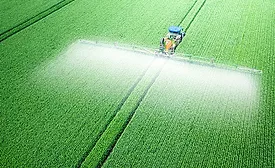
crops being sprayed with chemicals

EPA Reconsiders Fungicide Approval for Lack of Data on Human Health Risks

Bailee Henderson headshot
Bailee Henderson
October 5, 2022

The U.S. Environmental Protection Agency (EPA) has asked the U.S. Court of Appeals for the Ninth Circuit for a chance to withdraw the agency’s own decision to approve the fungicide difenoconazole for use on crops, agreeing with a lawsuit that states the agency needs to acquire more data on the fungicide’s toxicity.


Read More
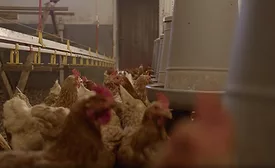
chickens

Spotlight: A Critical Look at Reducing the Risk of Salmonella from Poultry—Part 2

Harshavardhan Thippareddi Ph.D. Manpreet Singh Ph.D. Todd Applegate Ph.D. Sudhir Yadav Ph.D.
October 4, 2022

To understand and eventually reduce the risk of salmonellosis from poultry meat, it is necessary to understand the poultry production system, the introduction of the microorganism into the poultry ecosystem (as well as its gastrointestinal tract), the sources of Salmonella during production, and, subsequently, strategies to control or reduce the risk from this microorganism at both the pre-and post-harvest stages. Part 2 of this article series examines pre-harvest controls during grow-out.


Read More
Previous 1 2 … 161 162 163 164 165 166 167 168 169 … 208 209 Next
Manage My Account
  • eMagazine Subscription
  • Subscribe to Newsletters
  • Manage My Preferences
  • Website Registration
  • Subscription Customer Service

More Videos

Sponsored Content

Sponsored Content is a special paid section where industry companies provide high quality, objective, non-commercial content around topics of interest to the Food Safety Magazine audience. All Sponsored Content is supplied by the advertising company and any opinions expressed in this article are those of the author and not necessarily reflect the views of Food Safety Magazine or its parent company, BNP Media. Interested in participating in our Sponsored Content section? Contact your local rep!

close
  • Top view portrait of two factory workers standing by conveyor belt during quality inspection at food production, copy space
    Sponsored byFlexXray

    Foreign Material By the Numbers: What the 2026 Benchmark Report Reveals

  • a conveyorized industrial metal detector system that appears to resemble a Loma Systems IQ4 Metal Detector setup with an integrated conveyor belt and control panel for food or package inspection.
    Sponsored byMettler Toledo

    Beyond Detection: How to Avoid Physical Contamination in Food Through a Smarter Inspection Strategy

  • The image displays a bottling plant production line, commonly used in the beverage industry for filling and packaging soft drinks.
    Sponsored byBIOIONIX

    Sustainability with ROI: A Beverage Producer Case Study in Water Savings

Popular Stories

chemicals in beakers fda logo overlay

FDA Quietly Included Provision in GRAS Proposed Rule to Expand One ‘Loophole’ While Tightening Another

Genome sequencing data and lab equipment

Whole Genome Sequencing in Food Safety: Non-Technical Systems Barriers and Opportunities for Enhanced Global Use

pistachios in shell

Study Suggests Bleaching of Tree Nuts Produces Potentially Toxic Chemical Byproducts

allergens ebook

Events

October 29, 2026

FDA Proposes Major GRAS Reform: What It Could Mean for Your Business

Live: October 29, 2026 at 2:00 pm EDT: Attend this webinar to examine potential implications for self-GRAS, Flavor and Extract Manufacturers Association (FEMA) GRAS, and food-contact substances.

November 5, 2026

How Middle Managers Shape Food Safety Culture and Risk Performance

Live: November 5, 2026 at 11:00 am EST: From this webinar, attendees will learn how investing in middle managers improves both FSQ strategy implementation and accountability across all levels of the company.

November 12, 2026

From Data Overload to Actionable Food Safety Risk Intelligence

Live: November 12, 2026 at 11:00 am EST: This webinar explores how data integration, advanced analytics, and digital technologies can help transform disparate information into meaningful risk intelligence.

View All

Products

Global Food Safety Microbial Interventions and Molecular Advancements

Global Food Safety Microbial Interventions and Molecular Advancements

See More Products

Never miss the latest news and trends driving the food safety industry

Newsletters | Website | FSM Features Collection

JOIN TODAY!
  • RESOURCES
    • Advertise
    • Contact Us
    • Directories
    • Store
    • Want More
  • SIGN UP TODAY
    • Create Account
    • eMagazine
    • Newsletters
    • Customer Service
    • Manage Preferences
  • SERVICES
    • Marketing Services
    • Reprints
    • Market Research
    • List Rental
    • Survey/Respondent Access
  • STAY CONNECTED
    • LinkedIn
    • Facebook
    • Instagram
    • X (Twitter)
  • PRIVACY
    • PRIVACY POLICY
    • TERMS & CONDITIONS
    • DO NOT SELL MY PERSONAL INFORMATION
    • PRIVACY REQUEST
    • ACCESSIBILITY

Copyright ©2026. All Rights Reserved BNP Media, Inc. and BNP Media II, LLC.

Design, CMS, Hosting & Web Development :: ePublishing