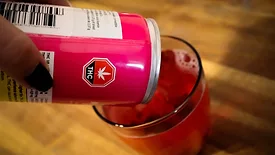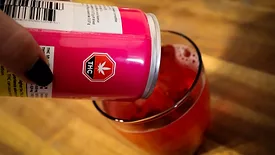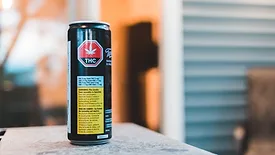
The legislation comes ahead of an impending end-of-year deadline set in the FY 2026 appropriations bill that is expected to remove most currently marketed intoxicating, hemp-derived THC beverages from the legal market by the end of 2026 through the closure of a loophole created by the 2018 Farm Bill.
The 2018 Farm Bill legalized the sale of hemp-derived products containing no more than 0.3 percent delta-9 THC, allowing a “legal” edibles and beverage market to emerge. The 2025 government shutdown reconciliation bill closed this “loophole,” effective in November.
EFSA established a provisional safe intake level for adults for CBD as a novel food while highlighting that data gaps continue to exist regarding possible effects of CBD on the liver and the endocrine, nervous, and reproductive systems.
In the U.S., as part of the appropriations bill ending the government shutdown, Congress closed the 2018 Farm Bill loophole allowing the sale of hemp-derived THC products, such as edibles and beverages. At the same time, in the EU, the European Food Safety Authority (EFSA) set a safe intake level for Delta-8 THC in food.
This article provides a regulatory perspective on some of the technical challenges that growing cannabis markets face, specifically focusing on product standardization, quality control testing, and consumer education and awareness amid a rapidly developing industry.
AOAC International has announced that the Scope of Accreditation to ISO/IEC 17043 for the Proficiency Testing program has been expanded to include its cannabis and hemp oil programs.
In the first of this two-part episode of Food Safety Matters, we interviewed professionals from the industry, regulatory, and nonprofit sectors, live from the show floor of the Food Safety Summit, which took place on May 6–9 in Rosemont, Illinois. We discussed food safety culture, food safety regulation for cannabis-infused edibles, traceability, legacy facilities and equipment, and more.
A new nonprofit organization called the Adult Beverage Alliance (ABA) has been formed in Massachusetts with the goal of advocating for responsible state-level regulation of drinks containing hemp-derived cannabidiol (CBD) and tetrahydrocannabinol (THC).
The cannabis industry is no exception to the potential risks of PFAS contamination, ranging from possible health and safety implications to a business' litigation risk.
With the proliferation of cannabis legislation in many U.S. states, there is a need to address food safety oversight through a federal regulatory framework
This article discusses the work being done by the Federal Regulatory Framework (FRF) Working Group, a collaboration between the Foundation of Cannabis Unified Standards (FOCUS) and the Association of Food and Drug Officials (AFDO), to advocate for and develop a comprehensive and relevant roadmap for the federal regulatory framework of cannabis-infused edibles and beverages to address critical challenges and enhance consumer confidence.