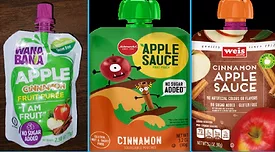
With regard to the recently recalled, lead-contaminated applesauce packages that have caused lead poisoning among dozens of children, Jim Jones, Deputy Commissioner for Human Foods at the U.S. Food and Drug Administration (FDA), recently shared that the agency’s leading theory is economically motivated adulteration of cinnamon used in the products.
Through a newly forged partnership, Oxford Nanopore’s sequencing devices and kits, combined with WeNou’s expertise, will be leveraged to develop a validated food authenticity rapid test that meets industry standards.
The European Commission’s Directorate-General for Health and Food Safety (EC’s DG SANTE) recently published a report on the effectiveness of EU Member States’ strategic approaches for fighting food fraud, which informed a guidance document that supports Member State efforts in this area.
The UK Food Standards Agency (FSA) recently published Our Food 2022, its annual report of food standards across the nation, which was conducted in collaboration with Food Standards Scotland (FSS). Although the UK faced significant challenges that affected the food system in 2022, FSA reported that that there has not been any significant change in food safety and authenticity standards, except for a trend in food allergen labeling requirements.
A protocol for the collection of honey reference samples for the creation of authenticity databases has been developed by the UK Government. Honey is one of the food commodities most subject to food fraud.
Scientists have developed a small, easy-to-produce, and cost effective sensor that can detect water adulteration of honey, a commodity that is often the subject of fraudulent food production practices.
Europol has drawn attention to an increasing trend of food fraudsters relabeling expired goods after operation OPSON Europe—a Europol-INTERPOL joint operation targeting fake and substandard food and beverages—found relabeled expired products at an “unprecedented scale.” Overall, €30 million euros worth of illicit foods weighing 8,000 tons were seized between December 2022 and April 2023.
The UK Food Standards Agency (FSA’s) Food Fraud Working Group has published proposals to strengthen the collective public-private response to food crime. FSA also released new research on the cost of food crime and prevention strategies.
The UK Food Standards Agency (FSA) recently published the findings of a targeted surveillance sampling program conducted during the COVID-19 pandemic to identify emerging food safety risks and increase knowledge of the food system.
In 2012, the Consumer Goods Forum’s Global Food Safety Initiative (GFSI) began the development of a standardized process for assessing and managing food fraud incidents, which has since been adopted across the food industry.