Food Safety
search
Ask Food Safety AI
cart
facebook twitter linkedin
  • Sign In
  • Create Account
  • Sign Out
  • My Account
Food Safety
  • NEWS
    • Latest News
    • White Papers
  • PRODUCTS
  • TOPICS
    • Contamination Control
    • Food Types
    • Management
    • Process Control
    • Regulatory
    • Sanitation
    • Supply Chain
    • Testing and Analysis
  • PODCAST
  • EXCLUSIVES
    • Food Safety Five Newsreel
    • eBooks
    • FSM Distinguished Service Award
    • Interactive Product Spotlights
    • Videos
  • BUYER'S GUIDE
  • MORE
    • ENEWSLETTER >
      • Archive Issues
      • Subscribe to eNews
    • Store
    • Sponsor Insights
    • ASK FSM AI
  • WEBINARS
  • FOOD SAFETY SUMMIT
  • EMAG
    • eMagazine
    • Archive Issues
    • Editorial Advisory Board
    • Contact
    • Advertise
  • SIGN UP!

Emerging food safety technology can cut costs and conserve water

By Bob Ogren
Emerging Food Safety Technology can Cut Costs and Conserve Water
August 26, 2019

While water is considered a renewable resource, it’s also a finite one, and food companies should strive to be good stewards of this increasingly valuable commodity. The cost of water continues to rise. Yet, so does public pressure and regulatory oversight aimed at keeping the food supply safe.

The challenge for processors is using water efficiently and effectively. Is it possible to reduce water usage without increasing food safety risks?

Leaders in the industry are developing and implementing innovations that will not only reduce water usage but improve overall food safety efforts. Technology is coming to market that uses water more efficiently while simultaneously delivering greater pathogen reduction.

For example, beef processing uses more water than any other type of food production, and one of the biggest offenders is the head and tongue wash. That’s because the amount of water used is highly disproportionate to the meat obtained. But the head and tongue can carry higher levels of bacteria, which could cause contamination down the line and potentially ruin a large amount of a product, such as ground beef.

Emerging technology allows beef processors to do more with less. In a conventional head and tongue wash cabinet, the water is constantly running, spraying in every direction and often missing the mark.

New equipment with precision application technology utilizes a three-dimensional wash that follows the head and tongue through the cabinet with contoured arbors, shutting off until the next head and tongue enters. This means 100 percent of the solution hits the target and waste water is greatly reduced.

Most existing systems use around 100 gallons of water per minute, or 14 gallons per head. But tests show this new approach to the head and tongue wash could reduce water usage to 45 to 50 gallons per minute at six gallons per head on average – a potential reduction of 50 percent or more.

Looking for quick answers on food safety topics?
Try Ask FSM, our new smart AI search tool.
Ask FSM →

Another exciting development in food safety technology is the advancement of electrostatic intervention technology. Put simply, by applying an electrical charge to the antimicrobial solution, transfer efficiency increases dramatically. When done correctly, electrostatics have the potential to reduce water and chemical usage by as much as 95 percent in comparison to conventional methods such as dip tanks. This precision application technology also provides log reductions in the range of 2.0 to 2.6 or better – a 10x improvement on traditional methods.

Facility cleaning and sanitation is another area with plenty of room for managing water usage. One of the best ways to address water waste is to automate key areas of the sanitation process. This automation technology can create repeatable processes that eliminate wasteful human error while improving accuracy and providing transparency into water usage through data and reporting features.  

The benefits of investing in food safety breakthroughs are clear. Food companies stand to cut costs related to both water usage and wastewater treatment. Yet, they will also enhance food safety and sustainability efforts, ultimately protecting brand reputation and boosting the bottom line.


KEYWORDS: natural resources water

Share This Story

Bobogren headshot 150x200
Vice President, Equipment, Birko

Recommended Content

JOIN TODAY
to unlock your recommendations.

Already have an account? Sign In

  • people holding baby chicks

    Serovar Differences Matter: Utility of Deep Serotyping in Broiler Production and Processing

    This article discusses the significance of Salmonella in...
    Meat/Poultry
    By: Nikki Shariat Ph.D.
  • woman washing hands

    Building a Culture of Hygiene in the Food Processing Plant

    Everyone entering a food processing facility needs to...
    Food Prep/Handling
    By: Richard F. Stier, M.S.
  • graphical representation of earth over dirt

    Climate Change and Emerging Risks to Food Safety: Building Climate Resilience

    This article examines the multifaceted threats to food...
    Risk Assessment
    By: Maria Cristina Tirado Ph.D., D.V.M. and Shamini Albert Raj M.A.
Manage My Account
  • eMagazine Subscription
  • Subscribe to eNewsletter
  • Manage My Preferences
  • Website Registration
  • Subscription Customer Service

More Videos

Sponsored Content

Sponsored Content is a special paid section where industry companies provide high quality, objective, non-commercial content around topics of interest to the Food Safety Magazine audience. All Sponsored Content is supplied by the advertising company and any opinions expressed in this article are those of the author and not necessarily reflect the views of Food Safety Magazine or its parent company, BNP Media. Interested in participating in our Sponsored Content section? Contact your local rep!

close
  • Salmonella bacteria
    Sponsored byThermoFisher

    Food Microbiology Testing Methods: Salmonella species

  • a diagram explaining indicator organisms
    Sponsored byHygiena

    How Proactive Listeria Testing Helps Prevent Six- and Seven-Figure Recalls

  • woman grocery shopping
    Sponsored byCorbion

    Designing Safety Into Every Bite: Proactive Risk Mitigation for Refrigerated Foods

Popular Stories

NRTE breaded stuffed chicken

USDA Indefinitely Delays Enforcement of Salmonella as Adulterant in Raw Breaded, Stuffed Chicken

digital map of europe

EU Publishes Food Fraud Tool Mapping Thousands of Cases Since 2016

non-conforming product

How to Handle Non-Conforming Product

Events

December 11, 2025

How to Develop and Implement an Effective Food Defense Strategy

Live: December 11, 2025 at 2:00 pm EDT: From this webinar, attendees will learn common areas where companies encounter challenges in their food defense strategies and how to address them.

May 11, 2026

The Food Safety Summit

Stay informed on the latest food safety trends, innovations, emerging challenges, and expert analysis. Leave the Summit with actionable insights ready to drive measurable improvements in your organization. Do not miss this opportunity to learn from experts about contamination control, food safety culture, regulations, sanitation, supply chain traceability, and so much more.

View All

Products

Global Food Safety Microbial Interventions and Molecular Advancements

Global Food Safety Microbial Interventions and Molecular Advancements

See More Products

Related Articles

  • hand holding an RFID

    How RFID technology can help increase confidence in food safety

    See More
  • Packaging Progressions Drew Ward

    How advanced interleaving material technology can increase shelf life, improve food safety

    See More
  • Outdated Technology in the Food Supply Chain Can Threaten Your Safety

    See More

Related Products

See More Products
  • 1119237963.jpg

    Food Safety in China: Science, Technology, Management and Regulation

  • 1119053595.jpg

    Food Safety for the 21st Century: Managing HACCP and Food Safety throughout the Global Supply Chain, 2E

  • 1119160553.jpg

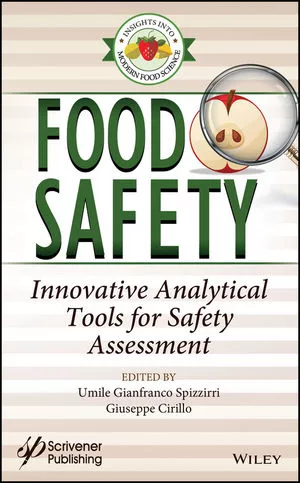
    Food Safety: Innovative Analytical Tools for Safety Assessment

See More Products

Related Directories

  • NEMIS Technologies

    At NEMIS, we are setting new standards in environmental monitoring, helping your facility stay audit-ready and protected from contamination. Our cutting-edge solutions are designed to proactively identify and address risks, transforming how food safety is upheld in production environments.
  • Pick Heaters Inc.

    Throughout the food plant, from process heating to plant sanitation, Pick Steam Injection Heaters provide instant, unlimited hot water at a precise temperature. When compared to indirect heat exchangers, Pick can cut energy costs. Higher processing efficiency, lower energy costs and increased safety are but a few of the benefits.
  • Goodway Technologies

    Goodway Technologies has the industry's most reliable surface and conveyor belt sanitizing equipment for robust hygiene in food production plants, as well as powerful dry steam cleaners that can be used to clean tough grime on virtually any surface.
×

Never miss the latest news and trends driving the food safety industry

eNewsletter | Website | eMagazine

JOIN TODAY!
  • RESOURCES
    • Advertise
    • Contact Us
    • Directories
    • Store
    • Want More
  • SIGN UP TODAY
    • Create Account
    • eMagazine
    • eNewsletter
    • Customer Service
    • Manage Preferences
  • SERVICES
    • Marketing Services
    • Reprints
    • Market Research
    • List Rental
    • Survey/Respondent Access
  • STAY CONNECTED
    • LinkedIn
    • Facebook
    • Instagram
    • X (Twitter)
  • PRIVACY
    • PRIVACY POLICY
    • TERMS & CONDITIONS
    • DO NOT SELL MY PERSONAL INFORMATION
    • PRIVACY REQUEST
    • ACCESSIBILITY

Copyright ©2025. All Rights Reserved BNP Media.

Design, CMS, Hosting & Web Development :: ePublishing