Food Safety
search
Ask Food Safety AI
cart
facebook twitter linkedin instagram youtube
  • Sign In
  • Create Account
  • Sign Out
  • My Account
Food Safety
  • NEWS
    • Latest News
    • Sponsor Insights
    • Sponsored White Papers
  • PRODUCTS
  • TOPICS
    • Contamination Control
    • Food Types
    • Management
    • Process Control
    • Regulatory
    • Sanitation
    • Supply Chain
    • Testing and Analysis
  • PODCAST
  • EXCLUSIVES
    • Food Safety Five Newsreel
    • eBooks
    • FSM Distinguished Service Award
    • Interactive Product Spotlights
    • Videos
  • BUYER'S GUIDE
  • MORE
    • NEWSLETTERS >
      • Archive Issues
      • Subscribe to eNews
    • Store
    • ASK FSM AI
  • WEBINARS
  • FOOD SAFETY SUMMIT
  • EMAG
    • eMagazine
    • Archive Issues
    • Editorial Advisory Board
    • Contact
    • Advertise
  • SIGN UP!
News

MSU Researchers Earn Grant Aimed at Reducing Pathogens in Low-Moisture Foods
June 23, 2020

Michigan State University’s Department of Biosystems and Agricultural Engineering (MSU BAE) has received a 5-year, $9.8 million grant from the U.S. Department of Agriculture National Institute of Food and Agriculture (NIFA). The grant will allow BAE to take a holistic look at reducing threats of pathogens in low-moisture foods. NIFA has designated the project as a Center of Excellence, meaning it has high merit value and meets criteria for broad impact.

Bradley Marks, professor and chair at MSU BAE is the project director over the grant. He, along with a team of economists, engineers, microbiologists, consumer educators, and risk modelers, is working to reduce the risk of Salmonella, Escherichia coli, and Listeria from harvest to consumer.

“Just being an engineer with a better piece of equipment isn't going to solve this food safety problem. We've got to look at the entire system,” says Marks. “It's a problem that may not always be a headline, but it's a huge economic impact for these companies.”

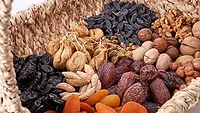
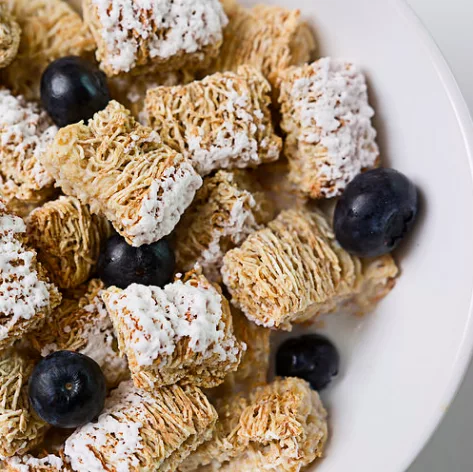
Low-moisture foods, like cereals and flour, dried fruit, and nuts have been recalled repeatedly in the last few years, posing health risks to consumers and economic threats to businesses. Low-moisture foods are used as ingredients in a variety of products, so if one supplier faces a recall, numerous items could be affected. One recall or outbreak could put a small operation out of business.

“If you're a Fortune 100, publicly-traded company, you can likely sustain a $100 million impact. You don't like it, and the stock market doesn't like it, but you can still exist,” Marks said. “If you're a family-owned private operation and you get hit with a recall, and worse, you get hit with an outbreak linked back to your product, it's possibly a death sentence for a company of that scale.”

E. coli, Salmonella, and Listeria can’t be completely eliminated from dried fruits, nuts, flour, and cereals. However, their occurrence can be reduced—and Marks and his team are looking forward to developing solutions to do just that. 

“In 5 or 6 years, we will not rid the earth of pathogens in dry foods, because they're going to be out there. But if we can make a dent that reduces outbreaks of illness associated with this product category to protect public health, and reduce the risk of recalls and the negative economic impact to the companies making the food, then this $9.8 million grant has paid for itself many times over.”

Looking for quick answers on food safety topics?
Try Ask FSM, our new smart AI search tool.
Ask FSM →

A major component of the grant is creating a food safety culture, or an established understanding of the importance of food safety, as a measure to reduce outbreaks.

“You really have to make sure everybody from harvest to the consumer understands their role in ensuring food safety,” Marks said.  “We will develop training and educational resources that help advance that goal.”

MSU researchers Sanghyup Jeong, assistant professor in BAE; Elliot Ryser, professor in the Department of Food Science and Human Nutrition (FSHN); and Felicia Wu, John A. Hannah Distinguished Professor in FSHN and Agricultural, Food and Resource Economics, are part of the grant team. Other members are from Purdue University, Ohio State University, Washington State University, University of California-Davis, the University of Arkansas, the Illinois Institute of Technology, and the U.S. Food and Drug Administration (FDA). 

Researchers on Marks’ team and members of the grant’s stakeholder advisory board have expertise in implementing practices for a food safety culture. The 12-person stakeholder advisory board includes representatives from farmer-owned cooperatives, commodity groups, food processing companies, equipment companies, and food retailers. 

“The science and the technology are coming along, but science and technology are not enough. It's people,” Marks said. “It's the economic incentives for the companies to behave and make the right kinds of decisions, and then it's ultimately putting all of that together and understanding risk, and then connecting it to sustainability.”

The grant funding includes money set aside for a guest scholars program, which will allow junior faculty from around the country interested in low-moisture food safety to attend the team’s meetings. Meetings will be held twice per year, with one virtual and one in person session.  

There is also a diversity, equity, and inclusion (DEI) advisory team. 

“We want to build in systems, from square one, that make sure folks are well-included and equitably participating and getting value out of the project,” Marks said. “We’re not just serving the stakeholders in that way, but we're also taking care of our own students and collaborators in a way that advances the cause for DEI.” 

Marks said the research, collaboration and networking opportunities the grant allows for will be valuable. 

“It’s a big endeavor, but it's exciting to bring together people from different institutions with a variety of expertise to be able to make a difference, while simultaneously offering opportunities for students and colleagues to advance their research, outreach, and educational work in this space,” he said. 

 “It's going to be fun doing something that's impactful.”


Author(s): Staff

Share This Story

Recommended Content

JOIN TODAY
to unlock your recommendations.

Already have an account? Sign In

  • people holding baby chicks

    Serovar Differences Matter: Utility of Deep Serotyping in Broiler Production and Processing

    This article discusses the significance of Salmonella in...
    Microbiological Control
    By: Nikki Shariat Ph.D.
  • woman washing hands

    Building a Culture of Hygiene in the Food Processing Plant

    Everyone entering a food processing facility needs to...
    Management
    By: Richard F. Stier, M.S.
  • graphical representation of earth over dirt

    Climate Change and Emerging Risks to Food Safety: Building Climate Resilience

    This article examines the multifaceted threats to food...
    Risk Assessment
    By: Maria Cristina Tirado Ph.D., D.V.M. and Shamini Albert Raj M.A.
Manage My Account
  • eMagazine Subscription
  • Subscribe to Newsletters
  • Manage My Preferences
  • Website Registration
  • Subscription Customer Service

More Videos

Sponsored Content

Sponsored Content is a special paid section where industry companies provide high quality, objective, non-commercial content around topics of interest to the Food Safety Magazine audience. All Sponsored Content is supplied by the advertising company and any opinions expressed in this article are those of the author and not necessarily reflect the views of Food Safety Magazine or its parent company, BNP Media. Interested in participating in our Sponsored Content section? Contact your local rep!

close
  • Darkling Beetle
    Sponsored byElanco Animal Health

    Integrated Pest Management: Protecting Poultry Operations as Seasons Change

  • NEVIFIT 3 Compartment BPA-FREE
    Sponsored byCorbion

    The Risks of Ready-to-Eat: Five Ways to Protect Today's Prepared Meals

  • a group of workers in a food production facility
    Sponsored bySkillUp by Registrar Corp

    How to Build a Better Training Program: Data and Insights from the Global Food Safety Training Survey

Popular Stories

half full baby bottle next to rubber duckie on white surface

Organic Infant Formulas Caused Back-to-Back Botulism Outbreaks—What Gives?

nara organics whole milk infant formula

Another Infant Botulism Outbreak Sickens Three, Nara Organics Formula Suspected Cause

smiling man with clipboard in front of bottling line at beverage manufacturing facility

The Evolving Role of the Quality Assurance Professional in Food Safety

Events

June 25, 2026

Rethinking Food Safety: Eliminating Biofilm and Building a Smarter Food Safety System

Live: June 25, 2026 at 2:00 pm EDT: Join this webinar to explore a modern approach to decontamination that goes beyond surface-level cleaning to combat biofilm and persistent pathogens.

June 30, 2026

FSMA 204 in Practice: Building a Traceability-Ready Operation

Live: June 30, 2026 at 11:00 am EDT: Attend this webinar to learn how food businesses can move from fragmented records toward a more reliable approach for recall response, FDA requests, and supply chain visibility.

July 21, 2026

Using AI Responsibly in Food Safety Management Systems

Live: July 21, 2026 at 2:00 pm EDT: This webinar will provide participants with guidance on how to effectively use generative artificial intelligence (AI) tools to develop key components of a food safety management system (FSMS).

View All

Products

Global Food Safety Microbial Interventions and Molecular Advancements

Global Food Safety Microbial Interventions and Molecular Advancements

See More Products

Related Articles

  • mixed nuts and dried fruits

    Study to Examine Pathogens in Low-Moisture Foods

    See More
  • coffee beans

    Developing Thermal Control of Salmonella in Low-Moisture Foods Using Predictive Models

    See More
  • medjool dates

    IAFP 2022: Persistence of Norovirus, Hepatitis A in Low-Moisture Foods

    See More

Related Products

See More Products
  • food-safety-making.jpg

    Food Safety: Making Foods Safe and Free From Pathogens

  • 9781138070912.jpg

    Trends in Food Safety and Protection

  • 1119237963.jpg

    Food Safety in China: Science, Technology, Management and Regulation

See More Products
×

Never miss the latest news and trends driving the food safety industry

Newsletters | Website | eMagazine

JOIN TODAY!
  • RESOURCES
    • Advertise
    • Contact Us
    • Directories
    • Store
    • Want More
  • SIGN UP TODAY
    • Create Account
    • eMagazine
    • Newsletters
    • Customer Service
    • Manage Preferences
  • SERVICES
    • Marketing Services
    • Reprints
    • Market Research
    • List Rental
    • Survey/Respondent Access
  • STAY CONNECTED
    • LinkedIn
    • Facebook
    • Instagram
    • X (Twitter)
  • PRIVACY
    • PRIVACY POLICY
    • TERMS & CONDITIONS
    • DO NOT SELL MY PERSONAL INFORMATION
    • PRIVACY REQUEST
    • ACCESSIBILITY

Copyright ©2026. All Rights Reserved BNP Media, Inc. and BNP Media II, LLC.

Design, CMS, Hosting & Web Development :: ePublishing