Food Safety
search
Ask Food Safety AI
cart
facebook twitter linkedin instagram youtube
  • Sign In
  • Join Today
  • Sign Out
  • My Account
Food Safety
  • NEWS
    • Latest News
    • Food Safety Five Newsreel
  • PRODUCTS
  • TOPICS
    • Contamination Control
    • Food Types
    • Management
    • Process Control
    • Regulatory
    • Sanitation
    • Supply Chain
    • Testing and Analysis
  • PODCAST
  • EXCLUSIVES
    • eBooks
    • Sponsored Insights
    • Sponsored White Papers
    • FSM Distinguished Service Award
    • Interactive Product Spotlights
    • Videos
  • MORE
    • BUYER'S GUIDE
    • NEWSLETTERS >
      • Archive Issues
      • Subscribe to eNews
    • Store
    • ASK FSM AI
  • WEBINARS
  • FOOD SAFETY SUMMIT
  • FSM FEATURES
    • FSM Features Collection
    • eMag Archives
    • Editorial Advisory Board
    • Contact
    • Advertise
  • JOIN
News

Proposed Bill Would Allow FDA Access to CAFOs to Investigate Foodborne Outbreaks
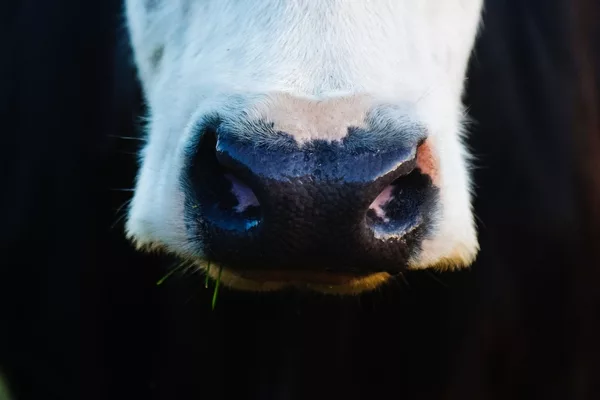
C9d5bc3e 5d05 4eaa 884d90ba95f2b4f9
February 12, 2020

Two U.S. senators are sponsoring a new bill that would allow the U.S. Food and Drug Administration (FDA) access to concentrated animal feeding operations (CAFOs) when foodborne outbreaks and other public health concerns require further investigation. 

Senators Rosa DeLauro (D-CT) and Kirsten Gillibrand (D-NY) have introduced a new bill, the Expanded Food Safety Investigation Act of 2019 (S.2958), that will provide FDA the authority to conduct microbiological sampling on CAFOs as necessary to facilitate a foodborne illness outbreak investigation, determine the root cause of an outbreak, or address other public health needs. 

FDA describes a CAFO as “a facility with a large number of cattle on the premises. The CAFO can hold in excess of 100,000 head of cattle at any one time and the FDA traceback information showed a clustering of romaine lettuce farms nearby.” CAFOs are believed to have been a potential contamination source in the 2018 outbreak of Escherichia coli O157:H7 that was linked to romaine lettuce grown in the Yuma, AZ, growing region.

S.2958 would allow the following to take place:

“(a) In General.—The Secretary may request access to a concentrated animal feeding operation in order to conduct microbial sampling, if the Secretary determines that such microbial sampling is necessary in order to facilitate a foodborne illness outbreak investigation, determine the root cause of an outbreak of foodborne illness, or address other public health needs.

“(b) Granting Of Reasonable Access.—A concentrated animal feeding operation that receives a request for access under paragraph (a) shall provide reasonable access to the Secretary to conduct such microbial sampling, including sampling of plants, animals, water, and the environment, as the Secretary determines appropriate to address the public health need. Such operation may place reasonable conditions on access to the operation, including by specifying a time, place, and manner for sampling, provided that any such conditions do not prevent the Secretary from conducting appropriate sampling within a reasonable period of time.

“(c) Authority Over Foods Regulated By The Secretary Of Agriculture.—Nothing in this section shall be construed to impose additional requirements by the Secretary, beyond microbial sampling, with respect to food that is within the jurisdiction of the Secretary of Agriculture pursuant to the Federal Meat Inspection Act, the Poultry Products Inspection Act, or the Egg Products Inspection Act.

“(d) Coordination With Other Public Health Agencies.—The Secretary shall ensure that data collected under this section are made available to the Secretary of Agriculture and relevant State and Federal public health agencies in order to facilitate work in detecting, investigating, or preventing foodborne illness. Nothing in this section shall be construed to limit the rights and exemptions otherwise available under section 552 of title 5, United States Code.

“(e) Definition.—In this section, the term ‘concentrated animal feeding operation’ has the meaning given such term in section 122.23(b) of title 40, Code of Federal Regulations (or any successor regulations).”.

(b) Enforcement.—Section 301 of the Federal Food, Drug, and Cosmetic Act (21 U.S.C. 331) is amended by adding at the end the following:

“(fff) The refusal to provide reasonable access for microbial sampling in accordance with section 424.”.

The bill, co-sponsored by Rep. Jackie Speier (D-CA) and Rep. Mark Pocan (D-WI), has been referred to the U.S. House of Representatives’ House Committee on Energy and Commerce.

Sign up for Food Safety Magazine’s bi-weekly emails!

Subscribe to our podcast: Food Safety Matters!


Author(s): Staff

Looking for quick answers on food safety topics?
Try Ask FSM, our new smart AI search tool.
Ask FSM →
Share This Story

Recommended Content

JOIN TODAY
to unlock your recommendations.

Already have an account? Sign In

  • people holding baby chicks

    Serovar Differences Matter: Utility of Deep Serotyping in Broiler Production and Processing

    This article discusses the significance of Salmonella in...
    Contamination Control
    By: Nikki Shariat Ph.D.
  • woman washing hands

    Building a Culture of Hygiene in the Food Processing Plant

    Everyone entering a food processing facility needs to...
    Management
    By: Richard F. Stier, M.S.
  • graphical representation of earth over dirt

    Climate Change and Emerging Risks to Food Safety: Building Climate Resilience

    This article examines the multifaceted threats to food...
    International
    By: Maria Cristina Tirado Ph.D., D.V.M. and Shamini Albert Raj M.A.
Manage My Account
  • Join Food Safety Magazine
  • Manage My Preferences
  • Customer Service

More Videos

Sponsored Content

Sponsored Content is a special paid section where industry companies provide high quality, objective, non-commercial content around topics of interest to the Food Safety Magazine audience. All Sponsored Content is supplied by the advertising company and any opinions expressed in this article are those of the author and not necessarily reflect the views of Food Safety Magazine or its parent company, BNP Media. Interested in participating in our Sponsored Content section? Contact your local rep!

close
  • pre-packaged salads, noodles, and prepared meals stocked on multi-tier grocery store refrigerator shelves
    Sponsored byCorbion

    How Many Days of Shelf Life Are You Leaving on the Table?

  • Top view portrait of two factory workers standing by conveyor belt during quality inspection at food production, copy space
    Sponsored byFlexXray

    Foreign Material By the Numbers: What the 2026 Benchmark Report Reveals

  • a conveyorized industrial metal detector system that appears to resemble a Loma Systems IQ4 Metal Detector setup with an integrated conveyor belt and control panel for food or package inspection.
    Sponsored byMettler Toledo

    Beyond Detection: How to Avoid Physical Contamination in Food Through a Smarter Inspection Strategy

Popular Stories

choosing food in the freezer aisle

Refrigerator Malfunctions on U.S. Military Bases May Be Result of Targeted Cyberattacks, Similar to French Incident

This image depicts a meat processing facility

Study Finds Differences Between Beef, Pork Microbial Contamination During Processing

supermarket freezers

Another Wave of Refrigerator Cyberattacks Sweeps European Grocery Stores, Causing More Food Losses

allergens ebook

Events

November 5, 2026

How Middle Managers Shape Food Safety Culture and Risk Performance

Live: November 5, 2026 at 11:00 am EST: From this webinar, attendees will learn how investing in middle managers improves both FSQ strategy implementation and accountability across all levels of the company.

November 12, 2026

From Data Overload to Actionable Food Safety Risk Intelligence

Live: November 12, 2026 at 11:00 am EST: This webinar explores how data integration, advanced analytics, and digital technologies can help transform disparate information into meaningful risk intelligence.

November 17, 2026

Are You Getting the Most from Your Food Safety Testing?

Live: November 17, 2026 at 11:00 am EST: Attend this webinar to explore practical ways food processors can modernize sanitation verification and microbiological testing while keeping workflows simple and effective.

View All

Products

Global Food Safety Microbial Interventions and Molecular Advancements

Global Food Safety Microbial Interventions and Molecular Advancements

See More Products

Related Articles

  • Sen. Kirsten Gillibrand

    Bill would allow the FDA access to CAFOs

    See More
  • gavel on books wood background

    Bill Reintroduced to Allow FDA to Share Information with State Agencies During Foodborne Illness Outbreaks

    See More
  • cows eating in cages

    Congress Reintroduces Bill Giving FDA Authority to Investigate Corporate Livestock Operations Implicated in Foodborne Illness Outbreaks

    See More

Related Products

See More Products
  • 9781138070912.jpg

    Trends in Food Safety and Protection

  • global food.jpg

    Global Food Safety Microbial Interventions and Molecular Advancements

  • 1119160553.jpg

    Food Safety: Innovative Analytical Tools for Safety Assessment

See More Products

Events

View AllSubmit An Event
  • August 6, 2026

    Beyond Sanitation: Understanding the Hidden System Conditions That Allow Pathogens to Persist

    On Demand: Attend this webinar to learn strategies for strengthening environmental control programs through a layered approach to pathogen management.
View AllSubmit An Event

Related Directories

  • Food Safety News

    Food Safety News advances public health by delivering timely, accurate, and comprehensive coverage of foodborne illness outbreaks, recalls, and regulatory developments that impact the safety of our global food supply.
  • Stop Foodborne Illness

    As the voice of people affected by foodborne illness, we collaborate with partners in academia, the food industry, consumer and public health groups, and government to prevent foodborne illness. We advocate for effective food safety policy and facilitate culture change to increase food safety.
  • Active Food Safety

    Active Food Safety consists of an experienced team of food safety professionals who are thought-leaders in the food industry, and have each led enterprise level food safety management programs in several of the most well-known and respected brands in the food industry. We continuously help our clients ensure food safety based on proven business best practices designed specifically to the brand - to maximize risk reduction to prevent foodborne disease illnesses and outbreaks, to meet all government regulatory requirements, and to improve sales and brand reputation.
×

Never miss the latest news and trends shaping the food safety industry

Newsletters | Website | FSM Features Collection

JOIN TODAY!
  • RESOURCES
    • Advertise
    • Contact Us
    • Directories
    • Store
  • JOIN TODAY
    • Create Account
    • FSM Features Collection
    • Newsletters
    • Customer Service
    • Manage Preferences
  • SERVICES
    • Marketing Services
    • Reprints
    • Market Research
    • List Rental
    • Survey/Respondent Access
  • STAY CONNECTED
    • LinkedIn
    • Facebook
    • Instagram
    • X (Twitter)
    • YouTube
  • PRIVACY
    • PRIVACY POLICY
    • TERMS & CONDITIONS
    • DO NOT SELL MY PERSONAL INFORMATION
    • PRIVACY REQUEST
    • ACCESSIBILITY

Copyright ©2026. All Rights Reserved BNP Media, Inc. and BNP Media II, LLC.

Design, CMS, Hosting & Web Development :: ePublishing