Food Safety
search
Ask Food Safety AI
cart
facebook twitter linkedin instagram youtube
  • Sign In
  • Create Account
  • Sign Out
  • My Account
Food Safety
  • NEWS
    • Latest News
    • Sponsored Insights
    • Sponsored White Papers
  • PRODUCTS
  • TOPICS
    • Contamination Control
    • Food Types
    • Management
    • Process Control
    • Regulatory
    • Sanitation
    • Supply Chain
    • Testing and Analysis
  • PODCAST
  • EXCLUSIVES
    • Food Safety Five Newsreel
    • eBooks
    • FSM Distinguished Service Award
    • Interactive Product Spotlights
    • Videos
  • BUYER'S GUIDE
  • MORE
    • NEWSLETTERS >
      • Archive Issues
      • Subscribe to eNews
    • Store
    • ASK FSM AI
  • WEBINARS
  • FOOD SAFETY SUMMIT
  • EMAG
    • eMagazine
    • Archive Issues
    • Editorial Advisory Board
    • Contact
    • Advertise
  • SIGN UP!

Exclusive interview: the rising trend of food safety issues and their industry impact

By Liz Parker
Todd Southerland
Todd Southerland
SunTrust logo
Todd Southerland
SunTrust logo
November 5, 2018

Food Safety Strategies recently got the chance to talk to Todd Southerland, senior vice president and food & agribusiness industry manager, SunTrust, about some current issues in the food safety world, as well as some best practices for businesses.


Liz Parker: Can you speak about the rising trend of food safety issues and how it’s impacting the industry?

Todd Southerland: Many of the issues are the result of an increasingly complex and global food supply chain. As consolidation and the level of integration among growers, manufacturers, and distributors has increased, food products (and the ingredients associated with them) are being supplied to a much larger base of consumers and end markets. When a food safety issue arises, it tends to be more far reaching than the ones we experienced decades ago.

Consumer tastes and preferences are also evolving and have become more distinguished. In an attempt to differentiate their offerings, many food companies are sourcing products and ingredients more broadly. This may include non-traditional ingredients used for flavor profiles or foreign-grown items that contribute to the more robust culinary experiences that many consumers are demanding. All of this has the effect of broadening our food supply but at the same time, exposing American culture to new origins of risk.

Significant advancements in technology are enabling companies to improve the level of oversight employed throughout the supply chain. Many of these technologies have been developed or are employed for the purpose of increasing the efficiency of businesses; they can relate to inventory controls, costing practices, purchasing and sales decisions, shipping routes, or any number of operational factors that can be improved through the availability of data and analytics, which in turn drives additional profitability. However, many of these technologies can also improve food safety protocols through advancements in traceability, monitoring, and testing. These benefits are vital to the success of food businesses, but they don’t always produce incremental revenues or profits; rather, they often result in added costs. The challenge for many food companies is how to bridge the gap between the two so that they achieve operational benefits from the costs that are being absorbed to institute these added requirements for food safety oversight.


LP: How should businesses prepare for product recalls and other food safety issues, especially from a financial or budgeting perspective?

TS: Many companies view the money that is being invested in food safety programs as risk mitigation, which is generally appropriate. But many of the technologies and tools that can be employed for food safety purposes can also be very powerful in improving operational decisions and working capital management. I always encourage companies to embrace the benefits of these tools and the powerful nature of the information associated with having an increased level of visibility into the supply chain. The money that companies invest to improve food safety practices does not have to be a sunk cost, and I am continually amazed at the ways in which businesses are utilizing these tools to be more efficient. 

Looking for quick answers on food safety topics?
Try Ask FSM, our new smart AI search tool.
Ask FSM →

In a similar fashion, the employment of heightened food safety protocols can and should be used as a marketing platform. Consumers care about how their food is grown, raised, processed, handled and stored. A company’s awareness around food safety can differentiate its products in the marketplace.  The use of traceability standards has been particularly impactful over the last few years; for example, some dairy companies display the farm from which fluid milk was sourced on the side of each milk carton.

From a financial perspective, I encourage all companies to seek guidance on risks that are insurable, but the cost/benefit analysis is always the key because many policies can be exorbitantly expensive. For risks that can be insured, it is critical to review the policy language to understand what events are covered or excluded. The cause of an event can be a determining factor in coverage decisions within a policy, and it’s important to understand whether you are insuring against controllable or manageable risks.  

Absent the ability or decision to insure certain risks, businesses should spend time developing business continuity plans in an attempt to quantify the financial impact one could have on the business. Only when those impacts are quantified can a business understand the balance sheet implications and whether it is adequately prepared to absorb them. We perform this type of consultative work on a routine basis not only to protect our interests as a lender, but also to help companies develop strategies to mitigate these risks.


LP: What best practices do you recommend for businesses? 

TS: The best risk management technique ahead of a food safety event is preparedness. Most companies train employees on the steps that should be taken in the event that a problem occurs, but two additional steps are often overlooked: (1) be sure that each employee understands why he or she is performing a task and how it contributes to the broader effort of the team; and (2) practice your emergency responses through mock situations that simulate real world possibilities. These steps can materially contribute to workforce engagement and successful outcomes in situations where small failures can have sizable consequences.


LP: Why is traceability often done more efficiently from smaller companies, and how can larger companies learn from this?

TS: The simple answer is that smaller companies tend to have smaller supply bases and/or fewer products to track, which by nature is an easier task to manage. But there are three other factors that I observe to varying degrees and across different sectors of the food industry that I find compelling, as follows:

  1. In an attempt to compete with larger peers or to differentiate product offerings, smaller companies have a tendency to better leverage their traceability and sourcing capabilities through marketing and advertising. This often drives consumer interest and appeal, which commonly results in premium selling prices due to perceived quality advantages. Quite simply, smaller companies have embraced the benefits of traceability standards and found ways to use them to their advantage.
  2. Smaller companies are not burdened by age-old practices or systems that are oftentimes obsolete; further, smaller companies can deploy modern technology across a smaller footprint or scale at a reasonable cost and without disrupting an entire supply chain.
  3. Smaller companies don’t have the same margin for error that larger companies enjoy due to the relative strength of their balance sheet. Small companies tend to be keenly focused on controlling these risks and preparing for a negative event because it could risk insolvency. Larger companies have more resources, financial or otherwise, to absorb a similar event, so the consequences are less dire.  
KEYWORDS: interview

Share This Story

Liz200

Liz Parker is the Senior Editor of Candy Industry and Snack Food & Wholesale Bakery and the former Managing Editor of Food Safety Magazine. She has written for CBS Detroit, as well as for her own blogs. She earned a B.A. degree in Creative Writing from the University of Michigan.

Recommended Content

JOIN TODAY
to unlock your recommendations.

Already have an account? Sign In

  • people holding baby chicks

    Serovar Differences Matter: Utility of Deep Serotyping in Broiler Production and Processing

    This article discusses the significance of Salmonella in...
    Methods
    By: Nikki Shariat Ph.D.
  • woman washing hands

    Building a Culture of Hygiene in the Food Processing Plant

    Everyone entering a food processing facility needs to...
    Training
    By: Richard F. Stier, M.S.
  • graphical representation of earth over dirt

    Climate Change and Emerging Risks to Food Safety: Building Climate Resilience

    This article examines the multifaceted threats to food...
    Risk Assessment
    By: Maria Cristina Tirado Ph.D., D.V.M. and Shamini Albert Raj M.A.
Manage My Account
  • eMagazine Subscription
  • Subscribe to Newsletters
  • Manage My Preferences
  • Website Registration
  • Subscription Customer Service

More Videos

Sponsored Content

Sponsored Content is a special paid section where industry companies provide high quality, objective, non-commercial content around topics of interest to the Food Safety Magazine audience. All Sponsored Content is supplied by the advertising company and any opinions expressed in this article are those of the author and not necessarily reflect the views of Food Safety Magazine or its parent company, BNP Media. Interested in participating in our Sponsored Content section? Contact your local rep!

close
  • Man In Warehouse
    Sponsored byRentokil

    Mitigating Hidden Rodent Risks in Food Facilities

  • an industrial manufacturing or processing facility
    Sponsored bybioMérieux

    Get Ahead of Spoilage in Food Manufacturing with Metagenomics for Preventive Monitoring

  • an automated industrial production line used in a modern food factory
    Sponsored byIFC

    A Formula for Food Processing Pest Management

Popular Stories

Cyclospora cayetanensis oocysts

FDA Begins Inspection at Taylor Farms Mexico as Official Cyclospora Outbreak Case Count Nears 10,000

pouring yellow canned beverage

FDA Proposes Mandatory GRAS Notifications for Ingredients Introduced to U.S. Food Supply

wheat grain and bread

Bill Introduced to Amend FD&C Act to Require Gluten Labeling for Barley, Rye, Oats

building a skilled workforce ebook

Events

August 25, 2026

Don’t Wing It: Bird Control for Food Processing Facilities

Live: August 25, 2026 at 2:00 pm EDT: This webinar will cover why managing bird activity should be a priority for your business, the complexities involved in effective bird control, and proactive strategies to help protect your facility.

September 1, 2026

Seafood Under the Microscope: FDA HACCP, Pathogen Risk, and Modern Testing Strategies

Live: September 1, 2026 at 2:00 pm EDT: Attend this webinar to learn how environmental monitoring, rapid pathogen detection, and risk-based testing strengthen seafood safety programs.

September 2, 2026

From Crisis to Control: A Listeria Elimination Journey in Food Manufacturing

Live: September 2, 2026 at 2:00 pm EDT: This webinar shares a real-world case study of a food processing facility that solved a persistent Listeria challenge after standard protocols fell short.

View All

Products

Global Food Safety Microbial Interventions and Molecular Advancements

Global Food Safety Microbial Interventions and Molecular Advancements

See More Products

Related Articles

  • Exclusive interview: Q&A with GS1 US, on FDAs New Era of Smarter Food Safety

    Exclusive interview: Q&A with GS1 US, on FDA's New Era of Smarter Food Safety

    See More
  • Exclusive interview: Q&A with GreenSeed CEO, David Gray, on the coronavirus and food safety trends

    Exclusive interview: Q&A with GreenSeed CEO, David Gray, on the coronavirus and food safety trends

    See More
  • interview with Defonce cannabis chocolates

    Exclusive interview: Défoncé on cannabis chocolate and food safety

    See More

Related Products

See More Products
  • 1118474600.jpg

    Practical Food Safety: Contemporary Issues and Future Directions

  • 1444333348.jpg

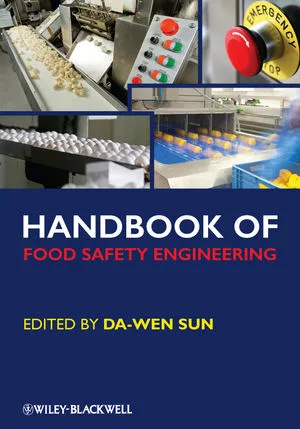
    Handbook of Food Safety Engineering

  • 9781498721776.jpg

    Handbook of Food Processing: Food Safety, Quality, and Manufacturing Processes

See More Products

Related Directories

  • Saldesia 'Goddess of Food Safety'

    Saldesia is a distributor of Food Safety products and solutions. We are focused on supplying the Quality, Production, Safety and Sanitation departments. Product lines include Color Coded, Metal Detectable, Antimicrobial Flooring & Mats, Workwear, Footwear, Spray Nozzles, and more!
  • Food Safety News

    Food Safety News advances public health by delivering timely, accurate, and comprehensive coverage of foodborne illness outbreaks, recalls, and regulatory developments that impact the safety of our global food supply.
  • Women In Food Safety

    Women in Food Safety is a US-based global nonprofit organization dedicated to empowering and advancing women in the food safety and quality industry. Women In Food Safety provides a platform for professionals at all stages of their careers to grow, share knowledge, and support one another. Through community events, educational initiatives, and leadership development, we are building a more inclusive and resilient future for food safety worldwide. Together, we can do BETTER!
×

Never miss the latest news and trends driving the food safety industry

Newsletters | Website | eMagazine

JOIN TODAY!
  • RESOURCES
    • Advertise
    • Contact Us
    • Directories
    • Store
    • Want More
  • SIGN UP TODAY
    • Create Account
    • eMagazine
    • Newsletters
    • Customer Service
    • Manage Preferences
  • SERVICES
    • Marketing Services
    • Reprints
    • Market Research
    • List Rental
    • Survey/Respondent Access
  • STAY CONNECTED
    • LinkedIn
    • Facebook
    • Instagram
    • X (Twitter)
  • PRIVACY
    • PRIVACY POLICY
    • TERMS & CONDITIONS
    • DO NOT SELL MY PERSONAL INFORMATION
    • PRIVACY REQUEST
    • ACCESSIBILITY

Copyright ©2026. All Rights Reserved BNP Media, Inc. and BNP Media II, LLC.

Design, CMS, Hosting & Web Development :: ePublishing