Food Safety
search
Ask Food Safety AI
cart
facebook twitter linkedin
  • Sign In
  • Create Account
  • Sign Out
  • My Account
Food Safety
  • NEWS
    • Latest News
    • White Papers
  • PRODUCTS
  • TOPICS
    • Contamination Control
    • Food Types
    • Management
    • Process Control
    • Regulatory
    • Sanitation
    • Supply Chain
    • Testing and Analysis
  • PODCAST
  • EXCLUSIVES
    • Food Safety Five Newsreel
    • eBooks
    • FSM Distinguished Service Award
    • Interactive Product Spotlights
    • Videos
  • BUYER'S GUIDE
  • MORE
    • ENEWSLETTER >
      • Archive Issues
      • Subscribe to eNews
    • Store
    • Sponsor Insights
    • ASK FSM AI
  • WEBINARS
  • FOOD SAFETY SUMMIT
  • EMAG
    • eMagazine
    • Archive Issues
    • Editorial Advisory Board
    • Contact
    • Advertise
  • SIGN UP!
Process ControlRegulatoryPackagingProcessing TechnologiesFDAFSMAInternational Standards/HarmonizationUSDA

An International Perspective on Food Safety Packaging

December 2, 2013

An interview with Fred Hayes, director, technical services, Packaging Machinery Manufacturers Institute.

Q: Food security doesn’t affect just the final product, but also the entire production cycle, including processing and packaging. Which organizations in the U.S. (federal administration, trade organizations, professional associations, trade unions, etc.) are in charge of devising, implementing and monitoring regulations affecting food machinery, equipment and packaging?

A: In the United States, there are two government organizations, created by law, that are responsible for food safety. The U.S. Department of Agriculture (USDA) regulates products such as meat, poultry, egg products, dairy products, etc. The U.S. Food and Drug Administration (FDA)’s scope of responsibility for food products includes basically all food products except those the law assigns to the USDA.

Another Health and Human Services component group, the U.S. Centers for Disease Control and Prevention, collects data and investigates foodborne illnesses (among its other duties).

Alcohol-related products are not considered food products and fall under the jurisdiction of the Bureau of Alcohol, Tobacco, Firearms and Explosives, which is a federal law enforcement agency within the United States Department of Justice.

Q: What are the most recent regulations and the latest standards that have been adopted in the United States relating to machinery to process and package food and for food packaging?

A: In the European Union (EU), machinery must be declared in conformity to the 2006/42/EC machinery directive before it can be placed into service. Section 2.1 of Annex I Essential Health and Safety Requirements, “Foodstuffs Machinery and Machinery for Cosmetics or Pharmaceutical Products,” lists the requirements a machinery supplier must meet using the risk assessment process outlined in Annex I, Section 1, of the machinery directive.

There is no equivalent “law” that requires machinery suppliers in the United States to declare their machine meets a specific law or standard. However, machinery builders and food manufacturers can be held accountable for harm their products may cause under the Restatement Third of Torts law (Products Liability).

Packaging machinery in the United States is covered by the American National Standards Institute (ANSI)/Packaging Machinery Manufacturers Institute (PMMI) B155.1-2011 standard, “Safety Requirements for Packaging Machinery and Packaging-Related Converting Machinery.” This is a voluntary consensus standard that requires the machinery supplier to build the machine to an acceptable level of risk using the risk assessment process. Sanitary design is a consideration in the standard. The ANSI/PMMI B155.1-2011 standard is harmonized with EN/ISO 12100-2010.

Under FDA’s Food Safety Modernization Act (FSMA), all food producers are required to use the risk assessment process to develop production processes, including food production machinery, which will result in the manufacture of safe food products. Therefore, it is up to the food manufacturing companies to purchase equipment from the machinery suppliers that meets the specific sanitary requirements of the food production facility.

Q: Are there common aspects in the regulations established by the EU and by the U.S. government concerning machinery and food packaging?

A: The EU machinery directive and the ANSI/PMMI B155.1-2011 standard both require the machinery supplier [to] perform a documented risk assessment to demonstrate the machine:

(EU) meets the essential health and safety requirements of the machinery directive.

(U.S.) is built to an acceptable level of risk (U.S. ANSI/PMMI B155.1-2011).

Q: Are there any salient differences?

A: In the EU, machinery is covered by the 2006/42/EC machinery directive—a good law, but there’s market surveillance.
    
In the U.S., packaging machinery is covered by ANSI/PMMI B155.1-2011 standard, which is, as I mentioned before, a voluntary consensus standard. However, market surveillance is very aggressive because of product liability litigation laws. 

Q: What are the main changes that will result with the implementation and enforcement of FSMA for the manufacturers of packaging and processing of food?

A: Food product manufacturers in wet environments, like those found in meat, poultry and dairy plants, have been cleaning processing and packaging machines to a microbiological level for many years. Cleaning to a microbiological level is going to become standard for many dry products, including cereal, crackers, cookies and candy, as well.

This requirement will result in the redesign of processing and packaging machinery. It will also force changes in the layout of equipment in production facilities to reduce the number and types of machinery that must be cleaned to a microbiological level.

Q: What significant issues will the manufacturers of packaging and processing machinery have to deal with in the next three or four years?

A: Machine design is going to involve potential trade-offs such as improving sanitary design while maintaining the ability to change products and clean quickly.

There’s no such thing as a perfect machine. Instead, machine manufacturers will need to work closely with their customers to determine precisely what the end users of their processing and packaging machinery need.


Author(s): Food Safety Magazine

Looking for quick answers on food safety topics?
Try Ask FSM, our new smart AI search tool.
Ask FSM →


Share This Story

Recommended Content

JOIN TODAY
to unlock your recommendations.

Already have an account? Sign In

  • people holding baby chicks

    Serovar Differences Matter: Utility of Deep Serotyping in Broiler Production and Processing

    This article discusses the significance of Salmonella in...
    Contamination Control
    By: Nikki Shariat Ph.D.
  • woman washing hands

    Building a Culture of Hygiene in the Food Processing Plant

    Everyone entering a food processing facility needs to...
    Management
    By: Richard F. Stier, M.S.
  • graphical representation of earth over dirt

    Climate Change and Emerging Risks to Food Safety: Building Climate Resilience

    This article examines the multifaceted threats to food...
    International
    By: Maria Cristina Tirado Ph.D., D.V.M. and Shamini Albert Raj M.A.
Manage My Account
  • eMagazine Subscription
  • Subscribe to eNewsletter
  • Manage My Preferences
  • Website Registration
  • Subscription Customer Service

More Videos

Sponsored Content

Sponsored Content is a special paid section where industry companies provide high quality, objective, non-commercial content around topics of interest to the Food Safety Magazine audience. All Sponsored Content is supplied by the advertising company and any opinions expressed in this article are those of the author and not necessarily reflect the views of Food Safety Magazine or its parent company, BNP Media. Interested in participating in our Sponsored Content section? Contact your local rep!

close
  • Salmonella bacteria
    Sponsored byThermoFisher

    Food Microbiology Testing Methods: Salmonella species

  • a diagram explaining indicator organisms
    Sponsored byHygiena

    How Proactive Listeria Testing Helps Prevent Six- and Seven-Figure Recalls

  • woman grocery shopping
    Sponsored byCorbion

    Designing Safety Into Every Bite: Proactive Risk Mitigation for Refrigerated Foods

Popular Stories

NRTE breaded stuffed chicken

USDA Indefinitely Delays Enforcement of Salmonella as Adulterant in Raw Breaded, Stuffed Chicken

non-conforming product

How to Handle Non-Conforming Product

spoonfuls of food ingredients

FDA’s Developing Rule to Tighten GRAS Oversight Moves to White House

Events

December 11, 2025

How to Develop and Implement an Effective Food Defense Strategy

Live: December 11, 2025 at 2:00 pm EDT: From this webinar, attendees will learn common areas where companies encounter challenges in their food defense strategies and how to address them.

May 11, 2026

The Food Safety Summit

Stay informed on the latest food safety trends, innovations, emerging challenges, and expert analysis. Leave the Summit with actionable insights ready to drive measurable improvements in your organization. Do not miss this opportunity to learn from experts about contamination control, food safety culture, regulations, sanitation, supply chain traceability, and so much more.

View All

Products

Global Food Safety Microbial Interventions and Molecular Advancements

Global Food Safety Microbial Interventions and Molecular Advancements

See More Products

Related Articles

  • Covid19-1206774789.jpg

    An International Perspective on the Impact of COVID-19 on Food Supply Chains

    See More
  • A State Perspective on National Uniformity, Federal Oversight and the Impact of International Trade on State Programs and Food Safety

    See More
  • FDA’s Perspective on Food Safety and Availability During and Beyond COVID-19

    See More

Related Products

See More Products
  • 1119053595.jpg

    Food Safety for the 21st Century: Managing HACCP and Food Safety throughout the Global Supply Chain, 2E

  • 9781498721776.jpg

    Handbook of Food Processing: Food Safety, Quality, and Manufacturing Processes

  • 1119160553.jpg

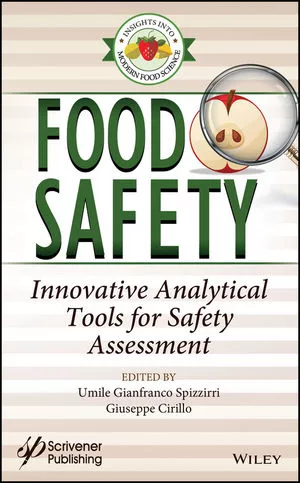
    Food Safety: Innovative Analytical Tools for Safety Assessment

See More Products

Related Directories

  • On Target Packaging

    On Target Packaging is a production/maintenance servicer for combination and check weighers. We do not sell or process food, but provide service/repairs, and equipment for the food industry
  • Loma Systems, an ITW Co.

    Established in 1969, LOMA SYSTEMS® is a leading manufacturer of advanced inspection systems for the food and pharmaceutical industries. With the addition of Lock Inspection and Cintex, Loma has built on this heritage to become a major supplier of metal detectors, checkweighers and X-ray inspection equipment.
×

Never miss the latest news and trends driving the food safety industry

eNewsletter | Website | eMagazine

JOIN TODAY!
  • RESOURCES
    • Advertise
    • Contact Us
    • Directories
    • Store
    • Want More
  • SIGN UP TODAY
    • Create Account
    • eMagazine
    • eNewsletter
    • Customer Service
    • Manage Preferences
  • SERVICES
    • Marketing Services
    • Reprints
    • Market Research
    • List Rental
    • Survey/Respondent Access
  • STAY CONNECTED
    • LinkedIn
    • Facebook
    • Instagram
    • X (Twitter)
  • PRIVACY
    • PRIVACY POLICY
    • TERMS & CONDITIONS
    • DO NOT SELL MY PERSONAL INFORMATION
    • PRIVACY REQUEST
    • ACCESSIBILITY

Copyright ©2025. All Rights Reserved BNP Media.

Design, CMS, Hosting & Web Development :: ePublishing