Third-party logistics providers integrate warehousing and transportation
Snack producers and bakers can customize warehousing and transportation services to meet individual needs.
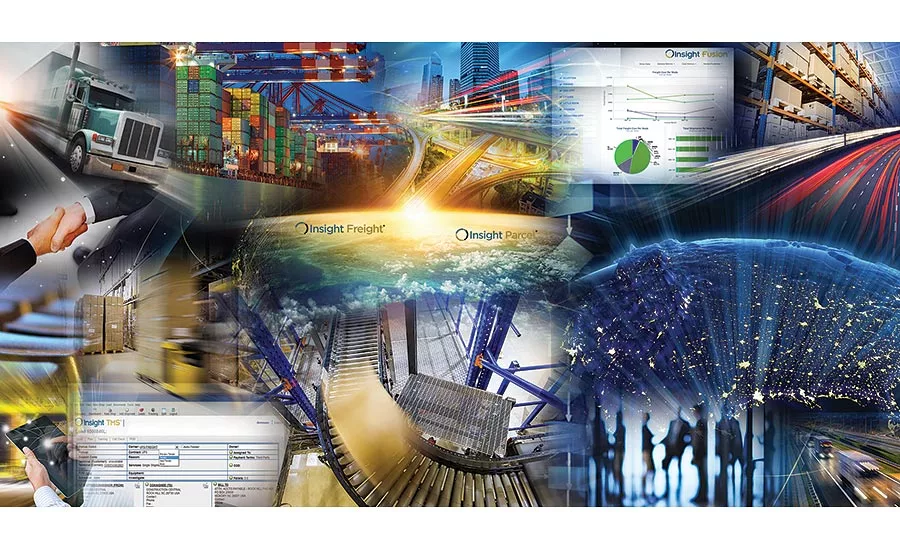
courtesy of Transportation Insight
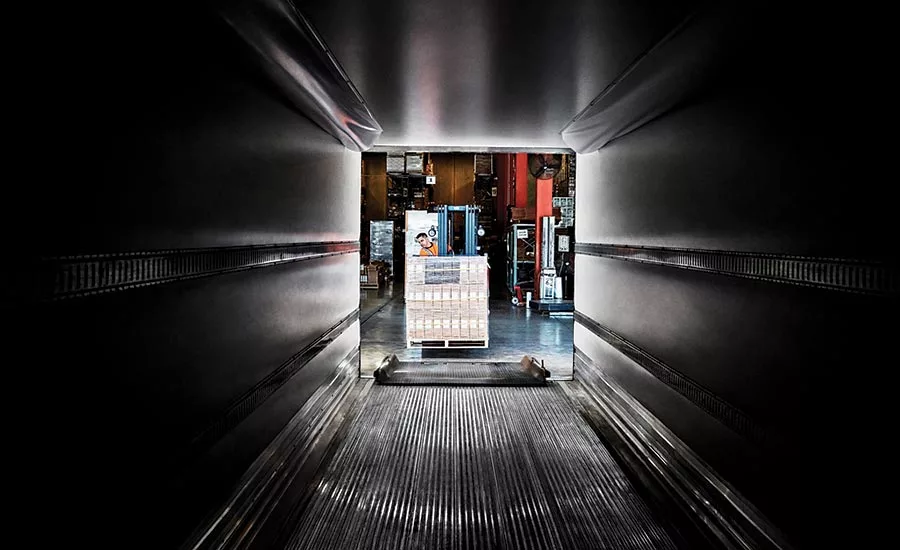
courtesy of Ryder Systems

courtesy of Ryder Systems

courtesy of Ryder Systems
Third-party logistics (3PL), the use of a third-party business to outsource elements of a company’s distribution and order fulfillment services, can help snack producers and bakeries deliver their products more effectively. 3PL providers specialize in integrated warehousing and transportation services that can be customized to meet customers’ needs based on market conditions.
As their capabilities have evolved, 3PL providers have become more invested in technology to support transportation and warehousing operations. This includes hard mechanization and automation (conveyors, sortation, automatic storage and retrieval systems) as well as software and tracking systems for warehouse and transportation management systems, and fleet tracking.
“The challenge for 3PL providers is to defray the cost of such overhead investments over the life of the contract with their clients,” says Bryan Jensen, chairman, St. Onge Co., York, PA. “From our client experience base at St. Onge, any technology and approach that allows for route optimization, fleet tracking and real-time monitoring will aid bakery/snack suppliers who provide direct store delivery (DSD) services. It allows for more-effective route planning and monitoring, an increase in on-time delivery, and, ultimately, store shelf inventory tracking.”
Partnership strategies
Increased demand for product visibility and the growing pressure to reduce on-hand inventory of fresh products is driving snack and bakery companies to adopt new business strategies, according to Rick Zaffarano, vice president of consumer products solutions, Transportation Insight, Hickory, NC. “By leveraging technology, load planning, network design and end-to-end supply-chain management, a 3PL or enterprise logistics provider (ELP) can help a client manage cost and improve decision-making.”
ELPs provide bundled solutions featuring a warehouse network and deep experience across many transportation modes so that shippers can leverage different strategies for aligning transportation lanes with production—consolidating loads, sharing networks, utilizing facilities and procuring last-mile delivery that improves service to retail sales points, Zaffarano notes.
As consumer demand drives food retailers to focus on inventory, those retailers more frequently purchase in smaller quantities, which translates to more frequent, smaller shipments that are more expensive for the manufacturer. “A bakery/snack company that works with an ELP has a network in place that can leverage technology-enabled data analysis to identify opportunities to consolidate products with other shippers,” Zaffarano adds.
Technology continues to drive positive change in the 3PL marketplace. Data capture and analysis tools, enhanced visibility and tracking technologies, and electronic billing and administrative solutions are having the greatest impact.
Looking for quick answers on food safety topics?
Try Ask FSM, our new smart AI search tool.
Ask FSM →
Zipline Logistics, Columbus, OH, offers the KanoPI shipper intelligence platform, which provides transparency for logistics performance and spending—down to individual customer orders. By using its filtering and analysis tools, shippers can see which customers or lanes are costing them the most money and why. KanoPI also has real-time tracking updates and visualization for day-of freight management. “With this information, we’re able to influence change for reduced spending and improved performance,” says Jesse Juett, senior business development representative.
Efficiencies are improving in the areas of DSD, 3PL ingredient/product storage, and distribution by motor, rail and intermodal transport. “Bakeries still deliver with dedicated fleets, because the product cannot sit in an LTL (less than truckload) facility or a trailer for an extended period. It must be delivered as quickly and efficiently as possible to ensure freshness, says Daniel Sears, senior consultant, Tompkins International, Raleigh, NC. Dynamic routing software is continuing to improve, which lowers cost for dedicated routes, he adds.
Zaffarano predicts that more snack producers and bakeries will begin leveraging ELPs for end-user forecasting. This will drive more of them to collaborate with other producers and embrace load consolidation strategies that ultimately serve everyone’s end customer more profitably. “An ELP can provide access to facilities, networks and load-matching opportunities that a shipper might not be able to access without a trusted business partner,” he notes.
Many companies are utilizing rail services, but factors must line up appropriately to achieve the best results, according to Juett. “It’s important that products are ready to ship and that a longer haul lane is established as a viable, lower-cost option compared to over-the-road transportation. As more companies pursue rail as an option, delays are being experienced at certain hubs, particularly Chicago. The railroads continue to invest in both labor and equipment to mitigate these delays, but volumes continue to increase.”
Improved DSD
DSD will continue to pose a challenge in the face of factors such as driver shortages, government regulations and consumer expectations for near-immediate delivery. “Consumers and retailers are demanding cost efficiency and better order accuracy for faster fulfillment. In most cases, bakery/snack producers cannot meet these challenges without effective partnerships and resources, which is why third-party providers are valuable,” says John Deris, senior vice president of national sales, Ryder Systems, Miami.
United States Cold Storage, Voorhees, NJ, offers the COLDshare Consolidation transportation program, which allows snack producers and bakeries to transport their goods along with other food producers to retail destinations at the right temperature, thus sharing truckload costs. The company ships to all 48 states out of 38 facilities. Program benefits include transportation cost savings, flexible schedules and improved management of shipments.
The Food Safety Modernization Act (FSMA) has impacted the 3PL business sector over the past few years. For example, it is transforming the food safety system from a response-based model to one that is focused on prevention and proactive action. “The costs associated with FSMA are making it difficult for bakery/snack companies to adapt and plan changes in training, compliance and customer demands. These factors are pushing many to look for 3PL partners who can help them navigate this complex environment,” Deris says.
Juett says the biggest impact that Zipline Logistics has seen is an increased level of communication for shipping requirements. In the past, it was just generally understood that food ingredients as a commodity would require a food-grade trailer. Now, companies are identifying specific requirements and establishing those well ahead of time.
“For example, if your trailer is inspected and a hole is found, it will be automatically refused with no option to rectify. This type of information is being broadcast upfront to all parties, so the 3PL partner can identify specific carriers that fit specific requirements and shippers can perform their due diligence ahead of time. It increases accountability across the board,” Juett explains.
Frozen dynamics
More bakeries are opting for warehousing and distributing frozen goods, which is another area where 3PL expertise can help. “The frozen goods segment is projected to grow at an annual rate of more than 7 percent into 2022. This increased volume will drive the need for more automation and warehousing by 3PL providers,” Sears says.
But while shipping frozen represents a rapidly growing category, there are not enough strong regional carriers that can handle LTL frozen foods, notes Zaffarano. Thus, snack producers and bakeries that offer frozen products must maintain their truckload quantities or look at more-engineered, multi-stop solutions for deployment of inventory. “Use of shipment consolidators is going to be on the rise, but that requires forward deployment of inventory, timing and more reliance on technology to ensure proper execution.”
Typically, when snack producers and bakeries have capital and need to expand, they would rather expand on what they do best, which is produce goods, according to Dave Carr, senior director of business development, United States Cold Storage. “Most do not want to spend that capital on freezers. Also, many retailers have changed their patterns by ordering less quantity per order but ordering more frequently, which produces more LTL freight.” This is an area where his company can help because it specializes in consolidating that LTL freight into full truckloads via its COLDshare Consolidation program.
What lies ahead for 3PL providers and users in the near future? Regulatory requirements covering food safety (FSMA) and transportation (electronic logging devices) have forced companies to evaluate how they manage their supply chain, says Derek Curtis, vice president sales, HighJump, Minneapolis. “It appears that the lower costs associated with cloud deployment, mobile devices and network infrastructure will continue to drive expansion. This combination of factors has been influencing decisions over the past year, and it shows no sign of abating.”