Food Safety
search
Ask Food Safety AI
cart
facebook twitter linkedin
  • Sign In
  • Create Account
  • Sign Out
  • My Account
Food Safety
  • NEWS
    • Latest News
    • White Papers
  • PRODUCTS
  • TOPICS
    • Contamination Control
    • Food Types
    • Management
    • Process Control
    • Regulatory
    • Sanitation
    • Supply Chain
    • Testing and Analysis
  • PODCAST
  • EXCLUSIVES
    • Food Safety Five Newsreel
    • eBooks
    • FSM Distinguished Service Award
    • Interactive Product Spotlights
    • Videos
  • BUYER'S GUIDE
  • MORE
    • ENEWSLETTER >
      • Archive Issues
      • Subscribe to eNews
    • Store
    • Sponsor Insights
    • ASK FSM AI
  • WEBINARS
  • FOOD SAFETY SUMMIT
  • EMAG
    • eMagazine
    • Archive Issues
    • Editorial Advisory Board
    • Contact
    • Advertise
  • SIGN UP!
News

Poll: Nearly Three-Quarters of Americans Looking to Government for More Food Safety Oversight

February 5, 2014

Source: PR Newswire

Food recall announcements have become something of a news cycle staple in the past few years. From spinach and peanut butter to chicken and pet foods, there seems to be little left in the U.S. food supply that should not be viewed with at least a modicum of suspicion. As such, it's likely not surprising that strong majorities of U.S. adults say food recalls have them at least somewhat concerned (86%, with 58% somewhat concerned and 28% seriously concerned) and believe there should be more government oversight in regards to food safety (73%).

These are some of the results of The Harris Poll® of 2,236 adults surveyed online between January 15 and 20, 2014. (Full results, including data tables, can be found here.)

Food recall concerns — and calls for increased government oversight where the food supply is concerned — are stronger among some subsets of Americans than others:

  • Women are more likely than men to indicate being both seriously (31% women, 25% men) and somewhat (61% and 55%, respectively) concerned; they are also more likely than their male counterparts to believe there should be more government oversight in regards to food safety (77% and 69%, respectively).
  • Americans in low income households — specifically households with an annual income under $35,000 — are more likely than those in higher earning households to describe food recalls as a serious concern (36% in households earning less than $35k, 21% in households earning $35k-$49,999, 26% in $50k+ households).
  • Turning to political leanings, Democrats (32%) are more likely than Republicans (25%) to characterize food recalls as a serious concern. The call for more government oversight rings most loudly from the Democrats' camp (86%) and least so from Republicans (60%), with Independents in the middle (70%).

Waxing or waning?

U.S. adults are somewhat divided on the question of whether there have been more health and/or safety prompted food recalls recently than in the past few years (43%) or if their frequency has remained about the same (50%). Few, however, believe things have improved, with only 7% indicating there have been fewer than in the past few years.

Older Americans — specifically Baby Boomers (48%, ages 49-67) and Matures (49%, ages 68+) — are more likely than their younger counterparts (38% Echo Boomers [ages 18-36], 37% Gen Xers [ages 37-48]) to believe there have been more such recalls. The perception that the number of recalls has risen is also stronger among women (48%) than men (37%).

When those who think there have been more food recalls lately are asked who they hold most responsible for this increase, the highest percentage by a dramatic margin place the blame on those responsible for packaging and/or processing food (50%), though the federal government (19%) and those responsible for growing and/or raising food (16%) don't escape this blame.

  • Though overall few Americans place the lion's share of blame on consumers, for wanting food to be as cheap as possible (6%), it's worth noting that men (9%) are twice as likely as women (4%) to take such a position.
  • Those in households with children are twice as likely as those without to point to those responsible for growing and/or raising food (24% with, 12% without).
  • Matures (65%) are the generation most likely to blame those responsible for packaging and/or processing food, with Echo Boomers (35%) least likely to do so; blame among Gen Xers (57%) and Baby Boomers (52%) falls in the middle.
  • Matures are less likely than any other generation to lay the blame on those responsible for growing and/or raising food (21% Echo Boomers, 15% Gen Xers, 16% Baby Boomers, 5% Matures).

Regardless of whether food recalls are on the rise or not, they have inarguably become a regular occurrence in the U.S., and six in ten Americans (61%) say that because of food safety concerns, they try to buy as much food locally as they can.

Women (68%) are more likely than men (52%) to indicate this. Additionally, Matures (73%) are more likely than either Echo Boomers (54%) or Gen Xers (57%) to do so; Baby Boomers (64%) are also more likely than Echo Boomers to indicate this.

Looking for quick answers on food safety topics?
Try Ask FSM, our new smart AI search tool.
Ask FSM →

Americans are split on whether food safety issues are an inevitable side effect of low food costs, with roughly half each agreeing (52%) and disagreeing (48%) with the sentiment.

Younger Americans (59% Echo Boomers, 56% Gen Xers) are more likely than their older counterparts (47% Baby Boomers, 45% Matures) agree with this sentiment.

Forgiveness is divine

Health or safety related food recalls can have enormous implications for a company's reputation and patronage – but not a permanent one, at least for a majority of Americans. Over half of U.S. adults (55%) indicate that if a brand they usually purchase is involved with a recall or safety concern issue, they'll temporarily switch to another brand and then return to the recalled brand once it's safe.

On the other hand, 16% say they'll purchase another brand and never purchase the recalled brand again, and an additional 17% would thereafter avoid any brands made by the recalled product's manufacturer.

Baby Boomers and Matures (60% each) are more likely than Echo Boomers (49%) to say they would temporarily switch brands, while Echo Boomers are more likely than any other generation to say they would never purchase the recalled brand again (24% Echo Boomers, 15% Gen Xers, 12% Baby Boomers, 9% Matures). Republicans (63%) are more likely than either Democrats (54%) or Independents (55%) to say they would make a temporary brand switch.




Share This Story

Recommended Content

JOIN TODAY
to unlock your recommendations.

Already have an account? Sign In

  • people holding baby chicks

    Serovar Differences Matter: Utility of Deep Serotyping in Broiler Production and Processing

    This article discusses the significance of Salmonella in...
    Food Type
    By: Nikki Shariat Ph.D.
  • woman washing hands

    Building a Culture of Hygiene in the Food Processing Plant

    Everyone entering a food processing facility needs to...
    Sanitation
    By: Richard F. Stier, M.S.
  • graphical representation of earth over dirt

    Climate Change and Emerging Risks to Food Safety: Building Climate Resilience

    This article examines the multifaceted threats to food...
    International
    By: Maria Cristina Tirado Ph.D., D.V.M. and Shamini Albert Raj M.A.
Manage My Account
  • eMagazine Subscription
  • Subscribe to eNewsletter
  • Manage My Preferences
  • Website Registration
  • Subscription Customer Service

More Videos

Sponsored Content

Sponsored Content is a special paid section where industry companies provide high quality, objective, non-commercial content around topics of interest to the Food Safety Magazine audience. All Sponsored Content is supplied by the advertising company and any opinions expressed in this article are those of the author and not necessarily reflect the views of Food Safety Magazine or its parent company, BNP Media. Interested in participating in our Sponsored Content section? Contact your local rep!

close
  • Salmonella bacteria
    Sponsored byThermoFisher

    Food Microbiology Testing Methods: Salmonella species

  • a diagram explaining indicator organisms
    Sponsored byHygiena

    How Proactive Listeria Testing Helps Prevent Six- and Seven-Figure Recalls

  • woman grocery shopping
    Sponsored byCorbion

    Designing Safety Into Every Bite: Proactive Risk Mitigation for Refrigerated Foods

Popular Stories

NRTE breaded stuffed chicken

USDA Indefinitely Delays Enforcement of Salmonella as Adulterant in Raw Breaded, Stuffed Chicken

non-conforming product

How to Handle Non-Conforming Product

spoonfuls of food ingredients

FDA’s Developing Rule to Tighten GRAS Oversight Moves to White House

Events

December 11, 2025

How to Develop and Implement an Effective Food Defense Strategy

Live: December 11, 2025 at 2:00 pm EDT: From this webinar, attendees will learn common areas where companies encounter challenges in their food defense strategies and how to address them.

May 11, 2026

The Food Safety Summit

Stay informed on the latest food safety trends, innovations, emerging challenges, and expert analysis. Leave the Summit with actionable insights ready to drive measurable improvements in your organization. Do not miss this opportunity to learn from experts about contamination control, food safety culture, regulations, sanitation, supply chain traceability, and so much more.

View All

Products

Global Food Safety Microbial Interventions and Molecular Advancements

Global Food Safety Microbial Interventions and Molecular Advancements

See More Products

Related Articles

  • scientist doing research in lab holding tablet

    UK Food Safety Research Network Receives Support to Continue Three More Years of Work

    See More
  • Dynamic Panel of Government and Industry Leaders to Discuss The New Food Safety Environment at 2016 Food Safety Summit

    See More
  • USDA and FDA One Step Closer to Securing More Government Funding for FY 2019

    See More

Related Products

See More Products
  • 1119053595.jpg

    Food Safety for the 21st Century: Managing HACCP and Food Safety throughout the Global Supply Chain, 2E

  • 1119160553.jpg

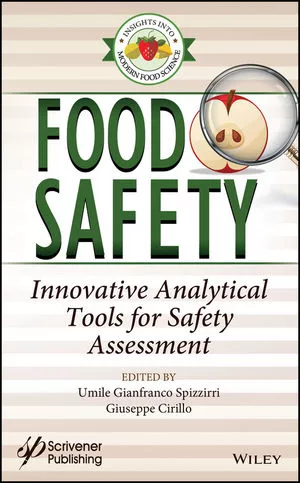
    Food Safety: Innovative Analytical Tools for Safety Assessment

  • 1118396308.jpg

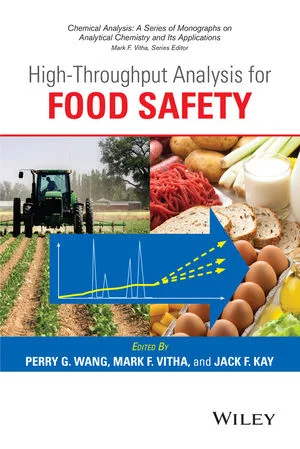
    High Throughput Analysis for Food Safety

See More Products

Related Directories

  • Saldesia "Goddess of Food Safety"

    Saldesia is a distributor of Food Safety products and solutions. We are focused on supplying the Quality, Production, Safety and Sanitation departments. Product lines include Color Coded, Metal Detectable, Antimicrobial Flooring & Mats, Workwear, Footwear, Spray Nozzles, and more!
  • Institute of Food Technologists

    Since 1939, the Institute of Food Technologists (IFT) has served as the voice of the global food science community. IFT advocates for science, technology, and research to address the world’s greatest food challenges, guiding our community of more than 200,000. IFT convenes professionals from around the world – from producers and product developers to innovators and researchers across food, nutrition, and public health – with a shared mission to help create a global food supply that is sustainable, safe, nutritious, and accessible to all. IFT provides its growing community spanning academia, industry, and government with the resources, connections, and opportunities necessary to stay ahead of a rapidly evolving food system as IFT helps feed the minds that feed the world. For more information, please visit ift.org.
×

Never miss the latest news and trends driving the food safety industry

eNewsletter | Website | eMagazine

JOIN TODAY!
  • RESOURCES
    • Advertise
    • Contact Us
    • Directories
    • Store
    • Want More
  • SIGN UP TODAY
    • Create Account
    • eMagazine
    • eNewsletter
    • Customer Service
    • Manage Preferences
  • SERVICES
    • Marketing Services
    • Reprints
    • Market Research
    • List Rental
    • Survey/Respondent Access
  • STAY CONNECTED
    • LinkedIn
    • Facebook
    • Instagram
    • X (Twitter)
  • PRIVACY
    • PRIVACY POLICY
    • TERMS & CONDITIONS
    • DO NOT SELL MY PERSONAL INFORMATION
    • PRIVACY REQUEST
    • ACCESSIBILITY

Copyright ©2025. All Rights Reserved BNP Media.

Design, CMS, Hosting & Web Development :: ePublishing