Food Safety
search
Ask Food Safety AI
cart
facebook twitter linkedin instagram youtube
  • Sign In
  • Create Account
  • Sign Out
  • My Account
Food Safety
  • NEWS
    • Latest News
    • White Papers
  • PRODUCTS
  • TOPICS
    • Contamination Control
    • Food Types
    • Management
    • Process Control
    • Regulatory
    • Sanitation
    • Supply Chain
    • Testing and Analysis
  • PODCAST
  • EXCLUSIVES
    • Food Safety Five Newsreel
    • eBooks
    • FSM Distinguished Service Award
    • Interactive Product Spotlights
    • Videos
  • BUYER'S GUIDE
  • MORE
    • NEWSLETTERS >
      • Archive Issues
      • Subscribe to eNews
    • Store
    • Sponsor Insights
    • ASK FSM AI
  • WEBINARS
  • FOOD SAFETY SUMMIT
  • EMAG
    • eMagazine
    • Archive Issues
    • Editorial Advisory Board
    • Contact
    • Advertise
  • SIGN UP!

HPP

Universal Pure Survey: Food safety helps drive increase of HPP

Consumer demand for fresh food is leading to an increased role for High Pressure Processing.
By Crystal Lindell
HPP
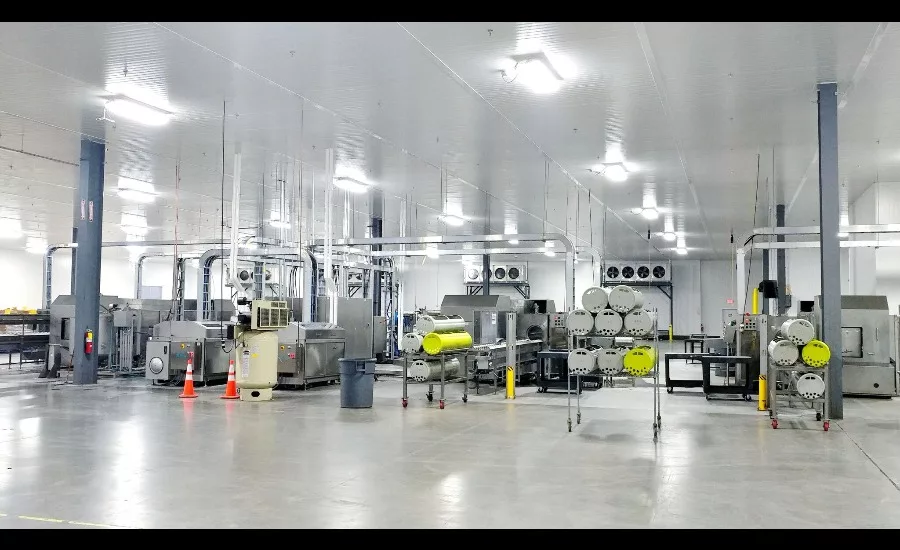
A growing number of producers and retailers are more familiar with HPP (pictured here) than ever before - from 60 percent in 2016 to 77 percent (producers) and 74 percent (retailers) last year, according to a Universal Pure Survey. Source: Universal Pure.
March 22, 2018

As demand for fresh food grows, more retailers are stocking their shelves with foods and beverages that have been high pressure processed (HPP) to help ensure food safety, food quality, and eliminate food waste, according to a new survey.

A whopping 85 percent of retailers say their companies are affected by the fresh food demand, and 78 percent go so far as to say they’re favoring companies that produce fresh product options, the survey found. And, more than 60 percent of retailers say they’re stocking more refrigerated and fresh products, while 48 percent say they’re expanding their refrigerated section.

That’s good news for HPP, as a growing number of producers and retailers are more familiar with HPP than ever before ― from 60 percent in 2016’s survey to 77 percent (producers) and 74 percent (retailers) last year ― and see its benefit for eliminating pathogens, allowing cleaner food labels, enhancing taste and extending shelf life, according to the survey, commissioned by Universal Pure, the largest provider of HPP services globally.

“The survey results demonstrate that HPP is a preferred technology for food safety, food quality and shelf life,” says Mark A. Duffy, CEO of Universal Pure. “Consumers want better-for-you foods that are fresh, tasty, preservative-free and safe, and HPP can help deliver these results.”

High Pressure Processing uses cold temperatures and high pressure to improve food safety. It also helps ensure the quality, taste and texture of food products and extend their shelf life.

HPP has come into its own, according to the study. Notably, 78 percent of retailers have a favorable view of HPP, and 85 percent said the method of processing used by a food producer positively affects their decision to purchase a food and beverage product.

The survey measured and compared perceived advantages in food quality, food safety, and food waste with other types of pasteurization, including heat pasteurization, pulsed electric field radiation, ultraviolet radiation, and other processes. High pressure processing was favored by producers and retailers among other food processing methods on measures concerning food quality, food safety and food waste.

Looking for quick answers on food safety topics?
Try Ask FSM, our new smart AI search tool.
Ask FSM →

Other Survey Findings

HPP Favorability Grows

  • 81 percent of producers reported their companies are using HPP at some level compared to 60 percent last year.

  • HPP was favored by producers and retailers among other food processing methods on measures concerning food quality (67 percent), food safety (59 percent) and food waste (56 percent).

Shelf-Life Interest Expands

  • The biggest reason producers say they use HPP is for shelf-life extension (73 percent). That along with food safety benefits (63 percent), nutrient preservation (58 percent) and cleaner label enablement (54 percent) dwarf all other reasons. The 2016 survey found that food safety was the biggest reason.

  • 96 percent of retailers say they are more likely to purchase a product with a longer shelf life, while 94 percent of food producers say they could expand distribution range if their products had a longer shelf life.

Reducing Food Waste Is Important

  • 74 percent of retailers and 92 percent of producers say the issue of food waste is important to their companies.

About the Survey

The online survey was conducted by a third-party and commissioned by Universal Pure, the country’s largest HPP outsourcing service provider for food and beverage producers. The survey was completed in October 2017 and included food producers (80 percent) and food retailers (20 percent). This is the second year that the survey has been commissioned by Universal Pure.




KEYWORDS: high pressure processing (HPP)

Share This Story

Crystal lindell author photo
Crystal Lindell worked primarily at daily newspapers before joining BNP Media in 2010. While here she has worked on Candy Industry Magazine, Food Engineering Magazine and Food Safety Strategies. She holds a master’s degree in public affairs reporting from the University of Illinois – Springfield and a bachelor’s degree in political science from Western Illinois University. And her favorite breakfast is a cup of espresso and Twix bar.

Recommended Content

JOIN TODAY
to unlock your recommendations.

Already have an account? Sign In

  • people holding baby chicks

    Serovar Differences Matter: Utility of Deep Serotyping in Broiler Production and Processing

    This article discusses the significance of Salmonella in...
    Contamination Control
    By: Nikki Shariat Ph.D.
  • woman washing hands

    Building a Culture of Hygiene in the Food Processing Plant

    Everyone entering a food processing facility needs to...
    Management
    By: Richard F. Stier, M.S.
  • graphical representation of earth over dirt

    Climate Change and Emerging Risks to Food Safety: Building Climate Resilience

    This article examines the multifaceted threats to food...
    International
    By: Maria Cristina Tirado Ph.D., D.V.M. and Shamini Albert Raj M.A.
Manage My Account
  • eMagazine Subscription
  • Subscribe to Newsletters
  • Manage My Preferences
  • Website Registration
  • Subscription Customer Service

More Videos

Sponsored Content

Sponsored Content is a special paid section where industry companies provide high quality, objective, non-commercial content around topics of interest to the Food Safety Magazine audience. All Sponsored Content is supplied by the advertising company and any opinions expressed in this article are those of the author and not necessarily reflect the views of Food Safety Magazine or its parent company, BNP Media. Interested in participating in our Sponsored Content section? Contact your local rep!

close
  • NEVIFIT 3 Compartment BPA-FREE
    Sponsored byCorbion

    The Risks of Ready-to-Eat: Five Ways to Protect Today's Prepared Meals

  • a group of workers in a food production facility
    Sponsored bySkillUp by Registrar Corp

    How to Build a Better Training Program: Data and Insights from the Global Food Safety Training Survey

  • the use of dual-energy X-ray food inspection technology to identify foreign contaminants.
    Sponsored byEagle by METTLER TOLEDO

    Precision Inspection Starts with the Right X-ray Detector

Popular Stories

green powder/moringa in wooden mortar

FDA Opens Third Salmonella–Moringa Outbreak Investigation of the Year

FoodSafetyMattersFinal-900x550-(002).jpg

Ep. 218. Dr. Brady Carter: Water Activity, Shelf-Life Validation, and Food Safety Controls

fermented meat

Study is First to Analyze Trends in Foodborne Illness Outbreaks Linked to Non-Dairy Fermented Products

a practical guide to spoilage investigation webinar

Events

June 3, 2026

How to Build a Better Food Safety Training Program

Live: June 3, 2026 at 2:00 pm EDT: Join this webinar to learn how AI is impacting food safety training, and how you can leverage AI in your programs.

June 4, 2026

Building a Stronger Food Safety Program in a Changing GFSI Landscape

Live: June 4, 2026 at 11:00 am EDT: Attend this webinar to understand how GFSI requirements are evolving and what those changes signal for quality programs at food and beverage facilities.

June 10, 2026

A Practical Guide to Spoilage Investigation and Prevention

Live: June 10, 2026 at 11:00 am EDT: Join this webinar to learn how to identify spoilage root causes, reduce risk, and apply data-driven strategies for prevention.

View All

Products

Global Food Safety Microbial Interventions and Molecular Advancements

Global Food Safety Microbial Interventions and Molecular Advancements

See More Products

Related Articles

  • Mark Duffy, CEO of Universal Pure

    Food Safety Summit Q&A with Mark Duffy, Universal Pure (Part 1)

    See More
  • FSS news generic image

    Universal Pure announces speaker lineup for 2019 HPP Summit, Sept. 25-27 in Atlanta

    See More
  • Annual GFSI Conference to take place March 23-25, 2021

    GFSI Will Survey Food Safety Industry on Views of Sustainable Development Goals

    See More

Related Products

See More Products
  • 9781498721776.jpg

    Handbook of Food Processing: Food Safety, Quality, and Manufacturing Processes

  • 1119053595.jpg

    Food Safety for the 21st Century: Managing HACCP and Food Safety throughout the Global Supply Chain, 2E

  • 1444333348.jpg

    Handbook of Food Safety Engineering

See More Products

Related Directories

  • Saldesia "Goddess of Food Safety"

    Saldesia is a distributor of Food Safety products and solutions. We are focused on supplying the Quality, Production, Safety and Sanitation departments. Product lines include Color Coded, Metal Detectable, Antimicrobial Flooring & Mats, Workwear, Footwear, Spray Nozzles, and more!
  • Michigan State University Online Food Safety Program

    MSU's Online Food Safety program strives to educate professionals on how to make global food systems safe. The program consists of a master’s degree and graduate certificate, both entirely online. Each program will provide students with applicable knowledge to navigate the ever-changing concerns surrounding food safety, food protection, and public health.
×

Never miss the latest news and trends driving the food safety industry

Newsletters | Website | eMagazine

JOIN TODAY!
  • RESOURCES
    • Advertise
    • Contact Us
    • Directories
    • Store
    • Want More
  • SIGN UP TODAY
    • Create Account
    • eMagazine
    • Newsletters
    • Customer Service
    • Manage Preferences
  • SERVICES
    • Marketing Services
    • Reprints
    • Market Research
    • List Rental
    • Survey/Respondent Access
  • STAY CONNECTED
    • LinkedIn
    • Facebook
    • Instagram
    • X (Twitter)
  • PRIVACY
    • PRIVACY POLICY
    • TERMS & CONDITIONS
    • DO NOT SELL MY PERSONAL INFORMATION
    • PRIVACY REQUEST
    • ACCESSIBILITY

Copyright ©2026. All Rights Reserved BNP Media, Inc. and BNP Media II, LLC.

Design, CMS, Hosting & Web Development :: ePublishing