Food Safety
search
Ask Food Safety AI
cart
facebook twitter linkedin instagram youtube
  • Sign In
  • Create Account
  • Sign Out
  • My Account
Food Safety
  • NEWS
    • Latest News
    • White Papers
  • PRODUCTS
  • TOPICS
    • Contamination Control
    • Food Types
    • Management
    • Process Control
    • Regulatory
    • Sanitation
    • Supply Chain
    • Testing and Analysis
  • PODCAST
  • EXCLUSIVES
    • Food Safety Five Newsreel
    • eBooks
    • FSM Distinguished Service Award
    • Interactive Product Spotlights
    • Videos
  • BUYER'S GUIDE
  • MORE
    • NEWSLETTERS >
      • Archive Issues
      • Subscribe to eNews
    • Store
    • Sponsor Insights
    • ASK FSM AI
  • WEBINARS
  • FOOD SAFETY SUMMIT
  • EMAG
    • eMagazine
    • Archive Issues
    • Editorial Advisory Board
    • Contact
    • Advertise
  • SIGN UP!

COVID-19

Coca-Cola bottlers produce millions of COVID-19 test tubes

Plastic preforms used for bottles are just the right shape for test kit swabs
By Rose Shilling
Coca-Cola bottlers make COVID-19 test tubes

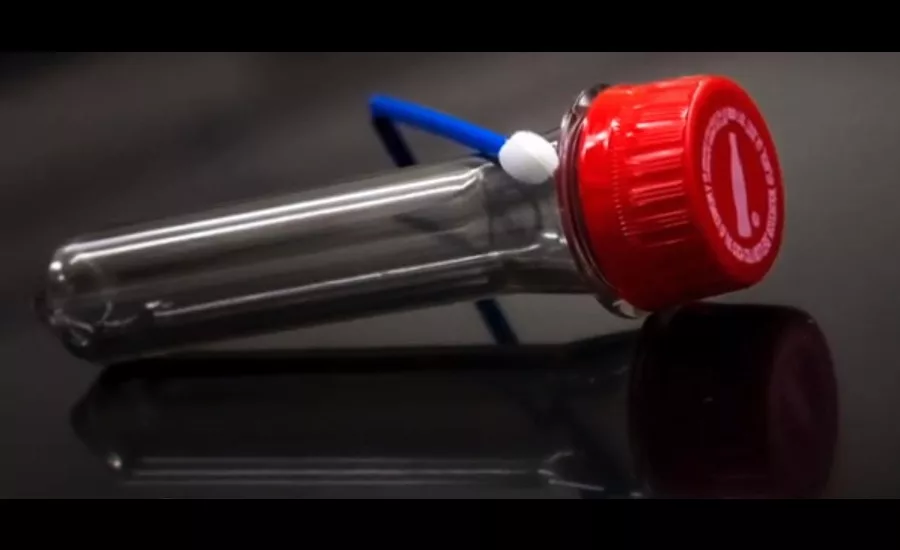
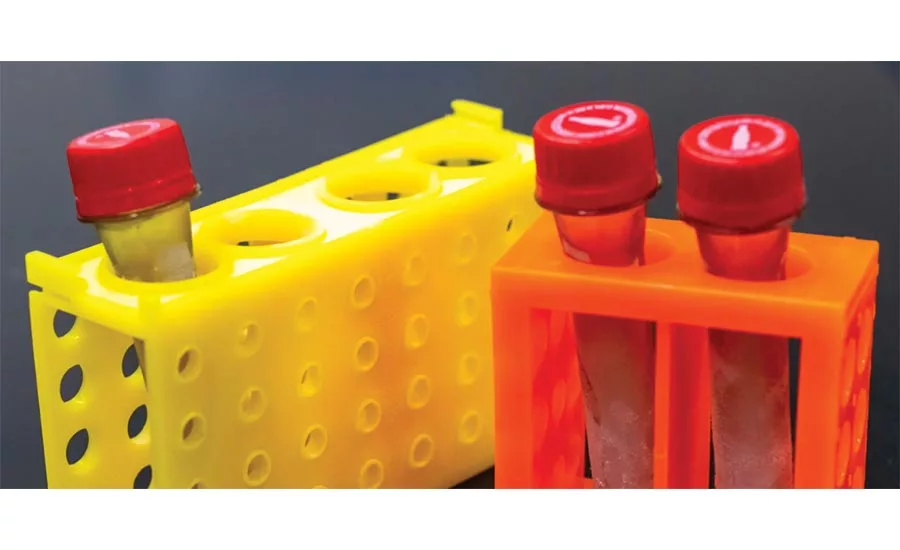
While the red branded lids were used during development, the tubes for testing labs will have plain white screw-top caps that are tamperproof and prevent leakage.
COVID-19 test tubes

A Coca-Cola Consolidated bottling facility can produce 7 million COVID-19 test tubes a week.

Photos courtesy of Coca-Cola Consolidated

Coca-Cola bottlers make COVID-19 test tubes
COVID-19 test tubes
July 22, 2020

A federal lab helping scale up production of COVID-19 test tubes found a solution in the beverage industry: the plastic used for Coca-Cola bottles.

The finished bottles themselves aren’t being used, but the PET preforms, which would normally be blown into bottle form, are conveniently the same shape as a test tube used to hold a swab with a sample from a person.

Coca-Cola Consolidated Inc., the largest bottler of the brand in the U.S., says a facility in Charlotte, N.C., managed by a group of bottlers has produced more than 7 million tubes already for test kits, using the preforms.

And that’s the number of tubes that Southeastern Container, a PET preform and bottle manufacturing cooperative, can produce weekly. During the testing phase, the sample tubes were topped with the familiar red Coke caps, but the tubes produced for tests will have plain white screw-top caps that are tamper proof, preventing leakage and exposure during transport. Soda bottle preforms are the perfect size to hold the long COVID-19 swab in saline solution during transport.

The Oak Ridge National Lab considered several options when helping the U.S. Department of Health and Human Services identify manufacturers that could help fill a gap in collection tubes needed for states’ increased testing.

“Through a personal connection and discussions with Coca-Cola Consolidated, we determined the preform that goes into a blow molding machine to make Coca-Cola bottles looked exactly like the test tube needed for the COVID-19 testing kits,” says Lonnie Love, lead scientist for Oak Ridge National Laboratory’s COVID-19 advanced manufacturing initiatives. UT-Battelle manages the lab for the Department of Energy’s Office of Science.

The laboratory worked with COVID-19 testing company Longhorn Vaccines and Diagnostics to confirm that samples from Coca-Cola Consolidated could work to help with a global shortage of cryotubes.

Looking for quick answers on food safety topics?
Try Ask FSM, our new smart AI search tool.
Ask FSM →

“Coke bottlers have done what no other vialing company could do: In a few short days, they have fabricated a small, ruggedized vial from a plastic preform that does not leak, is large enough to hold any swab type, and importantly, they can make millions of tubes per week,” says Luke T. Daum, chief scientific officer at Longhorn Vaccines.

The Coca-Cola bottlers will now supply millions of preforms for test kits throughout the country, with five testing companies in line at this point to start using the containers.

Once test tubes are produced, sterilization is usually required before they can be used in test kits. Sandia National Laboratories, a Department of Energy and National Nuclear Security Administration lab with headquarters in Albuquerque, N.M., is using its Gamma Irradiation Facility and a team of radiation science experts to find the right level of gamma radiation to sterilize the tubes without damaging the plastic or seals.


This article was originally posted on www.foodengineeringmag.com.
KEYWORDS: bottles coronavirus and food safety food packaging technology packaging materials

Share This Story

Rose shilling author

Rose Shilling helps ensure Food Engineering Magazine is ready to print each month as managing editor. She writes feature stories on a variety of topics and tracks the food packaging industry. A journalist with an editing background at news services and newspapers, she also has driven editorial projects in health care and higher education.

Recommended Content

JOIN TODAY
to unlock your recommendations.

Already have an account? Sign In

  • people holding baby chicks

    Serovar Differences Matter: Utility of Deep Serotyping in Broiler Production and Processing

    This article discusses the significance of Salmonella in...
    Meat/Poultry
    By: Nikki Shariat Ph.D.
  • woman washing hands

    Building a Culture of Hygiene in the Food Processing Plant

    Everyone entering a food processing facility needs to...
    Food Prep/Handling
    By: Richard F. Stier, M.S.
  • graphical representation of earth over dirt

    Climate Change and Emerging Risks to Food Safety: Building Climate Resilience

    This article examines the multifaceted threats to food...
    Best Practices
    By: Maria Cristina Tirado Ph.D., D.V.M. and Shamini Albert Raj M.A.
Manage My Account
  • eMagazine Subscription
  • Subscribe to Newsletters
  • Manage My Preferences
  • Website Registration
  • Subscription Customer Service

More Videos

Sponsored Content

Sponsored Content is a special paid section where industry companies provide high quality, objective, non-commercial content around topics of interest to the Food Safety Magazine audience. All Sponsored Content is supplied by the advertising company and any opinions expressed in this article are those of the author and not necessarily reflect the views of Food Safety Magazine or its parent company, BNP Media. Interested in participating in our Sponsored Content section? Contact your local rep!

close
  • NEVIFIT 3 Compartment BPA-FREE
    Sponsored byCorbion

    The Risks of Ready-to-Eat: Five Ways to Protect Today's Prepared Meals

  • a group of workers in a food production facility
    Sponsored bySkillUp by Registrar Corp

    How to Build a Better Training Program: Data and Insights from the Global Food Safety Training Survey

  • the use of dual-energy X-ray food inspection technology to identify foreign contaminants.
    Sponsored byEagle by METTLER TOLEDO

    Precision Inspection Starts with the Right X-ray Detector

Popular Stories

green powder/moringa in wooden mortar

FDA Opens Third Salmonella–Moringa Outbreak Investigation of the Year

FoodSafetyMattersFinal-900x550-(002).jpg

Ep. 218. Dr. Brady Carter: Water Activity, Shelf-Life Validation, and Food Safety Controls

fermented meat

Study is First to Analyze Trends in Foodborne Illness Outbreaks Linked to Non-Dairy Fermented Products

a practical guide to spoilage investigation webinar

Events

June 4, 2026

Building a Stronger Food Safety Program in a Changing GFSI Landscape

Live: June 4, 2026 at 11:00 am EDT: Attend this webinar to understand how GFSI requirements are evolving and what those changes signal for quality programs at food and beverage facilities.

June 10, 2026

A Practical Guide to Spoilage Investigation and Prevention

Live: June 10, 2026 at 11:00 am EDT: Join this webinar to learn how to identify spoilage root causes, reduce risk, and apply data-driven strategies for prevention.

June 16, 2026

Sustainable Food Contact Materials: Where Regulation Meets Analytical Testing

Live: June 16, 2026 at 11:00 am EDT: This webinar explores how sustainability regulations are changing food contact material requirements, including packaging compliance, unintended substances, and per- and polyfluoroalkyl substances.

View All

Products

Global Food Safety Microbial Interventions and Molecular Advancements

Global Food Safety Microbial Interventions and Molecular Advancements

See More Products

Related Articles

  • COVID-19 & Food Safety: The Importance of Research and Extension in Mitigating the Negative Impacts of COVID-19

    See More
  • Food Safety Summit 2017 logo

    Keynote address and opening session of 2020 Food Safety Summit will focus on the impact of COVID-19 on the food industry

    See More
  • RIKEN, Suntory Liquors and Toppan Printing collaborate to reduce the risk of COVID-19 infection at restaurants and bars

    RIKEN, Suntory Liquors and Toppan Printing collaborate to reduce the risk of COVID-19 infection at restaurants and bars

    See More

Related Products

See More Products
  • 1444333348.jpg

    Handbook of Food Safety Engineering

  • 9781498721776.jpg

    Handbook of Food Processing: Food Safety, Quality, and Manufacturing Processes

  • 0813808774.jpg

    Improving Import Food Safety

See More Products
×

Never miss the latest news and trends driving the food safety industry

Newsletters | Website | eMagazine

JOIN TODAY!
  • RESOURCES
    • Advertise
    • Contact Us
    • Directories
    • Store
    • Want More
  • SIGN UP TODAY
    • Create Account
    • eMagazine
    • Newsletters
    • Customer Service
    • Manage Preferences
  • SERVICES
    • Marketing Services
    • Reprints
    • Market Research
    • List Rental
    • Survey/Respondent Access
  • STAY CONNECTED
    • LinkedIn
    • Facebook
    • Instagram
    • X (Twitter)
  • PRIVACY
    • PRIVACY POLICY
    • TERMS & CONDITIONS
    • DO NOT SELL MY PERSONAL INFORMATION
    • PRIVACY REQUEST
    • ACCESSIBILITY

Copyright ©2026. All Rights Reserved BNP Media, Inc. and BNP Media II, LLC.

Design, CMS, Hosting & Web Development :: ePublishing