Supplier Verification Beyond the Checklist: Moving from Documentation to Food Safety Decisions
Need to Know
- Effective supplier verification requires more than maintaining approved supplier lists, COAs, and audit reports; documentation must provide meaningful evidence that food safety hazards are being controlled
- Risk-based supplier verification programs prioritize oversight based on the hazards associated with ingredients and suppliers, rather than applying the same verification activities to every supplier
- COAs and microbiological testing provide valuable information, but their limitations underscore the importance of evaluating suppliers' preventive controls, environmental monitoring, and sampling practices
- Supplier verification is also a business risk management strategy, helping processors identify recurring issues, prevent costly disruptions, and strengthen supply chain resilience
The supplier verification binder is full.
Approved supplier lists? Approved.
Certificates of analysis? Filed.
Supplier questionnaires? Complete.
Third-party audit reports? Current.
On paper, everything appears to be in order. Then, someone asks a simple question: How do you know your supplier is actually controlling the hazard you have identified? For many food processors, that is the moment supplier verification shifts from a documentation exercise to a food safety strategy.
Supplier verification is now a routine part of doing business for most food processors. Food companies maintain approved supplier lists, collect certificates, request audit reports, and organize records to meet customer expectations and regulatory requirements. Those documents are essential. However, documentation alone does not prevent contaminated ingredients from entering a facility or ensure hazards are consistently controlled throughout the supply chain.
Today's food supply chains are more complex than ever. A single ingredient may pass through multiple handlers, processors, and distributors before arriving at a manufacturing facility. When something goes wrong upstream, the consequences can extend far beyond one company. A 2025 powdered infant formula recall in 20251 illustrated just how quickly a supplier issue can ripple through the food supply chain. The lesson was not simply that recalls happen; it was that supplier verification programs should be designed to recognize warning signs early, document recurring issues, and reduce the likelihood that problems move unnoticed from one company to the next.
Moving Beyond Supplier Verification Documentation
For food processors ranging from startups to established manufacturers, supplier verification presents challenges that extend across multiple departments. Effective supplier verification requires coordination among quality management, food safety, microbiology, and business operations to develop programs that are practical, risk-based, and effective.
Whether approving a first supplier or strengthening an existing verification program, food processors often encounter similar challenges. The question is not simply whether supplier documentation exists, but whether that documentation provides reliable assurance that suppliers are consistently controlling the hazards for which they are responsible.
That journey begins with the paperwork—but it should not end there. Approved supplier lists, certificates of analysis, supplier questionnaires, third-party audit reports, and written procedures form the foundation of most supplier verification programs. Most processors are not starting from scratch. Many have invested significant time building supplier approval programs that satisfy customer requirements and regulatory expectations.
Documentation alone does not tell the whole story, however.
Looking for quick answers on food safety topics?
Try Ask FSM, our new smart AI search tool.
Ask FSM →
"Most companies already have the foundational pieces in place," said Stephanie Baker, Manager of Oklahoma State University's Robert M. Kerr Food & Agricultural Products Center's (FAPC's) Food Safety and Quality Program. "The challenge isn't collecting the documents. It's making sure those documents tell a meaningful story about food safety."
For Baker, supplier verification is far more than maintaining a binder of records. It is about creating confidence that ingredients entering a facility are consistently produced under conditions that effectively control food safety hazards. That confidence becomes especially important when something goes wrong upstream.
The powdered milk recall underscores why supplier verification must extend beyond collecting records. The goal is not to assume every problem can be prevented, but to recognize warning signs early, track recurring issues, and reduce the chance that supplier problems move unnoticed into finished products.
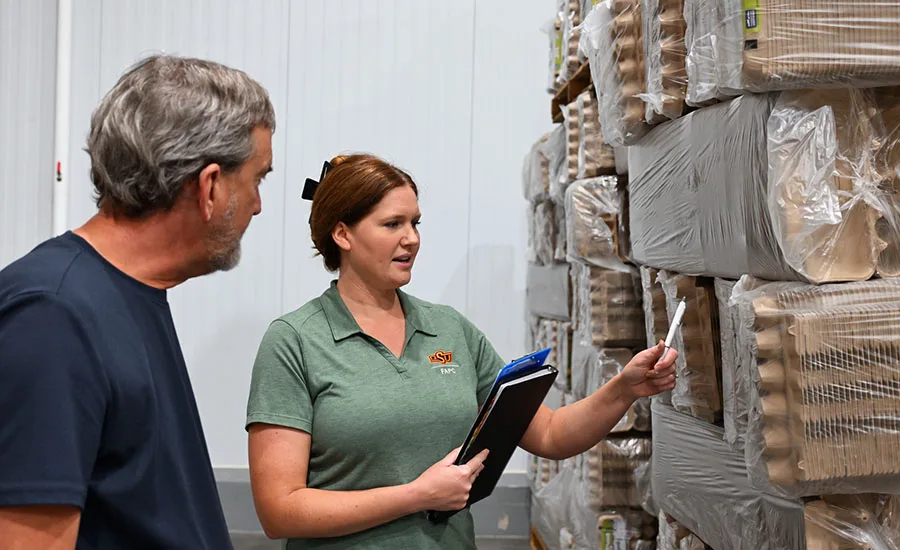
That means moving beyond documentation and observing how supplier verification works in practice (Figure 1). Baker encourages processors to occasionally step away from the paperwork and watch the receiving process unfold. Observing a truckload of ingredients being received, for example, can reveal whether written procedures are being followed consistently or whether employees have developed shortcuts, workarounds, or better practices that have never been documented. Those observations become valuable verification activities in their own right and help ensure that procedures reflect what is actually happening on the production floor.
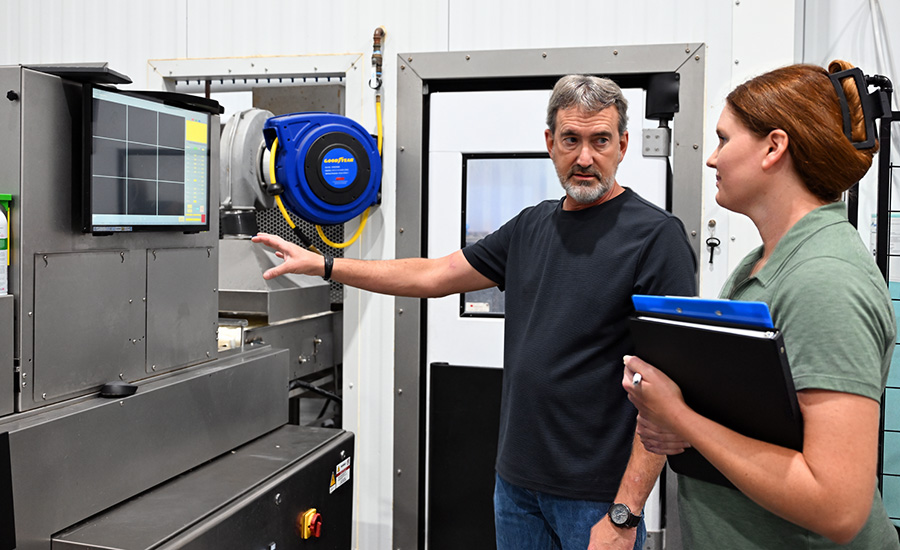
Baker emphasized that the paperwork should reflect what is actually happening—not what a company hopes is happening.
Sometimes, recurring issues appear so small that they are easy to overlook. Baker recalled a processor that repeatedly received large rolls of labels in which the product changed midway through the roll. Employees simply discarded the unusable labels and kept production moving, but the incidents often went undocumented. Over time, those seemingly minor issues resulted in lost production time, unnecessary waste, and a missed opportunity to work with the supplier to correct the problem. Tracking recurring supplier issues, Baker said, allows processors to identify trends before they develop into larger operational or food safety concerns.
Over time, supplier verification records become more than documentation—they become data. Patterns begin to emerge. A supplier consistently misses specifications. Labeling errors become more frequent. Deliveries arrive outside established parameters. Individually, these issues may seem minor, but together, they help processors determine where attention is needed most.
"Those trends help processors move from reacting to supplier issues to preventing them," Baker said.
Applying a Risk-Based Approach to Supplier Verification
Such observations lead to another question.
Should every supplier receive the same level of scrutiny, or should verification activities be based on the level of risk each supplier presents?
That distinction is at the heart of the Food Safety Modernization Act's (FSMA's) approach to supplier verification. Rather than treating every supplier the same, FSMA encourages processors to evaluate where the greatest food safety risks exist and direct their verification efforts accordingly.
"Supplier verification isn't about treating every supplier the same," said Dr. Ravi Jadeja, Food Safety Extension Specialist at Oklahoma State University. "It's about understanding risk and focusing verification activities where they matter most."
FSMA does not measure the strength of a supplier verification program by the thickness of its binder. It measures whether the program effectively manages risk.
"A receiving facility must establish and implement a written, risk-based supply chain program when its hazard analysis identifies a hazard that will be controlled by a supplier," Dr. Jadeja said. "If you're relying on your supplier to control a food safety hazard because your process doesn't eliminate it, then you also have to verify that those controls are working."
Consider two suppliers. One provides corrugated shipping boxes. Another supplies a ready-to-eat (RTE) spice blend that receives no additional lethality step during manufacturing. Both are approved suppliers, but they do not present the same food safety risk. A risk-based supplier verification program recognizes that distinction and adjusts verification activities accordingly.
"If every supplier receives exactly the same level of verification, you're probably spending resources where they don't have the greatest impact," Dr. Jadeja said.
Verification also requires looking closely at how a supplier generates the data reported on a Certificate of Analysis (COA). Processors should evaluate whether the supplier uses a statistically valid sampling plan and an analytical method appropriate for the product, hazard, and specification being measured. That expectation applies not only to microbial hazards, but also to chemical and physical concerns.
Dr. Jadeja points to peroxide value testing in peanuts as one example. If a supplier collects only a few samples from a large lot without using a statistically valid sampling plan, then localized pockets of peanuts with elevated peroxide values may go undetected. Those peanuts can then enter finished products, contributing to shortened shelf life or rancid flavors—risks that may become more pronounced during warm-weather storage and transportation.
"A COA is only as meaningful as the sampling plan and analytical method behind it," Dr. Jadeja said.
Understanding the Limitations of Microbiological Testing
Risk-based thinking helps processors determine where to focus their supplier verification efforts. It does not necessarily tell them what they might still be missing.
A supplier may have a current audit, a complete COA, and a well-documented food safety plan. Everything appears to be in order. Yet one important question remains: What risks could still exist that paperwork alone cannot reveal?
That is where documentation reaches its limit and microbiology begins.
"A supplier's COA is an important part of supplier verification, but it is only one piece of the overall picture," said Dr. Caitlin Karolenko, Program Director of Food Microbiology and Food Chemistry for FAPC. "A COA documents the results of a specific test performed on a specific lot under specific conditions. It provides evidence that certain specifications were evaluated, but it does not, by itself, demonstrate that microbiological hazards are consistently controlled."
A COA provides information about one lot of product, but it does not necessarily reflect the conditions under which every lot is produced. That is why supplier verification often requires looking beyond product testing and evaluating the systems a supplier has in place to consistently control microbiological hazards.
One example is an environmental monitoring program. While a COA reflects the microbiological status of a sampled product, environmental monitoring evaluates the manufacturing environment itself. A well-designed program can identify persistent contamination or sanitation issues before microorganisms reach food-contact surfaces or finished products, providing a broader picture of how effectively a supplier is controlling risk over time.
"Microbiology is about understanding the overall system, not just reliance on one laboratory result," Dr. Karolenko said.
Imagine receiving a shipment of RTE ingredients accompanied by a COA showing that no pathogens were detected. That documentation has value, but it represents only the portion of product that was tested. Understanding how the supplier validates sanitation, monitors its environment, and controls process variability provides a much clearer picture of long-term food safety performance.
Documentation tells processors what a supplier reports happened. Microbiology helps determine whether those records provide useful evidence that hazards are truly being controlled (Figure 2).
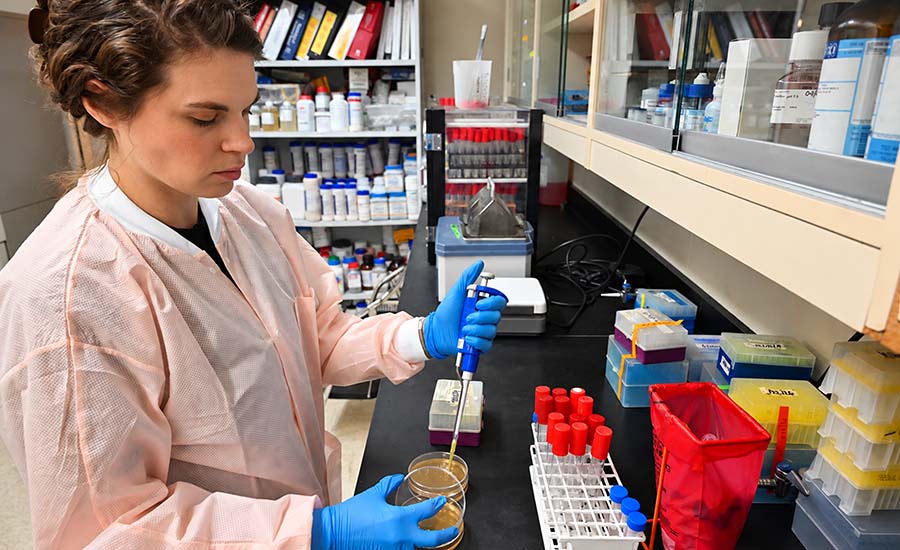
Microorganisms are rarely distributed evenly throughout a food or ingredient. A laboratory tests only a small sample of a much larger lot. A negative result increases confidence that contamination was not detected, but it cannot prove that contamination is absent. That is why supplier verification relies on understanding the systems controlling hazards—not just the test result attached to one shipment.
When biological risks go unrecognized, they rarely remain microbiological concerns for long. They become shortened shelf life, product waste, customer complaints, recalls, regulatory action, and ultimately, business risks.
Supplier Verification as a Business Risk Management Strategy
When food safety becomes a business risk, the conversation changes. For many processors, the first response is to ask whether they are covered, which is a reasonable question. However, just as documentation does not automatically mean that hazards are being controlled, having a food liability insurance policy does not necessarily mean that a business is protected from every consequence of a supplier verification failure.
When supplier verification fails, the consequences extend far beyond a food safety audit. A recall can halt production. Customers may lose confidence. Products are removed from store shelves. Supply chain partners ask difficult questions. Even companies that did not cause the original problem can find themselves managing the financial and operational consequences of an upstream supplier failure.
At that point, the conversation shifts from food safety to protecting the business. A supplier verification failure rarely affects only the quality department. Operations may stop while ingredients are replaced. Sales teams answer customer questions. Production schedules shift. Brand reputation can suffer long after the recall is over. For many processors, supplier verification is no longer simply a food safety program; it is a business continuity strategy.
For Dr. Rodney Holcomb, Interim Director of FAPC and an agricultural economist, supplier verification is more than a regulatory responsibility. It is one component of a broader risk management strategy that protects both consumers and the long-term viability of a business.
"There's a big difference between having proof of coverage and having effective coverage," Dr. Holcomb said.
Food liability insurance policies (FLIPs) are designed to help businesses manage risk, but not every policy provides the same protection. Product recall insurance, for example, may cover direct costs such as collecting and destroying recalled products, replacing inventory, and paying transportation expenses. It may exclude indirect losses tied to damaged reputation, interrupted production, lost customers, or downstream claims unless those coverages have been specifically added. Just as processors should not assume a COA tells the entire food safety story, Dr. Holcomb cautions against assuming that an insurance policy automatically covers every consequence of a supplier verification failure.
Effective supplier verification is ultimately about much more than compliance. It helps protect production schedules, preserve customer confidence, and strengthen supplier relationships while reducing the likelihood of recalls and costly business interruptions. Most importantly, it gives processors the information they need to make informed decisions before small supplier issues become larger food safety and business crises.
Companies invest considerable time developing supplier verification programs because they understand what is at stake. The greatest return on that investment is not simply passing an audit or satisfying a regulatory requirement; rather, it is building confidence that the people, systems, and decisions supporting the food supply chain are working together to prevent problems before they reach consumers.
Supplier verification is often viewed as a regulatory requirement, but the companies that do it well approach it differently. They do not see supplier verification as a collection of forms, certificates, and audit reports. They see it as a process that helps them understand risk, ask better questions, and make better decisions throughout the supply chain.
Where Processors Can Find Help
Not every processor has a multidisciplinary team on staff, but few have to tackle supplier verification alone. The strongest supplier verification programs often draw on expertise in food safety, microbiology, quality management, process validation, and business planning.
Processors can look for assistance through:
- Land-grant universities
- Cooperative Extension programs
- Food innovation and agricultural product centers
- State Manufacturing Extension Partnership centers
- Qualified food safety and quality consultants
- University laboratories and process validation specialists.
These resources can help processors evaluate supplier documentation, assess hazards, strengthen verification activities, and connect food safety decisions with operational and business priorities (Figure 3).

Building Supplier Verification Programs That Adapt to Change
Effective supplier verification begins with documentation, but it does not stop there. It requires quality professionals who understand how programs are implemented in day-to-day operations and food safety specialists who evaluate hazards and determine where verification activities should be focused. It also depends on microbiologists who understand the limitations of testing and the importance of preventive controls. Furthermore, it requires business leaders who recognize that food safety decisions are also business decisions, affecting customers, operations, and long-term resilience.
Supplier verification is not static. Suppliers change. Manufacturing processes evolve. Ingredients are reformulated. Regulations are updated. Customer expectations shift. Programs that worked five years ago may no longer provide the level of assurance they once did. The strongest supplier verification programs evolve alongside those changes.
Tomorrow morning, another shipment will arrive. Another COA will be reviewed, and another supplier decision will be made. The presence of documentation alone, however, does not guarantee effective supplier verification.
Approved supplier lists are still important. Certificates of analysis still have value. Audit reports still matter. However, effective supplier verification is not measured by the number of documents maintained. It is measured by the confidence those documents provide that hazards are being identified, understood, and consistently controlled throughout the supply chain.
The strongest supplier verification programs do not simply document food safety. They help deliver it.
Reference
- U.S. Food and Drug Administration (FDA). "Outbreak Investigation of Infant Botulism: Infant Formula (November 2025)." Current as of June 3, 2026. https://www.fda.gov/food/outbreaks-foodborne-illness/outbreak-investigation-infant-botulism-infant-formula-november-2025.






