Food Safety
search
Ask Food Safety AI
cart
facebook twitter linkedin
  • Sign In
  • Create Account
  • Sign Out
  • My Account
Food Safety
  • NEWS
    • Latest News
    • White Papers
  • PRODUCTS
  • TOPICS
    • Contamination Control
    • Food Types
    • Management
    • Process Control
    • Regulatory
    • Sanitation
    • Supply Chain
    • Testing and Analysis
  • PODCAST
  • EXCLUSIVES
    • Food Safety Five Newsreel
    • eBooks
    • FSM Distinguished Service Award
    • Interactive Product Spotlights
    • Videos
  • BUYER'S GUIDE
  • MORE
    • ENEWSLETTER >
      • Archive Issues
      • Subscribe to eNews
    • Store
    • Sponsor Insights
    • ASK FSM AI
  • WEBINARS
  • FOOD SAFETY SUMMIT
  • EMAG
    • eMagazine
    • Archive Issues
    • Editorial Advisory Board
    • Contact
    • Advertise
  • SIGN UP!

Food Safety

The importance of ERP in recall prevention and preparedness
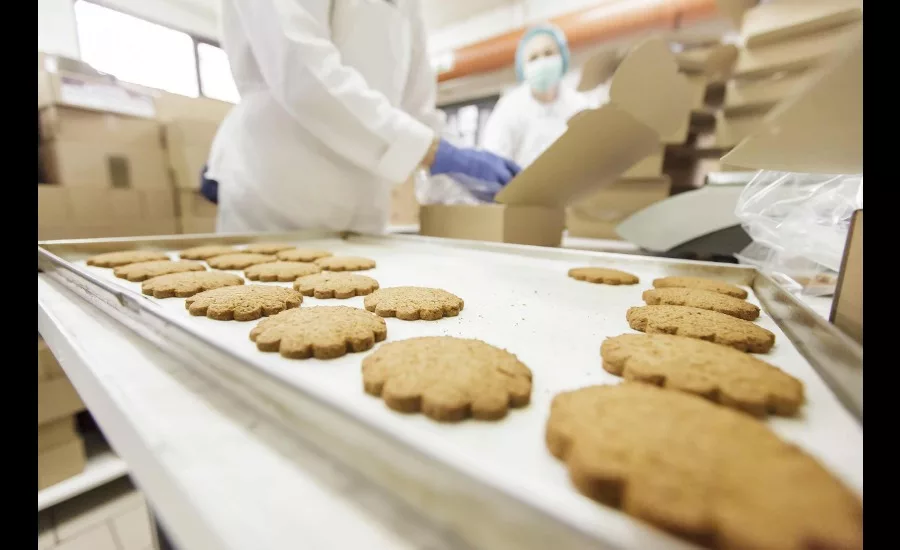
Cookie tray packing
November 26, 2019

Food and beverage manufacturers must be able to respond quickly and effectively to the recall of products deemed unsafe for the market, as the consequences for not doing so can have effects both legally and financially.

The responsiveness of social media is also a factor, which can make or break a company’s reputation in an instant, creating an environment in which the stakes of a product recall are even higher.

Consumers with rising expectations are driving companies to expand their food safety initiatives and adopt comprehensive preventative measures to mitigate monetary expense, threatened reputations and the negative press associated with product safety and recall issues.

In an effort to meet these standards, focusing on quality best practices and adoption of industry-specific ERP solutions has enabled companies to be better equipped to prepare for, prevent and minimize recalls and lessen the potential negative effects.

The Food Safety Modernization Act (FSMA) governs product recalls, and ERP functionality helps to comply with its requirements with a written food safety plan (FSP) and preventative controls to preclude recalls from occurring in the first place.

In order to reduce contamination risk, manufacturers should maintain a supplier/ingredient approval management program, conduct quality control testing, implement sanitary practices/process controls to avoid allergen or cross-contamination and document quarantine procedures all within an ERP solution.

Preventative controls and automated procedures managed within the system further promote best practices and repeatable processes. These measures allow for the handling of potential issues before they become a critical recall situation in the future.

Looking for quick answers on food safety topics?
Try Ask FSM, our new smart AI search tool.
Ask FSM →

Implementation of an industry-specific ERP solution can greatly assist a company with recall preparation and execution with an ultimate goal overall of prevention.

Data integrity

As the first principle of recall preparedness, data integrity demonstrates concrete documentation and proof that companies have followed all of the FDA’s recall procedures.

An ERP solution is able to manage large amounts of data from multiple sources and provides an accessible and real-time repository of information, a reality not achieved by disparate software systems and/or paper methods of documentation.

With one version of truth, ERP software manages data in a secure, controlled and auditable format—increasing accuracy and accountability. Per FSMA guidelines, the ERP solution assists with the strict data management procedures required, including what type of data it is, how it must be recorded, the timing, and which employee is responsible.

This detailed and comprehensive recordkeeping includes purchase orders, key inventory movements, bills of lading, certificates of analysis, product lot locations, sales records and shipping documents. From a centralized and integrated system, information is immediately accessible enabling potentially contaminated items to be located quickly in the event of an ingredient or product recall.

Good manufacturing processes

As the next principle, maintaining sound manufacturing processes provides further assistance with recall preparedness. ERP solutions maintain product safety and visibility, with forward and backward lot tracking and traceability in the supply chain from raw ingredients to finished goods—tracking an ingredient or product from farm to fork through barcode scanning.

The integrated system supports current good manufacturing practices (cGMP), FDA and other industry regulations to provide a documented audit trail with the capability to adapt as regulations change. Accurate product labeling, including ingredient and allergen statements, nutrient analysis, expiration dates and lot/batch numbers, is efficiently handled by the software to allow items to be identified and located quickly in the event of a recall.

Having effective processes in place, and challenging their viability and efficiency periodically, helps to ensure that the proper procedures are being utilized to meet the company’s needs when a recall takes place. 

Mock recall 

As an extremely important principle of recall preparedness, mock recalls are a practice performed to show the reliability of the recall plan and to ensure processes are working correctly. Utilizing the recall functionality in the ERP solution makes executing a practice mock recall efficient and easy.

While there is not a regulatory requirement for conducting these simulated exercises, it is unwise for an actual recall situation to be the first execution of the company’s implemented plan. For many manufacturers, these simulated activities can be eye-opening, as they may discover they are not as prepared as they initially thought—finding that their written plan does not translate well into practice.

By introducing mock recalls into their overall preparedness strategy, companies can instill a “practice makes perfect” mentality to implant familiarity of internal recall processes to all company stakeholders.

Conducted regularly, the purpose of a mock recall is to identify and locate 100% of contaminated ingredients/products and notify clients, vendors and governmental agencies in a simulated exercise of a contamination event in a timely manner. A successful exercise will identify all contaminated products and necessary parties quickly and efficiently.

An evaluation of the exercise should identify any glaring deficiencies or process gaps in order to modify the prepared recall plan as needed. Follow-up simulations can test any plan adjustments. Being recall ready provides companies with a way to minimize consumer exposure to potentially dangerous contaminants.

Since companies never know when a product recall will actually happen, the preventative and preparative advantages that an ERP solution provides is essential to help lessen the negative effects that recalls can have on their operation.

An integrated ERP system with its preventative controls, coupled with the data integrity, good manufacturing processes and mock recall, helps to mitigate the negative consequences caused by unsafe products entering the marketplace. Food and beverage manufacturers utilizing industry-specific ERP solutions during unwanted recall situations will have a competitive edge in a complex and fast-paced marketplace.


This article was originally posted on www.foodengineeringmag.com.
KEYWORDS: ERP software

Share This Story

Recommended Content

JOIN TODAY
to unlock your recommendations.

Already have an account? Sign In

  • people holding baby chicks

    Serovar Differences Matter: Utility of Deep Serotyping in Broiler Production and Processing

    This article discusses the significance of Salmonella in...
    Food Type
    By: Nikki Shariat Ph.D.
  • woman washing hands

    Building a Culture of Hygiene in the Food Processing Plant

    Everyone entering a food processing facility needs to...
    Personal Hygiene/Handwashing
    By: Richard F. Stier, M.S.
  • graphical representation of earth over dirt

    Climate Change and Emerging Risks to Food Safety: Building Climate Resilience

    This article examines the multifaceted threats to food...
    Best Practices
    By: Maria Cristina Tirado Ph.D., D.V.M. and Shamini Albert Raj M.A.
Manage My Account
  • eMagazine Subscription
  • Subscribe to eNewsletter
  • Manage My Preferences
  • Website Registration
  • Subscription Customer Service

More Videos

Sponsored Content

Sponsored Content is a special paid section where industry companies provide high quality, objective, non-commercial content around topics of interest to the Food Safety Magazine audience. All Sponsored Content is supplied by the advertising company and any opinions expressed in this article are those of the author and not necessarily reflect the views of Food Safety Magazine or its parent company, BNP Media. Interested in participating in our Sponsored Content section? Contact your local rep!

close
  • Salmonella bacteria
    Sponsored byThermoFisher

    Food Microbiology Testing Methods: Salmonella species

  • a diagram explaining indicator organisms
    Sponsored byHygiena

    How Proactive Listeria Testing Helps Prevent Six- and Seven-Figure Recalls

  • woman grocery shopping
    Sponsored byCorbion

    Designing Safety Into Every Bite: Proactive Risk Mitigation for Refrigerated Foods

Popular Stories

NRTE breaded stuffed chicken

USDA Indefinitely Delays Enforcement of Salmonella as Adulterant in Raw Breaded, Stuffed Chicken

non-conforming product

How to Handle Non-Conforming Product

spoonfuls of food ingredients

FDA’s Developing Rule to Tighten GRAS Oversight Moves to White House

Events

December 11, 2025

How to Develop and Implement an Effective Food Defense Strategy

Live: December 11, 2025 at 2:00 pm EDT: From this webinar, attendees will learn common areas where companies encounter challenges in their food defense strategies and how to address them.

May 11, 2026

The Food Safety Summit

Stay informed on the latest food safety trends, innovations, emerging challenges, and expert analysis. Leave the Summit with actionable insights ready to drive measurable improvements in your organization. Do not miss this opportunity to learn from experts about contamination control, food safety culture, regulations, sanitation, supply chain traceability, and so much more.

View All

Products

Global Food Safety Microbial Interventions and Molecular Advancements

Global Food Safety Microbial Interventions and Molecular Advancements

See More Products

Related Articles

  • A Cautionary Tale: The Importance of Diligence and Candor in Food Product Contamination Insurance

    See More
  • COVID-19 & Food Safety: The Importance of Research and Extension in Mitigating the Negative Impacts of COVID-19

    See More
  • Nuts and seeds and non-thermal pasteurization

    The importance of maintaining nutritional and sensory quality in pasteurized food

    See More

Related Products

See More Products
  • 1119053595.jpg

    Food Safety for the 21st Century: Managing HACCP and Food Safety throughout the Global Supply Chain, 2E

  • 1119258073.jpg

    FSMA and Food Safety Systems: Understanding and Implementing the Rules

  • 9781138070912.jpg

    Trends in Food Safety and Protection

See More Products

Events

View AllSubmit An Event
  • May 14, 2025

    Recall Modernization Initiatives with the Consumer in Mind

    On Demand: In this session, attendees will hear what industry and others have been doing to move this modernization forward faster for consumer safety.
View AllSubmit An Event

Related Directories

  • Instant Recall LLC

    Instant Recall automates best practice workflows, data analysis and regulatory reporting for mock recalls, product holds, withdrawals, and recalls for the food industry. Learn why the food industry consistently chooses us as the shared solution for food recall preparedness, recall communications execution, and cost recovery!
  • FoodBusiness ERP

    Designed for food and beverage manufacturing companies, FoodBusiness ERP is built in Sage X3 to provide a unified platform that is configured by NexTec industry experts who deliver a complete food and beverage manufacturing business solution. FoodBusiness ERP was developed from years of industry experience incorporating best practices from food and beverage manufacturers and industry leaders across North America.
  • Wherefour ERP Software

    Wherefour is a modern ERP and traceability platform that is cloud-based, easy-to-use, and affordable. Manage lot codes, control inventory, batch costs and ingredient forecasts. Use on any internet-connected device, including phones and tablets. Integrates with platforms like QuickBooks, Sage Intacct, ShipStation, Shopify, Microsoft Dynamics and many more.
×

Never miss the latest news and trends driving the food safety industry

eNewsletter | Website | eMagazine

JOIN TODAY!
  • RESOURCES
    • Advertise
    • Contact Us
    • Directories
    • Store
    • Want More
  • SIGN UP TODAY
    • Create Account
    • eMagazine
    • eNewsletter
    • Customer Service
    • Manage Preferences
  • SERVICES
    • Marketing Services
    • Reprints
    • Market Research
    • List Rental
    • Survey/Respondent Access
  • STAY CONNECTED
    • LinkedIn
    • Facebook
    • Instagram
    • X (Twitter)
  • PRIVACY
    • PRIVACY POLICY
    • TERMS & CONDITIONS
    • DO NOT SELL MY PERSONAL INFORMATION
    • PRIVACY REQUEST
    • ACCESSIBILITY

Copyright ©2025. All Rights Reserved BNP Media.

Design, CMS, Hosting & Web Development :: ePublishing