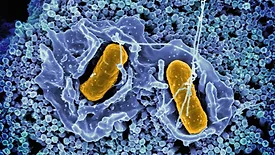
The Trivalent Salmonella Conjugate Vaccine (TSCV), which simultaneously addresses typhoid fever and foodborne illness caused by non-typhoidal Salmonella enterica, elicited strong immune response in 100 percent of participants in the randomized, placebo-controlled clinical trial.
Using an artificial intelligence (AI) model to standardize and analyze a massive, global set of whole genome sequencing (WGS) data for Cronobacter sakazakii, University of Maryland researchers have discovered genetic traits that may explain the pathogen’s persistence and virulence in low-moisture foods like powdered infant formula.
There is national interest in protecting public health by reducing foodborne illness from Salmonella in poultry. The University of Maryland, in partnership with IAFNS and Structured Partnerships, have been collaborating with USDA-FSIS through a Cooperative Agreement to support data sharing with the aim of reducing Salmonella illnesses in humans.
The University of Maryland-based Joint Institute for Food Safety and Applied Nutrition and the U.S. Food and Drug Administration (FDA) have entered a five-year, $41 million cooperative agreement that will expand JIFSAN’s work to increase the scientific knowledge required to mitigate foodborne illness and inform food safety policy.
The U.S. Department of Agriculture’s Food Safety and Inspection Service (USDA’s FSIS) has signed a cooperative agreement with the University of Maryland and EpiX Analytics to develop quantitative risk assessments for Salmonella in chicken and turkey.