A UK Government report calls attention to the increasing volume of illegally imported meat and dairy to Great Britain, which is often unsafe and unhygienic, posing foodborne illness and zoonotic disease risks. It recommends a coordinated approach to tackling illicit imports.
In a testing and sampling assignment conducted from 2022–2024 to determine the prevalence of economically motivated adulteration among imported frozen seafood, FDA found that 36 percent of the samples were violative for short weighting.
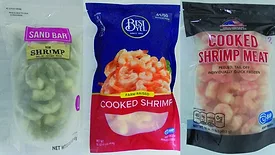
Originally limited to Great Value products sold at Walmart, FDA is warning consumers not to eat or purchase imported frozen shrimp sold under five additional brand names, originating from a single distributor, due to potential radioactivity.
FDA has issued a safety alert raw frozen shrimp products that tested positive for radioactive isotope Celsium-137, which were imported from Indonesia and sold at Walmart stores in 13 states. The agency recommends a recall.
A new study led by the University of Georgia’s Center for Food Safety has confirmed that imported seafood carries colistin resistance genes that are capable of transfer, posing the risk of this resistance gene spreading via the U.S. food supply.
Effective August 4, 2025, FDA is changing its import entry review process for regulated goods from a geographic-based system to a national-based system. Industry must be aware of new communication protocols for the Nationalized Entry Review (NER) program.
In this episode of Food Safety Matters, we speak to Christian Ararat, a seasoned food safety and quality professional with a global perspective, about a range of topics, including auditing, traceability, certifications, exporting to the U.S., and artificial intelligence (AI). We also hear from Joseph Corby, the recipient of Food Safety Magazine’s 2025 Distinguished Service Award, about his illustrious career and advocacy work.
In an April 25 speech, UK Food Standards Agency (FSA) Chief Executive Katie Pettifer described efforts FSA is taking to improve meat industry regulation, including supporting the adoption of new technologies, negotiating international trade agreements, addressing inspector and veterinarian workforce shortages, evaluating inspection charge discounts, and tackling food crime.
Introduced by Senator Cindy Hyde-Smith (R-MS), the Senate Bill 667, named the Safer Shrimp Imports Act, would require FDA to ensure that food safety inspections for shrimp in importing countries meet standards equivalent to those upheld in the U.S.
The UK Food Standards Agency has proposed changes to the list of high-risk imported food and feed of non-animal origin subjected to increased official controls (described in assimilated Regulation 2019/1793). A public consultation is open until April 9.
 RSS
RSS