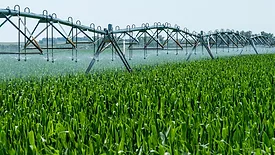
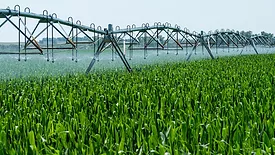
The U.S. Food and Drug Administration (FDA) has published the long-anticipated Pre-Harvest Agricultural Water Final Rule, fulfilling Subpart E of the Food Safety Modernization Act (FSMA) Produce Safety Rule.
A new FDA webpage lists regulations that the Human Foods Program (HFP) plans to publish by October 2024 and longer-term regulations HFP is prioritizing. FDA also updated the list of guidance topics that it is considering and expects to publish by the end of 2024, which was last updated in July 2023.
The U.S. Government Accountability Office (GAO) and the U.S. Department of Health and Human Services (HHS) are urging the U.S. Food and Drug Administration (FDA) to develop an implementation plan for the Food Traceability Final Rule.
The U.S. Food and Drug Administration (FDA) recently rolled out additional resources to help entities comply with Section 204 of the Food Safety Modernization Act (FSMA 204), also known as the Food Traceability Final Rule.
The International Fresh Produce Association (IFPA) has published an industry guidance to help stakeholders comply with the U.S. Food and Drug Administration (FDA’s) Food Safety Modernization Act (FSMA) Produce Safety Rule (PSR), Subpart E requirements for agricultural water.
In this episode of Food Safety Matters, we are joined by Blake Harris, CSCP, the Technical Director of IFT's Global Food Traceability Center (GFTC), and Alison Grantham, Ph.D., the Founder of Grow Well Consulting and a GFTC Member, to discuss the work of GFTC and how industry is preparing to comply with the requirements of FDA’s Food Traceability Final Rule under FSMA 204, which comes into effect on January 1, 2026.
The U.S. Food and Drug Administration (FDA) is offering new resources—a QR code and graphic element—to communicate with stakeholders about two of its Food Safety Modernization Act (FSMA) programs: the Accredited Third-Party Certification Program (TPP) and the Laboratory Accreditation for Analyses of Foods Program (LAAF).
The U.S. Food and Drug Administration (FDA) is soliciting volunteers to participate in the first phase of the rollout of the new Observation and Corrective Action Report (OCAR) industry portal, which enables human and animal food facilities to submit documentation of voluntary corrective actions they have taken to address regulatory non-compliances noted by the agency during facility inspections.
In November, Penn State University Extension will offer webinar course to help produce growers meet the food safety requirements outlined in the U.S. Food and Drug Administration’s Food Safety Modernization Act (FSMA).
A survey sent to stakeholders in the fresh produce sector found respondents’ top food safety priorities to differ between businesses of various sizes, as well as between industry community members and those serving in upper management, regulatory, or advisory roles.
 RSS
RSS