PerkinElmer has launched its new GC 2400™ Platform, an automated gas chromatography (GC) headspace sampler and GC/mass spectrometry solution for food safety testing laboratories.
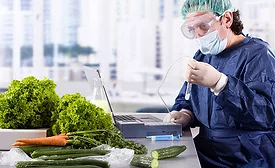
The food industry recognizes that consumers provide a very high level of fitness-for-purpose testing when they use products. Some shrinkage is, of course, involved in this process, but this consumer sampling will always reach beyond what is possible for a manufacturer. Instead, manufacturers make a more careful study of samples that are expected to be representative of what is delivered to the consumer. The selection of these samples, including the common misconceptions around the sampling of leafy greens, is the focus of this article.
It is critical to understand the data provided by a sampling plan and the related assessments. Inadequate sampling programs can lead to illness and the loss of consumer confidence.
I recall sitting in the office one day in the fall of 2018 when I received a call from a reporter who informed me that there had been a further outbreak of Escherichia coli O157:H7 linked to romaine lettuce. After an initial response of “oh, no,” the reporter asked why do we continue to have outbreaks linked to lettuce?
Food companies and regulators have become increasingly vigilant for environmental pathogens in manufacturing facilities, with problems triggering swab-a-thons and even recalls.
Trending environmental monitoring data can help with a root-cause analysis to uncover the origins of the positive finding and may inform the mitigation strategy.
The ability to rapidly detect the presence of viable pathogens along the production chain is essential for determining intervention and control strategies.
The number of reported incidents and recalls related to Listeria and L. monocytogenes has been increasing, and processors are making efforts to rid their facilities of harborage organisms and sites.