Study’s results suggest that charged nanoplastics can influence the growth, viability, virulence, physiological stress response, and biofilm lifestyle of the pathogen Escherichia coli O157:H7.
FDA has released for public comment its proposed method for ranking chemicals in the food supply that will be prioritized in post-market safety assessments.
Per- and polyfluoroalkyl substances (PFAS) are ubiquitous in food, cosmetics, and pharmaceuticals. This article discusses different PFAS, their connection to microplastics, and their global impacts on public health and the environment.
The bill’s passage by the California State Assembly comes on the heels of two other food safety-related bills authored by Assemblymember Jesse Gabriel and passed into law.
FDA notes that, until now, it has conducted post-market reviews on a case-by-case basis, often in response to citizen petitions or new scientific evidence. FDA says the new framework will be more proactive.
New York State Senator Brian Kavanagh, lead Senate sponsor of the legislation, says a key aim of the bill is to address major loopholes in federal food regulation.
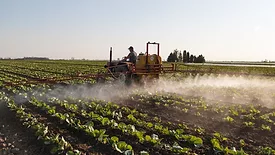
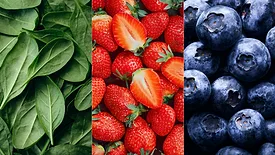
EFSA analyzed thousands of samples collected in 2023 from commonly consumed products. Maximum residue levels (MRLs) were exceeded in 2 percent of samples, of which 1 percent were non-compliant after taking into account the measurement uncertainty.
Announcement comes on heels of April 22 press conference regarding the agency’s focus on phasing out petroleum-based synthetic dyes in the nation’s food supply.