California Governor Gavin Newsom has issued an executive order that mandates state agencies explore the safety of ultra-processed foods, food dyes, and "generally recognized as safe" (GRAS) ingredients, and recommend actions to mitigate the adverse health effects.
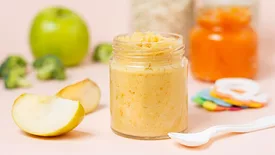
FDA issued a new final guidance for industry on the action levels for lead in processed food intended for babies and young children. Action levels are levels of a contaminant at which the agency may consider a food to be adulterated.
The European Food Safety Authority’s (EFSA’s) most recent report on emerging risk activities identifies food safety issues on the horizon posed by chemical and biological hazards, and new processes and technologies.
The U.S. Food and Drug Administration (FDA) has announced that the food contact notifications for 35 per- and polyfluoroalkyl substances (PFAS) are no longer effective, due to the abandonment of their uses by industry.
A study of antimicrobial resistance (AMR) data for four important foodborne pathogens isolated from U.S. chicken and turkey revealed trends over time and by region that suggest the potential influence of local agricultural practices on AMR patterns and pathogen distribution.
This episode of Food Safety Five previews the top three food safety innovations of 2024, based on the advancements that gained the most attention from Food Safety Magazine readers. These include a first-of-its-kind antimicrobial preharvest agricultural water treatment, as well as novel PFAS detection and remediation techniques.
This year’s Top Ten Food Safety Innovations list was chosen based on which discoveries and technologies attracted the most attention from Food Safety Magazine readers, including new detection methods for chemical and microbiological contaminants, novel processing technologies, preharvest interventions for microbial risks, and others.
An analysis conducted by Pesticide Action Network Europe (PAN Europe) raises concerns about trifluoroacetic acid (TFA), a type of per- and polyfluoroalkyl substance (PFAS), in European mineral waters, which are sourced from deep underground and are typically believed to be more protected from pollutants than other waters.
In this episode of Food Safety Matters, we discuss the top food safety stories of 2024 and their implications, including high-profile foodborne illness outbreaks, the ongoing avian flu outbreak in poultry and dairy cattle, FDA’s Human Foods Program restructuring, rising concerns and evolving legislation around food additives and chemical contaminants, and other topics.
 RSS
RSS