The California Assembly has passed a bill requiring an expedited review of paraquat, an herbicide linked to human health harms. It is used on food crops like almonds and pistachios.
A recent European Food Safety Authority (EFSA) project explored new methods to understand the immunotoxicity of per- and polyfluoroalkyl substances (PFAS). At the same time, one Swiss canton has called on Parliament to develop a PFAS action plan after finding widespread contamination on farms, and has banned the sale of beef with high levels of the chemical.
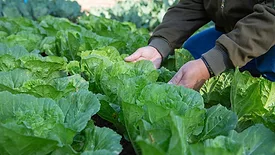
A recent study has demonstrated that the risk of foodborne Salmonella enterica infection from raw produce may increase as humidity worsens due to climate change, and that certain plant diseases can aid the survival of Salmonella on leafy greens.
The California Assembly has passed AB 2316, named the California School Food Safety Act, which aims to ban six potentially toxic synthetic food dyes from foods sold or offered at public schools. The bill now awaits signature into law by Governor Gavin Newsom.
At the 2024 Farm Progress Show, U.S. Department of Agriculture (USDA) Secretary Tom Vilsack revealed that the agency is beginning field trials for a vaccine to address the ongoing outbreak of Highly Pathogenic Avian Influenza (HPAI) H5N1—also known as “bird flu”—in cattle.
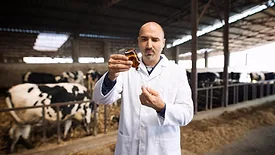
USDA has released an updated guideline to strengthen animal-raising and environment-related label claims on meat and poultry products, such as “raised without antibiotics.” Due to specific concern over negative antibiotic claims, USDA may undertake future sampling and rulemaking to ensure label claims are truthful.
Providing food manufacturers with a standardized methodology for determining whether precautionary allergen labeling is appropriate for their products, the Allergen Bureau has introduced the latest version of its risk assessment tool, Voluntary Incidental Trace Allergen Labeling (VITAL®) 4.0.
The U.S. Department of Agriculture (USDA) has awarded a $300,000 grant to a University of Arkansas research project that aims to develop best practices for controlling pests and pathogens in soilless substrate used in hydroponic lettuce production.
The world could be rendered defenseless against the next global pandemic if antimicrobial use in Southeast Asian animal agriculture is not curbed, researchers from RMIT University have warned.
The Food and Agriculture Organization of the United Nations (FAO) recently published a report on the health impact of dietary exposure to toxic fatty acid esters from supplementary foods provided by humanitarian organizations to treat malnutrition.
 RSS
RSS