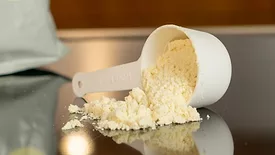
At the upcoming 49th Session of the Codex Committee on Food Labeling (CCFL49), CCFL will consider draft guidelines on applying food labeling provisions during emergencies. Infant and maternal health groups oppose these guidelines, saying they could harm vulnerable populations.
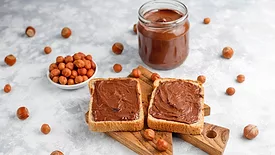
The outbreak strain of Salmonella Bochum is extremely rare. Children and adolescents aged 2–15 years represent 75 percent of outbreak patients. Patient interviews and a case-control study point to a certain brand of chocolate-hazelnut spread as the vehicle of illness.
The third Science Meets Policy conference will take place September 2–3 in Rome, Italy, focused on helping EU competent authorities and industry members effectively implement new WGS data-sharing requirements for foodborne pathogens.
Researchers at Johns Hopkins University analyzed how four major food processing classification systems (including the NOVA “ultra-processed” definition) differ in categorizing foods and how those differences may influence nutrition research, public health, and policy.
During its investigation of an ongoing Escherichia coli O157:H7 outbreak involving Raw Farm-brand unpasteurized cheddar cheese, FDA detected E. coli in a product sample not matching the current outbreak strain, but instead matching a strain from a different 2025 outbreak.
Sponges far outperformed cotton swabs in laboratory experiments and real-world sampling in an RTE food production facility. The findings align with existing recommendations supporting the use of sponge-based sampling with neutralizers for environmental monitoring.
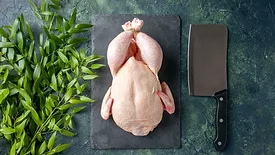
Per CDC and USDA-FSIS data, in 2023, Salmonella Infantis strain REPJFX01 accounted for 97 percent of S. Infantis isolates and 21 percent of all Salmonella recovered from chicken carcasses. This rising trend is closely aligned with an increase in human salmonellosis infections linked to REPJFX01.
Per the new law, restaurants must place an identifying marker on any food item prepared for delivery or takeout that has been altered or substituted due to a consumer-identified food allergy or sensitivity.
 RSS
RSS