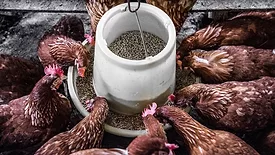
In an effort to address the growing public health threat of antimicrobial resistance (AMR), the Food and Agriculture Organization (FAO) is seeking data and information on alternative and advanced feed practices in animal agriculture to promote the responsible use of antimicrobials.
In celebration of World Food Safety Day, on June 7, 2023 the Food and Agriculture Organization of the United Nations (FAO) and partner organizations will be holding four virtual events discussing different aspects of food safety and promoting new resources.
The Food and Agriculture Organization of the United Nations (FAO) and the World Health Organization (WHO) have released a report summarizing a meeting on precautionary allergen labeling (PAL) that will support the Codex Committee on Food Labeling (CCFL) in the development of guidance on the use of PAL.
In a letter to U.S. Congress members, twelve major industry organizations and stakeholder groups made the case for improving national food safety by making changes to the U.S. Food and Drug Administration’s (FDA’s) authorities and budget.
A recent study has demonstrated the benefits of interagency collaboration during foodborne illness outbreak investigations. The study was conducted by researchers from the U.S. Food and Drug Administration’s Center for Food Safety and Applied Nutrition (FDA’s CFSAN) and the U.S. Centers for Disease Control and Prevention (CDC).
Microplastics and nanoplastics are pervasive in the food supply and may be affecting food safety and security on a global scale, according to a new study led by the Commonwealth Scientific and Industrial Research Organization (CSIRO), Australia’s national science agency.
The U.S. Food and Drug Administration (FDA) has announced that the National Academies of Sciences, Engineering, and Medicine (NASEM) will conduct an independent study on challenges in the U.S. infant formula supply, market competition, and regulation.
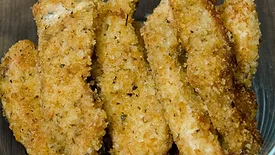
Additional control measures for Salmonella contamination by manufacturers of Not ready-to-eat (NRTE) breaded, stuffed chicken products—such as those proposed by the U.S. Department of Agriculture—could reduce salmonellosis cases associated with such products, according to a recent study from the U.S. Centers for Disease Control and Prevention (CDC).
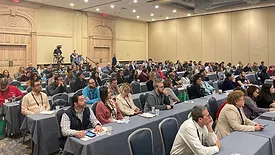
The 2023 Food Safety Summit, held from May 8–11, was a highly anticipated event that brought together 2,700 industry professionals, researchers, policymakers, and experts in person and virtually from around the world to discuss the latest advancements and challenges in ensuring food safety.
 RSS
RSS