With California Assembly Bill 899 recently being signed into law, any baby food products sold or made in the state will require testing for arsenic, cadmium, lead, and mercury, beginning January 1, 2024. Consumer disclosures will be required a year after.
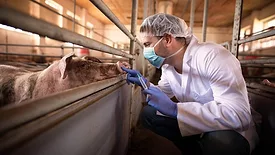
On November 1, 2023, the U.S. Department of Agriculture’s Food Safety and Inspection Service (USDA’s FSIS) will begin a one-year sampling program of domestic beef, pork, and Siluriformes fish (commonly referred to as catfish) to determine levels of dioxins and dioxin-like compounds.
After finding that more than a third of water courses in England and Wales contain medium- to high-risk levels of per- and polyflouralkyl substances (PFAS), the Royal Society of Chemistry is calling upon the UK Government to enact stricter drinking water standards for the “forever chemicals.”
In an October 19 invite-only media roundtable and written statement, James (Jim) Jones, the first Deputy Commissioner for Human Foods at the U.S. Food and Drug Administration (FDA), revealed his priorities for forging a new, unified Human Foods Program. Significantly, amid the wave of state legislators aiming to ban possibly harmful food additives, Jones stated his intent to more closely address the issue, beginning with brominated vegetable oil.
Recently, the Joint Food and Agriculture Organization of the United Nations (FAO)/World Health Organization (WHO) Expert Meeting on Microbiological Risk Assessment (JEMRA) provided a review of foodborne viruses and relevant food commodities of highest public health concern, relevant analytical methods, and the potential utility of indicators.
According to recent research from the U.S. Centers for Disease Control and Prevention (CDC), infections caused by Salmonella with antimicrobial resistance (AMR) only to clinically important antibiotics were not associated with poorer outcomes, suggesting that factors other than treatment failure may be important.
A recent assessment conducted by the National Environmental Health Association (NEHA) and funded by the U.S. Food and Drug Administration (FDA) has provided a better understanding of NEHA-FDA Retail Flexible Funding Model Grant Program (RFFM) distribution based on social needs. RFFM provides funding to state, local, tribal, and territorial retail food regulatory agencies as they achieve and advance conformance with FDA’s Retail Program Standards.
Scientists have developed a small, easy-to-produce, and cost effective sensor that can detect water adulteration of honey, a commodity that is often the subject of fraudulent food production practices.
The U.S. Department of Agriculture’s Food Safety and Inspection Service (USDA’s FSIS) has published its annual plan for fiscal year (FY) 2024, which acts as a guide for the agency’s efforts to prevent foodborne illnesses associated with FSIS-regulated products, transform inspections, and achieve operational excellence.
The U.S. Department of Agriculture’s Food Safety and Inspection Service (USDA’s FSIS) has released a notice informing agency inspection program personnel about the continuation of and changes to the Raw Pork Products Sampling Program.